
Short Answer
21 Facts About Millipedes
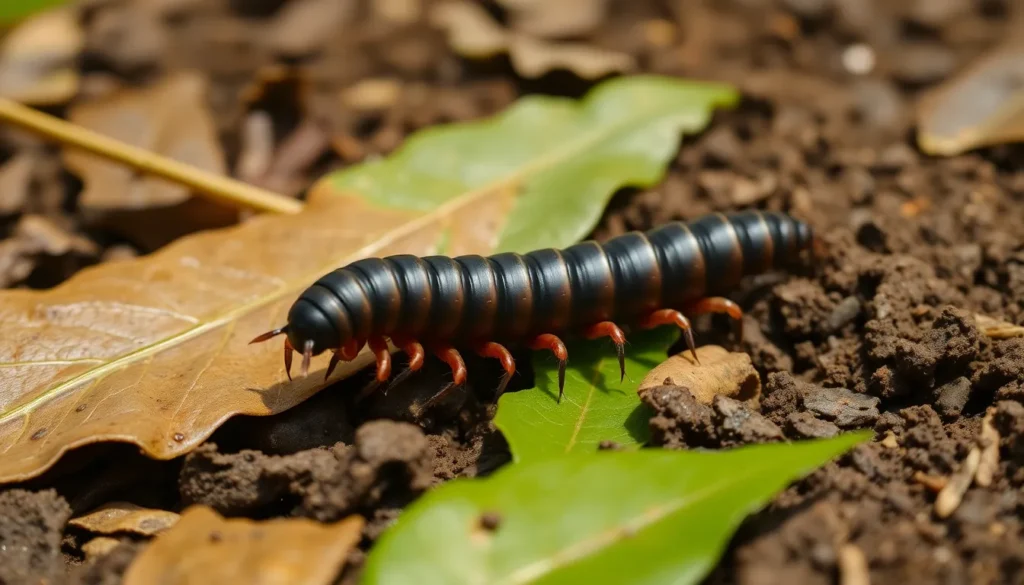
- Millipedes are arthropods with two pairs of legs per body segment. Unlike centipedes, which have one pair of legs per segment, millipedes typically have two pairs, giving them their characteristic many-legged appearance.
- The number of legs varies widely among species. Some millipedes have as few as 30 legs, while others can have up to 400 legs, depending on the species and number of body segments.
- They are detritivores. Millipedes primarily feed on decaying plant material, playing a vital role in breaking down organic matter in soil ecosystems.
- Millipedes move slowly. Their locomotion is deliberate and coordinated to accommodate their many legs, which contributes to their slow movement compared to other arthropods.
- Millipedes do not bite humans. They lack venomous claws and are generally harmless to people, although some can secrete irritating substances as a defense mechanism.
- They possess chemical defenses. Many millipedes can excrete substances such as hydrogen cyanide or other noxious chemicals to deter predators.
- Millipedes have a cylindrical or flattened body shape. The body form varies across species, with some exhibiting a more rounded appearance and others more flattened.
- They reproduce by laying eggs. Female millipedes lay eggs in soil or decaying wood, where the young hatch and go through several molts before reaching adulthood.
- Millipedes have existed for over 400 million years. Fossil evidence indicates that millipedes are among the oldest known land animals.
- They inhabit moist environments. Millipedes require damp conditions to prevent desiccation and are commonly found in leaf litter, under logs, or in soil.
- Some species can curl into a tight coil. This behavior protects their softer undersides from predation.
- Millipedes have simple eyes called ocelli. These give them limited vision, mainly detecting light and dark rather than detailed images.
- They are generally nocturnal. Most millipedes are active at night to avoid predators and reduce water loss.
- Millipedes contribute to soil health. By breaking down organic matter and aerating the soil, they help maintain nutrient cycles.
- Some cultures use millipedes in traditional medicine. Certain species have been utilized in folk remedies, although scientific evidence for efficacy is limited.
- Millipedes can live for several years. Lifespans vary among species but can range from 2 to 10 years in some cases.
- They have segmented bodies with a head, trunk, and tail end. Each trunk segment typically bears legs, while the head contains sensory organs.
- Millipedes breathe through spiracles connected to a tracheal system. This respiratory system allows gas exchange despite their elongated bodies.
- They are mostly solitary animals. Millipedes usually live alone except during mating or in abundant food conditions.
- Millipedes are different from centipedes. Besides leg number, millipedes are slower, herbivorous or detritivorous, and generally less aggressive.
- There are over 12,000 known species worldwide. Millipedes are diverse and found on every continent except Antarctica.
Habitat and Behavior
Millipedes predominantly inhabit moist terrestrial environments where they can find sufficient organic material to consume. They are commonly found in leaf litter, under stones, logs, and in soil rich with decaying plant debris. Their need for moisture stems from their susceptibility to desiccation due to their permeable exoskeleton. Behaviorally, millipedes are slow-moving and primarily nocturnal, which helps them avoid predators and minimize water loss. When threatened, many species curl their bodies into a tight coil, protecting their vulnerable undersides while exposing the harder exoskeleton. Their diet mainly consists of decomposing plant matter, making them important detritivores that contribute to nutrient cycling in ecosystems. Reproduction involves egg-laying in protected environments, with juveniles undergoing multiple molts before reaching maturity.
Why This Animal Matters
Millipedes play a crucial ecological role as decomposers. By processing dead plant material, they facilitate the breakdown and recycling of nutrients back into the soil, promoting soil fertility and health. This activity supports plant growth and overall ecosystem productivity. Furthermore, millipedes serve as prey for a variety of animals, including birds, amphibians, and small mammals, thereby contributing to the food web. Their presence can also indicate soil quality and environmental conditions. While generally not a focus of conservation efforts, some millipede species face threats from habitat loss and pollution. Understanding their biology and ecological role highlights their importance within terrestrial ecosystems.
Common Misconceptions
Misconception: Millipedes have a thousand legs.
Correction: Despite their name, millipedes do not have exactly 1,000 legs. Most species have far fewer legs, usually ranging from 30 to 400 depending on the species and developmental stage.
Misconception: Millipedes are dangerous and bite humans.
Correction: Millipedes do not have venomous bites and generally do not harm humans. They may secrete irritating chemicals if threatened, but they are not aggressive or harmful.
FAQ
Do millipedes really have a thousand legs?
No, most millipedes have far fewer legs than a thousand. The number varies by species and can range from 30 to around 400 legs.
Are millipedes harmful to humans?
Millipedes are not harmful to humans. They do not bite or sting, but some species can secrete irritating chemicals as a defense, which can cause mild skin irritation.
What role do millipedes play in the environment?
Millipedes act as decomposers by feeding on dead plant material, which helps recycle nutrients back into the soil and supports healthy ecosystems.




Leave a Reply