

Short Answer
21 Facts About Ring Species (Salamanders)
- Definition of Ring Species: Ring species are groups of related populations that form a geographic ring, where neighboring populations can interbreed but the populations at the ends of the ring cannot.
- Salamanders as Ring Species Models: Certain salamander populations serve as classic examples of ring species, showcasing gradual genetic divergence around geographic barriers.
- Ensatina Salamanders: The Ensatina eschscholtzii complex in California is one of the most studied salamander ring species, with subspecies distributed in a horseshoe-shaped range around the Central Valley.
- Gene Flow Variation: In ring species, gene flow occurs between adjacent populations, but reproductive isolation increases with geographic distance.
- Speciation in Progress: Ring species exemplify speciation as a continuum rather than a discrete event, with salamanders illustrating this process in real time.
- Hybrid Zones: At the ends of the ring, salamander populations often form hybrid zones where limited or no viable offspring are produced.
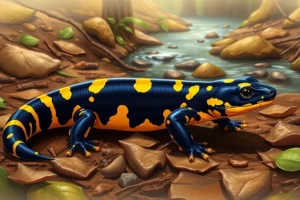
- Morphological Gradients: Salamanders in ring species show gradual changes in morphology, such as coloration and size, along the geographic range.
- Genetic Studies: DNA analysis has been pivotal in confirming the relationships and divergence among salamander ring species populations.
- Geographic Barriers: Features like mountains and valleys contribute to the ring-shaped distribution by limiting direct gene flow.
- Ecological Niches: Different salamander populations adapt to distinct microhabitats along the ring, influencing their divergence.
- Behavioral Differences: Varied mating calls and courtship behaviors among populations reduce interbreeding at the ring’s ends.
- Evolutionary Significance: Salamander ring species are important case studies in understanding gradual evolutionary change and reproductive isolation.
- Conservation Status: Many ring species salamanders are sensitive to habitat loss and environmental changes, requiring conservation efforts.
- Environmental Sensitivity: Salamanders are generally sensitive to pollution and habitat fragmentation, factors that can disrupt ring species dynamics.
- Research Challenges: Studying ring species in salamanders requires extensive geographic sampling and genetic analysis to fully understand their complex relationships.
- Taxonomic Debates: There is ongoing scientific discussion regarding whether the end populations of ring species should be classified as distinct species.
- Climate Impact: Climate change may alter salamander habitats, potentially affecting the distribution and gene flow in ring species populations.
- Role in Education: Ring species salamanders are frequently used as teaching examples in evolutionary biology courses.
- Fossil Evidence: Fossils provide limited direct insight into salamander ring species, but paleontological data help contextualize evolutionary timelines.
- Comparison with Other Ring Species: Salamanders offer a terrestrial amphibian perspective on ring species, complementing studies in birds and insects.
- Future Studies: Advances in genomics and ecological modeling continue to enhance understanding of ring species dynamics in salamanders.
Habitat and Behavior
Ring species salamanders predominantly inhabit moist forested regions, often in mountainous or hilly terrain where geographic barriers such as valleys and ridges shape their distribution. They require cool, damp microhabitats with abundant leaf litter, logs, and rocks for shelter. These salamanders are generally nocturnal and exhibit secretive behavior, spending much of their time hidden under debris or underground to maintain moisture levels. Their diet mainly consists of small invertebrates such as insects and worms. Reproduction involves internal fertilization and egg-laying in moist environments, with some species exhibiting direct development, bypassing an aquatic larval stage. The patterns of movement and gene flow among populations are influenced by habitat connectivity and environmental conditions, which are critical in maintaining the ring species structure.
Why This Animal Matters
Ring species salamanders hold significant ecological and scientific importance. Ecologically, they contribute to forest ecosystem health by controlling invertebrate populations and serving as prey for larger animals. Scientifically, they represent natural laboratories for studying speciation, genetic divergence, and evolutionary processes. Their unique distribution and gene flow dynamics help clarify how species boundaries form and evolve over time. Additionally, their sensitivity to environmental changes makes them valuable bioindicators for monitoring ecosystem health and the impact of human activities. Conservation of these salamanders is crucial for preserving biodiversity and maintaining the evolutionary processes they exemplify.
Common Misconceptions
Misconception: Ring species are completely separate species with no interbreeding.
Correction: Ring species populations typically interbreed with neighboring populations around the ring, with reproductive isolation primarily occurring between the terminal populations.
Misconception: All salamanders in a ring species are identical in appearance.
Correction: Morphological traits vary gradually along the ring, with differences often visible between populations at opposite ends.
Misconception: Ring species are rare and theoretical concepts only.
Correction: While rare, ring species are observed in nature, with salamanders like the Ensatina being well-documented real-world examples.
FAQ
What is a ring species?
A ring species is a connected series of populations, each of which can interbreed with neighboring populations, but where the populations at the ends of the series cannot interbreed, effectively forming separate species.
Why are salamanders important in studying ring species?
Certain salamanders, such as the Ensatina complex, provide concrete examples of ring species, allowing scientists to observe evolutionary processes like gradual divergence and speciation in natural settings.
How does habitat affect ring species salamanders?
Geographic barriers like mountains and valleys shape the distribution of salamander populations, influencing gene flow and reproductive isolation critical to maintaining the ring species structure.



Leave a Reply