
Short Answer
21 Facts About Blue Morpho Butterflies
- Vivid Blue Coloration
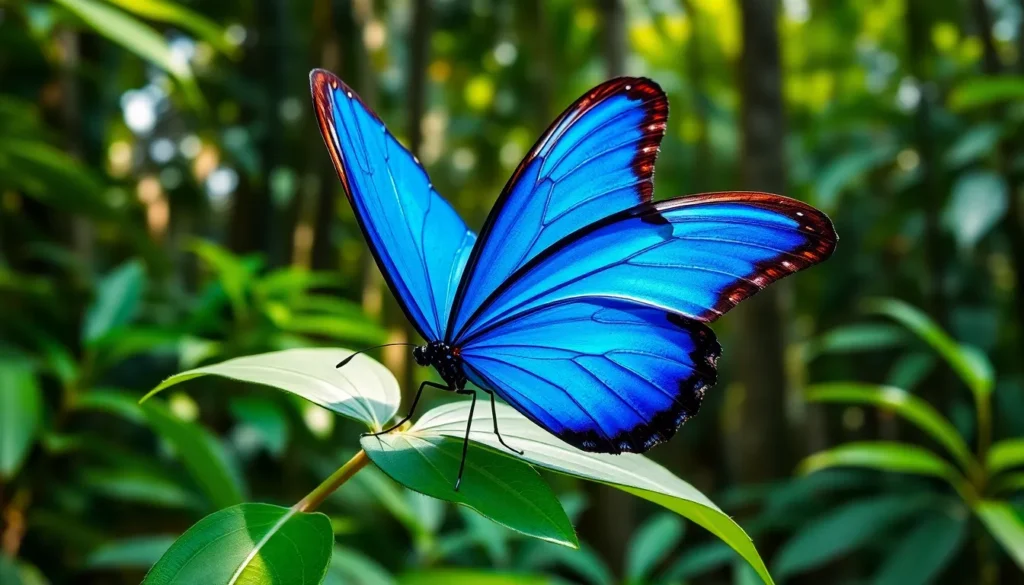
The Blue Morpho butterfly is renowned for its brilliant iridescent blue wings, caused by microscopic scales that reflect light rather than pigment. - Scientific Name
The most commonly studied species is Morpho menelaus, belonging to the family Nymphalidae. - Wing Span
Blue Morphos have a wingspan ranging from 5 to 6 inches (12.5 to 15 cm), making them one of the larger tropical butterflies. - Habitat Range
They are primarily found in Central and South American rainforests, including Brazil, Costa Rica, and Venezuela. - Daytime Activity
Blue Morphos are diurnal, active mainly during daylight hours when their coloration is most visible. - Camouflage on Wing Undersides
The undersides of their wings are brown with eyespots, providing camouflage against predators when the wings are closed. - Flight Pattern
They have a slow, graceful flight that can appear to flash bright blue as they flap their wings. - Lifespan
The adult Blue Morpho typically lives for about 115 days, though this can vary based on environmental conditions. - Lifecycle Stages
The lifecycle includes egg, larva (caterpillar), pupa (chrysalis), and adult stages, typical of butterflies. - Diet
Adults feed mainly on the juices of rotting fruits, tree sap, fungi, and decaying animals rather than nectar. - Larval Diet
Caterpillars feed on leaves of plants such as those in the pea family (Fabaceae). - Predators
Natural predators include birds, lizards, and frogs, which the Blue Morpho tries to evade using camouflage and erratic flight. - Role in Ecosystem
They contribute to nutrient recycling by feeding on decaying plant and animal matter and serve as prey for other animals. - Mating Behavior
Males often patrol forest edges and clearings to find females for mating. - Wing Structure
The blue coloration is due to structural coloration, where microscopic ridges on the wing scales reflect light. - Temperature Dependence
Their activity levels depend on temperature; they tend to bask in sunlight to warm up before flying. - Flight Height
Blue Morphos commonly fly at heights of 1 to 3 meters above the forest floor but can also be found higher in the canopy. - Conservation Status
They are not currently listed as endangered, but habitat destruction threatens local populations. - Significance in Culture
Blue Morphos have been featured in art, literature, and symbolism due to their striking appearance. - Use in Ecotourism
Their beauty attracts tourists and butterfly enthusiasts, supporting local economies through ecotourism. - Scientific Research
They have been studied extensively to understand structural coloration and butterfly ecology.
Habitat and Behavior
Blue Morpho butterflies inhabit tropical rainforests in Central and South America, preferring dense, humid environments with abundant foliage. They are most often found near rivers and streams where moisture is high. These butterflies spend much of their time flying through the forest understory and edges but can also be seen higher in the canopy. Their behavior includes basking in sunlight to raise body temperature, slow and fluttering flight patterns to evade predators, and using their wing coloration as both a mating display and a defensive mechanism. The underside of their wings acts as camouflage when resting, while the vibrant blue upper side can startle or confuse predators during flight.
Why This Animal Matters
Blue Morpho butterflies play an important ecological role as pollinators and as part of the food web in tropical forests. Their feeding on decaying organic matter helps in nutrient recycling within the ecosystem. Culturally, they serve as symbols of beauty and transformation and are often used in educational and artistic contexts to raise awareness about biodiversity and conservation. Although not currently endangered, the Blue Morpho’s reliance on intact rainforest habitats makes it an indicator species for environmental health and highlights the importance of preserving tropical ecosystems.
Common Misconceptions
Misconception: The blue color of the Blue Morpho comes from blue pigment in its wings.
Correction: The blue coloration is due to structural coloration, where microscopic scales reflect light to create the vivid blue appearance, not pigment.
Misconception: Blue Morpho butterflies feed on flower nectar.
Correction: Unlike many butterflies, Blue Morphos primarily feed on rotting fruit juices, tree sap, and other non-nectar sources rather than flowers.
FAQ
Why are Blue Morpho butterflies blue?
Their distinctive blue color results from structural coloration, where microscopic scales on their wings reflect light in a way that produces a vivid blue appearance rather than from blue pigments.
What do Blue Morpho butterflies eat?
Adult Blue Morphos primarily feed on the juices of rotting fruits, tree sap, fungi, and decaying animals instead of nectar from flowers.
Where do Blue Morpho butterflies live?
They inhabit tropical rainforests in Central and South America, including countries such as Brazil, Costa Rica, and Venezuela, favoring humid, dense forest environments.

Leave a Reply