
Short Answer
21 Facts About Eastern Diamondback Rattlesnakes
- Largest Venomous Snake in the U.S.
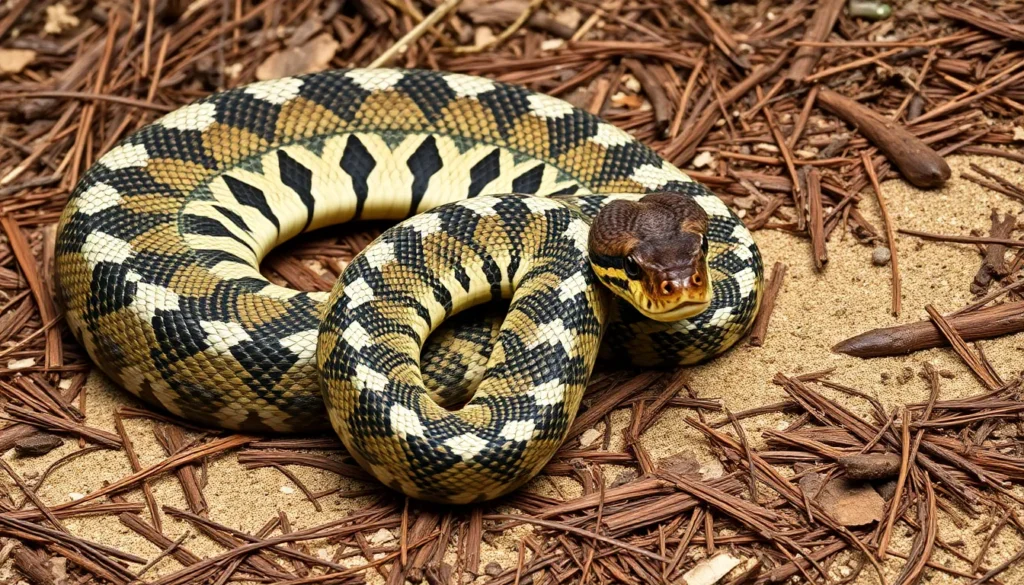
The Eastern Diamondback Rattlesnake (Crotalus adamanteus) is the largest venomous snake native to the United States, with adults commonly reaching lengths of 3 to 5 feet, and some exceptional specimens growing up to 8 feet. - Distinctive Diamond Pattern
It gets its name from the series of dark diamond-shaped markings edged in lighter scales that run along its back, providing camouflage in its natural habitat. - Powerful Venom
The species possesses hemotoxic venom that can cause significant tissue damage and affects blood clotting; however, bites are rarely fatal with prompt medical treatment. - Rattle as a Warning
The rattlesnake’s segmented rattle produces a distinctive buzzing sound, serving as a warning to potential predators or threats. - Habitat Preference
It prefers dry pine forests, sandy woodlands, and coastal scrub habitats predominantly in the southeastern United States, including states like Florida, Georgia, and the Carolinas. - Diet Composition
Its diet mainly consists of small mammals such as rabbits and rats, but it also preys on birds and occasionally amphibians. - Ambush Predator
The Eastern Diamondback is an ambush predator, often waiting motionless for prey to come within striking distance. - Reproduction Mode
This rattlesnake species is ovoviviparous, meaning females give birth to live young rather than laying eggs. - Neonates Have Functional Rattles
Unlike some rattlesnake species, newborn Eastern Diamondbacks are born with a single segment on their rattle that can produce sound immediately. - Defensive Behavior
When threatened, it will coil, rattle its tail vigorously, and may strike if provoked, but generally prefers to avoid confrontation. - Longevity
In the wild, Eastern Diamondbacks can live up to 20 years, although many do not reach this age due to predation and human impact. - Role in Ecosystem
As a top predator, it helps control populations of rodents and other small mammals, contributing to ecological balance. - Seasonal Activity
They are most active during warmer months and may brumate (a hibernation-like state) during colder periods. - Conservation Status
The species is currently listed as Near Threatened due to habitat loss, road mortality, and persecution by humans. - Heat-Sensing Pits
Like other pit vipers, it has heat-sensing pits located between the eyes and nostrils to detect warm-blooded prey. - Impressive Strike Speed
Its strike can be extremely fast, often faster than the human eye can follow, aiding in effective prey capture and defense. - Rattle Composition
The rattle is made of keratin, the same protein found in human hair and nails, and grows with each molt. - Molting Process
The snake sheds its skin periodically to allow growth and remove parasites, during which the rattle gains new segments. - Human Interaction
While bites can be serious, Eastern Diamondbacks generally avoid humans and bites mostly occur when the snake is provoked or accidentally stepped on. - Predators and Threats
Predators include hawks, owls, and some mammals; however, humans pose the greatest threat through habitat destruction and killing snakes out of fear. - Scientific Importance
Research into its venom has contributed to medical advances, including development of antivenoms and studies on blood clotting disorders.
Habitat and Behavior
The Eastern Diamondback Rattlesnake inhabits the southeastern United States, favoring dry pine flatwoods, sandy soils, palmetto thickets, and coastal dunes. These environments offer ample cover and prey. It is primarily terrestrial but can climb low vegetation occasionally. As a nocturnal and crepuscular animal in warmer months, it hunts mainly at dusk and dawn to avoid extreme heat. During cooler months, it brumates underground or in burrows to conserve energy. Its behavior is generally defensive rather than aggressive; the rattling sound serves as a warning to potential threats, helping avoid unnecessary confrontations. The species relies on camouflage, heat-sensing pits, and quick strikes to capture prey and defend itself.
Why This Animal Matters
Ecologically, the Eastern Diamondback Rattlesnake is a key predator controlling populations of rodents and other small mammals, which helps reduce crop damage and limits disease spread by these animals. It also serves as prey for larger predators, contributing to biodiversity. Culturally, it has significance in indigenous folklore and is a symbol in some southeastern U.S. communities. From a conservation perspective, protecting this rattlesnake helps preserve the health of pine and scrub ecosystems. Additionally, its venom has valuable biomedical applications, including antivenom production and research into cardiovascular and coagulation disorders.
Common Misconceptions
Misconception: Eastern Diamondbacks are aggressive and will chase humans.
Correction: These snakes generally avoid humans and will only strike when threatened or accidentally provoked.
Misconception: All rattlesnake bites are fatal.
Correction: While venomous, fatalities are rare with timely medical treatment; many bites result in non-lethal envenomation.
Misconception: The rattle can be used to determine the snake’s age.
Correction: Rattle segments can break off, so the number of segments is not a reliable age indicator.
FAQ
How dangerous is the Eastern Diamondback Rattlesnake to humans?
While its venom is potent, the Eastern Diamondback typically avoids humans and bites are rare. When bites do occur, they can be serious but are rarely fatal with prompt medical treatment.
Where can Eastern Diamondback Rattlesnakes be found?
They are native to the southeastern United States, including Florida, Georgia, South Carolina, and parts of Alabama and Mississippi, primarily inhabiting dry pine forests and sandy coastal areas.
Can the rattle be used to tell the age of the snake?
No, the number of segments on the rattle does not reliably indicate the snake's age because segments can break off or wear away over time.




Leave a Reply