
Short Answer
21 Facts About Venom vs Poison in Animals
- Venom and poison are chemically different delivery systems. Venom is actively injected via specialized body parts like fangs or stingers, while poison is passively delivered, typically through touch or ingestion.
- Venomous animals use venom primarily for predation or defense. Examples include snakes, spiders, and scorpions that inject venom to immobilize prey or deter predators.
- Poisonous animals rely on their toxicity to deter predators. Many amphibians, insects, and some fish produce toxic substances absorbed through skin or tissues.
- Venom must enter the bloodstream or tissues to be effective. It is delivered via bites, stings, or spines and often contains enzymes and neurotoxins.
- Poison typically causes harm when ingested or touched. For example, some frogs secrete toxins through their skin harmful upon contact or consumption.
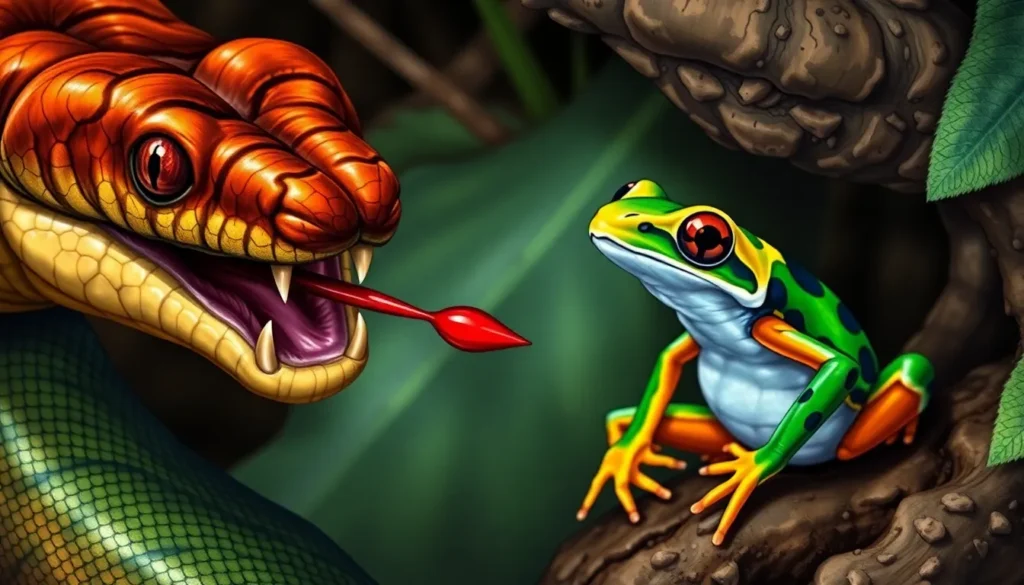
- Not all venomous animals are poisonous, and vice versa. For instance, a rattlesnake is venomous but not poisonous, while a poison dart frog is poisonous but not venomous.
- Venom composition is highly specialized and varies widely. It can contain proteins, peptides, and other compounds adapted to target specific physiological systems.
- Some animals are both venomous and poisonous. The slow loris is venomous via a bite and also secretes toxic compounds from its glands.
- Venom delivery mechanisms have evolved independently multiple times. Various animal groups developed fangs, stingers, or spines to inject venom for survival advantages.
- Poisonous animals often advertise their toxicity through bright colors. This aposematism warns predators of their harmful nature, as seen in many poison dart frogs and monarch butterflies.
- Some venomous animals use venom for defense only. The honeybee and some scorpions inject venom primarily to defend themselves rather than to capture prey.
- Venom can be used for competition within species. Certain male spiders inject venom to subdue rivals during mating contests.
- Humans have long studied venom for medical applications. Venoms are researched for potential use in painkillers, blood pressure medications, and clotting agents.
- Many venomous animals have complex venom glands and delivery anatomy. For example, snakes possess venom glands connected to hollow fangs specialized for injection.
- Poisonous animals often sequester toxins from their diet. Some poison dart frogs acquire toxins by eating certain insects, making them poisonous only in the wild.
- Venom toxicity can vary depending on the animal’s age or season. Some snakes produce more potent venom during mating seasons or as they mature.
- Venomous animals often have warning behaviors. Rattlesnakes rattle and some scorpions raise their tails before striking to deter threats.
- Some animals use venom for digestion. The Gila monster injects venom to help break down prey tissues before consumption.
- Venom can cause a range of effects from mild irritation to death. The specific symptoms depend on venom composition and quantity injected.
- Poisonous animals may rely on toxins for microbial defense. Some amphibians and insects produce toxins that prevent fungal or bacterial infections.
- Venom and poison represent evolutionary adaptations for survival. Both mechanisms provide distinct advantages in feeding strategies, defense, and competition in diverse ecological niches.
Habitat and Behavior
Venomous and poisonous animals inhabit a wide range of environments, including terrestrial, aquatic, and arboreal ecosystems. Venomous snakes are often found in forests, deserts, and grasslands, where they use venom to capture prey and deter predators. Poisonous animals, such as certain frogs and insects, may live in tropical rainforests or freshwater habitats, relying on their toxicity as a chemical defense. Behavioral adaptations include warning displays, such as coloration or sounds, and active use of venom in hunting or defense. Survival strategies vary widely, with some animals employing camouflage combined with venom, while others use bright warning colors to advertise their poisonous nature.
Why This Animal Matters
Venomous and poisonous animals play crucial roles in their ecosystems. Venomous predators help control prey populations, maintaining ecological balance. Poisonous species contribute to food web dynamics by deterring predation and influencing predator behavior. Many venomous animals have cultural significance in human societies, often symbolizing danger or healing, and their venoms contribute to biomedical research. Conservation of these animals is important as they face threats from habitat loss, climate change, and human encroachment. Protecting venomous and poisonous species helps preserve biodiversity and supports ongoing scientific discoveries related to their unique chemical compounds.
Common Misconceptions
Misconception: All poisonous animals are venomous.
Correction: Poisonous animals are toxic when touched or eaten, whereas venomous animals inject toxins via bites or stings. The two are distinct mechanisms.
Misconception: Venom is always deadly to humans.
Correction: While some venoms can be fatal, many are only harmful or cause mild symptoms. The effect depends on venom type, dose, and victim’s response.
FAQ
What is the main difference between venom and poison?
Venom is a toxin that is actively delivered into another organism via a bite or sting, whereas poison is a toxin that causes harm when the organism is touched or ingested.
Can an animal be both venomous and poisonous?
Yes, some animals, such as the slow loris, possess venomous capabilities through bites and are also poisonous through toxic secretions.
Are all venomous animals dangerous to humans?
Not all venomous animals pose a significant threat to humans; the danger depends on the venom's potency, the amount delivered, and the victim's susceptibility.
Leave a Reply