
Short Answer
21 Facts About Red Slender Lorises
- Distinctive Red Fur
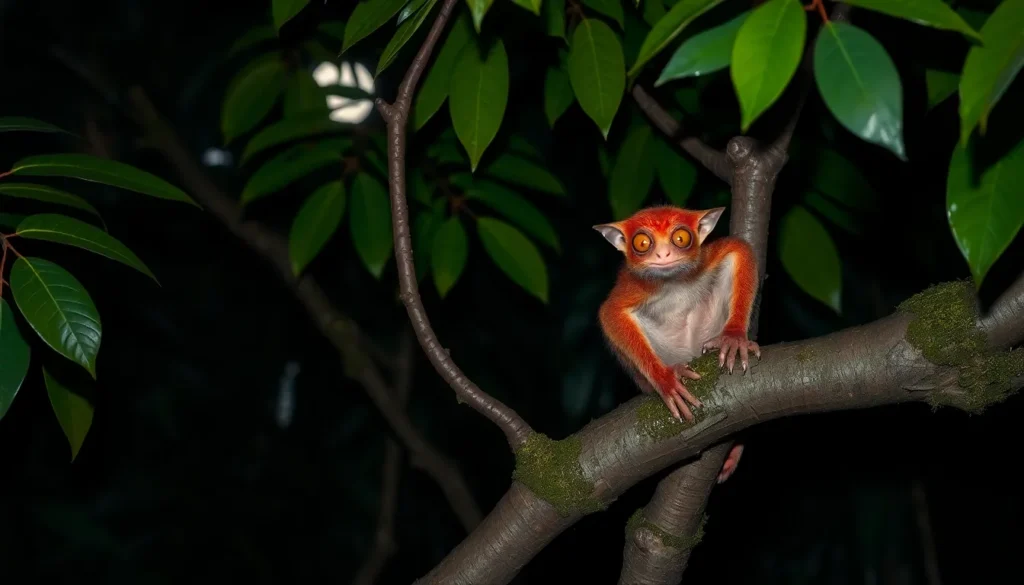
The red slender loris is characterized by its reddish-brown fur, which differentiates it from other loris species with grayer coats. - Small Size
Adults typically weigh between 85 and 265 grams, making them one of the smaller primates in their habitat. - Nocturnal Activity
They are primarily active at night, using their excellent night vision to forage and avoid predators. - Arboreal Lifestyle
Red slender lorises live almost exclusively in trees, moving slowly and deliberately to navigate branches. - Slow Movement
They exhibit slow, careful movements that help them remain inconspicuous to both prey and predators. - Diet
They are insectivorous and omnivorous, feeding on insects, small birds, fruits, and occasionally small reptiles. - Specialized Hands
Their hands have a strong grip with opposable thumbs, aiding in grasping branches and catching prey. - Large Eyes
Adapted for nocturnal vision, their large forward-facing eyes enhance depth perception and low-light sight. - Social Behavior
Though often solitary, red slender lorises sometimes form small social groups, especially mothers with offspring. - Communication
They use a combination of vocalizations, scent marking, and facial expressions to communicate. - Reproductive Cycle
Females typically give birth to one or two offspring after a gestation period of about 170 days. - Lifespan
In the wild, red slender lorises can live up to 15 years, though data is limited. - Habitat Range
They are native primarily to the wet forests of Sri Lanka and some parts of southern India. - Conservation Status
The species is classified as Vulnerable due to habitat loss and fragmentation. - Camouflage
The red fur helps them blend with the reddish-brown leaves and tree bark in their forest environment. - Predators
Natural predators include snakes, owls, and some carnivorous mammals. - Ecological Role
As insect predators, they help control insect populations, contributing to forest health. - Slow Metabolism
Their slow movement corresponds with a low metabolic rate, conserving energy in dense forest environments. - Threats from Human Activity
Habitat destruction and capture for the pet trade pose significant threats to their populations. - Scientific Research
Studies focus on their unique locomotion, sensory adaptations, and social behaviors to understand primate evolution. - Cultural Significance
In some local cultures, they are considered symbols of good luck or spiritual guardians.
Habitat and Behavior
The red slender loris inhabits tropical rainforests and moist deciduous forests mostly in Sri Lanka, with some populations in the Western Ghats of India. It prefers dense, undisturbed forest areas with abundant canopy cover, which provides both food and protection. Being arboreal, it rarely descends to the ground, instead relying on slow, deliberate movements to navigate through tree branches. Their nocturnal nature means they are active after dusk and before dawn, which helps them avoid many diurnal predators. Their diet mainly consists of insects, small vertebrates, and some plant material, which they forage carefully using their sensitive hands and keen eyesight. Social interactions are limited but important, especially between mothers and their young, and occasional adult interactions involve scent marking and soft vocalizations.
Why This Animal Matters
The red slender loris plays a crucial role in its ecosystem by controlling insect populations and acting as prey for larger predators, thus contributing to the forest food web. Its presence is an indicator of forest health and biodiversity. Conservation of this species helps protect broader forest habitats that are vital for many other plants and animals. Additionally, the red slender loris has significance in local cultures and traditions, sometimes viewed as a symbol of luck or spiritual importance. Scientific interest in their specialized adaptations, such as their slow locomotion and nocturnal vision, provides insights into primate evolution and biodiversity.
Common Misconceptions
Misconception: Red slender lorises are aggressive animals.
Correction: They are generally shy and slow-moving, avoiding confrontation and rarely displaying aggressive behavior.
Misconception: They can be kept easily as exotic pets.
Correction: Red slender lorises have specialized dietary and habitat needs that make them unsuitable and often illegal as pets; keeping them harms wild populations.
FAQ
What do red slender lorises eat?
Red slender lorises primarily eat insects, but their diet also includes small birds, reptiles, fruits, and flowers, making them omnivorous.
Are red slender lorises endangered?
Yes, they are classified as Vulnerable mainly due to habitat loss, fragmentation, and illegal capture for the pet trade.
Can red slender lorises be kept as pets?
No, they have specialized habitat and dietary needs that are difficult to meet in captivity, and capturing them threatens wild populations.

Leave a Reply