
Short Answer
21 Facts About Binturongs (Bearcats)
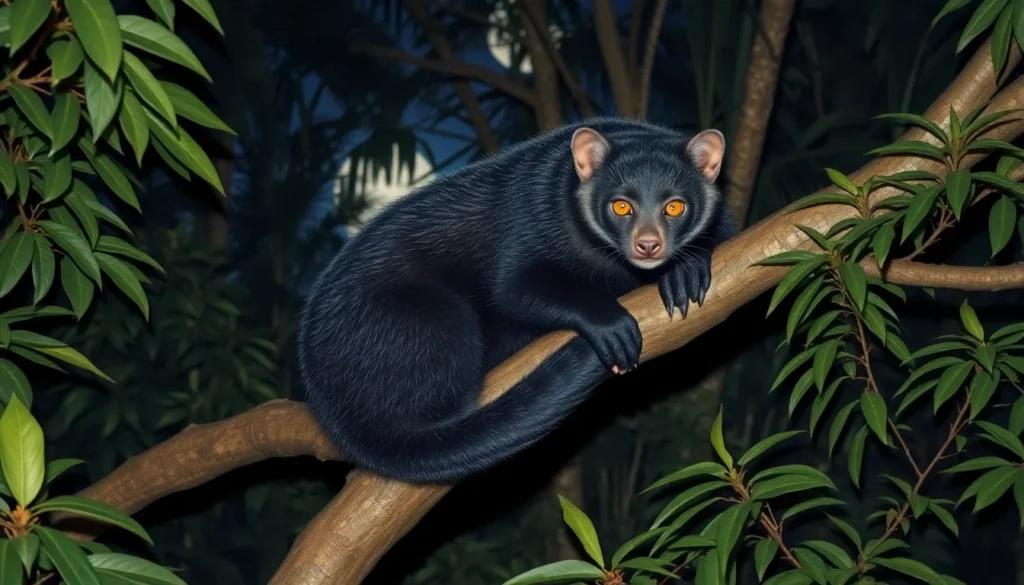
- Binturongs are not cats or bears. Despite their common name “bearcat,” binturongs belong to the Viverridae family, which includes civets and genets, and are neither bears nor cats.
- They have a prehensile tail. Binturongs use their long, muscular tails to grasp branches, aiding their arboreal lifestyle in dense forests.
- Their fur smells like popcorn. Binturongs produce a scent reminiscent of buttered popcorn, due to a chemical compound called 2-AP found in their scent glands.
- They are primarily nocturnal. Most of their activity occurs at night, which helps them avoid predators and human disturbances.
- Binturongs are omnivores. Their diet includes fruits, small animals, birds, insects, and carrion, showing their dietary adaptability.
- They play a role in seed dispersal. By eating fruits and excreting seeds, binturongs contribute to forest regeneration and plant diversity.
- They have a slow reproductive rate. Females typically give birth to one or two offspring after a gestation period of about 90 days.
- Binturongs communicate using scent marking. They have scent glands near the anus and on their chest that they use to mark territory and communicate with others.
- They are excellent climbers. Their strong limbs, curved claws, and prehensile tail make them adept at navigating forest canopies.
- Binturongs have a distinctive vocalization. They produce a variety of sounds, including chuckles, hisses, and growls, which serve different communicative purposes.
- They are native to Southeast Asia. Their range includes countries like Indonesia, Malaysia, Thailand, and the Philippines.
- Binturongs are considered vulnerable. Habitat loss, hunting, and the illegal pet trade threaten their populations in the wild.
- Their scientific name is Arctictis binturong. The genus name means “bear-weasel,” referring to their bear-like appearance and viverrid family ties.
- Binturongs have slow metabolism. Their energy needs are lower compared to similar-sized mammals, which suits their slow-paced movement.
- They are solitary animals. Outside of mating and rearing young, binturongs tend to live alone rather than in groups.
- Their eyes have a reflective layer. The tapetum lucidum enhances night vision, facilitating nocturnal activity.
- Binturongs have a strong sense of smell. Their olfactory capabilities are important for finding food and detecting other animals.
- They have unique grooming behaviors. Binturongs use their teeth and claws to groom their fur, which helps remove parasites and maintain coat health.
- Their size can be substantial. Adults typically weigh between 9 to 20 kilograms (20 to 44 pounds) and can reach lengths of up to 90 centimeters (3 feet), excluding the tail.
- They contribute to the cultural folklore. Some indigenous communities regard binturongs as symbols or incorporate them into traditional stories.
- Binturongs have been studied for conservation. Research efforts focus on understanding their ecology and mitigating threats to ensure their survival.
Habitat and Behavior
Binturongs inhabit tropical rainforests, dense bamboo thickets, and secondary forests in Southeast Asia. They are mostly arboreal, spending a significant amount of time in trees where their prehensile tail and strong limbs aid movement. Their nocturnal behavior helps reduce competition and predation risks. Binturongs are solitary except during mating or when females care for their young. As omnivores, they adapt their diet seasonally, consuming various fruits, small vertebrates, insects, and eggs. Their scent marking is crucial for communication and territoriality, and their vocalizations serve social and defensive functions.
Why This Animal Matters
Binturongs play an important ecological role in seed dispersal, which supports forest regeneration and biodiversity maintenance. By consuming fruits and passing seeds through their digestive system, they aid in the propagation of many tree species. Their presence indicates the health of tropical forest ecosystems. Additionally, binturongs hold cultural significance in certain local traditions and folklore. From a conservation perspective, they highlight the challenges faced by wildlife due to deforestation and human encroachment, making their protection a priority for biodiversity preservation in Southeast Asia.
Common Misconceptions
Misconception: Binturongs are closely related to bears or cats.
Correction: Binturongs belong to the Viverridae family, which is more closely related to civets and genets rather than bears or cats.
Misconception: They are aggressive and dangerous animals.
Correction: Binturongs are generally shy and avoid humans, using vocalizations and scent marking to communicate rather than aggression.
FAQ
Are binturongs related to bears or cats?
No, binturongs are neither bears nor cats. They belong to the Viverridae family, which is more closely related to civets and genets.
What do binturongs eat?
Binturongs have an omnivorous diet that includes fruits, small animals, birds, insects, and occasionally carrion.
Why do binturongs smell like popcorn?
Binturongs produce a distinctive scent similar to buttered popcorn due to a chemical compound called 2-acetyl-1-pyrroline in their scent glands.


Leave a Reply