
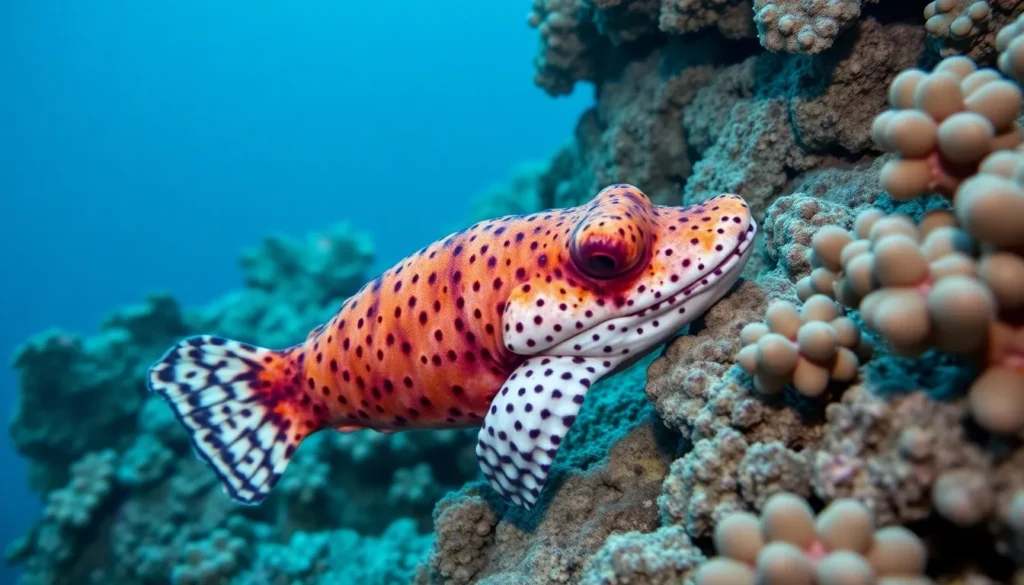
Short Answer
21 Facts About Cuttlefish
- Cuttlefish belong to the class Cephalopoda. They are closely related to squids, octopuses, and nautiluses, sharing traits such as bilateral body symmetry and advanced nervous systems.
- They possess an internal shell called the cuttlebone. This porous structure provides buoyancy control in the water column.
- Cuttlefish can change their skin color rapidly. Specialized cells called chromatophores allow them to display complex patterns for communication and camouflage.
- Beyond color, cuttlefish can alter their skin texture. They use papillae to create bumps and ridges, enhancing their ability to blend into surroundings.
- They have highly developed eyes. Cuttlefish eyes can detect polarized light and have a unique W-shaped pupil that enhances contrast detection.
- Cuttlefish are carnivorous predators. Their diet mainly includes small fish, crabs, shrimp, and other mollusks.
- They use a specialized feeding mechanism. Their tentacles rapidly shoot out to capture prey and bring it to their beak-like jaws.
- Cuttlefish exhibit complex mating behaviors. Males perform dynamic displays to attract females and may engage in mate guarding or sneaky mating tactics.
- They have a relatively short lifespan. Most species live from one to two years, maturing quickly and dying shortly after reproduction.
- Cuttlefish communicate with visual signals. Rapid changes in skin color and patterns can convey information about mood, intentions, or warnings.
- They are capable of learning and problem-solving. Studies suggest cuttlefish can remember past events and adapt their hunting strategies accordingly.
- Cuttlefish ink serves as a defense mechanism. They release a dark cloud to confuse predators and facilitate escape.
- The size of cuttlefish varies by species. Some are as small as a few centimeters while others can grow to over 50 centimeters in length.
- Cuttlefish are found primarily in shallow marine waters. Many species inhabit seagrass beds, coral reefs, and sandy or muddy sea floors.
- The cuttlefish’s brain-to-body ratio is among the highest of invertebrates. This supports their complex behaviors and advanced sensory capabilities.
- Cuttlefish have a unique method of locomotion. They use fin undulations and jet propulsion to move swiftly through water.
- They have three hearts. Two pump blood to the gills, and one circulates blood to the rest of the body.
- Cuttlefish blood contains hemocyanin. This copper-based molecule transports oxygen and gives their blood a blue color.
- Cuttlefish play an important role in marine food webs. They are both predators and prey, supporting populations of larger fish, marine mammals, and humans.
- Some cuttlefish species are commercially fished. They are valued as food in many cultures, particularly in Mediterranean and Asian cuisines.
- Climate change and habitat loss pose challenges. Ocean warming and pollution may impact cuttlefish populations and their ecosystems.
Habitat and Behavior
Cuttlefish inhabit diverse marine environments, primarily in shallow coastal waters. They are commonly found in temperate and tropical seas around the world, often favoring seagrass beds, coral reefs, and sandy or muddy substrates where they can hide and hunt. Their remarkable ability to change color and texture helps them avoid predators and successfully ambush prey. Behaviorally, cuttlefish are solitary animals except during mating seasons when males compete for females with elaborate displays. They are active hunters, using their keen eyesight and rapid tentacle strikes to capture crustaceans, small fish, and other mollusks. Cuttlefish also display advanced problem-solving abilities and can learn from experience, making them one of the more cognitively sophisticated invertebrates. Their locomotion combines gentle fin undulations for slow movement and jet propulsion for quick bursts of speed.
Why This Animal Matters
Cuttlefish are ecologically significant as both predators and prey in marine food webs, impacting populations of smaller organisms and serving as food for larger species including fish, sharks, and marine mammals. Their advanced camouflage abilities have inspired scientific research into materials science and adaptive technologies. Culturally, cuttlefish have been utilized by humans for centuries, both as a source of food and for the cuttlebone, which is used as a calcium-rich dietary supplement for pets like birds. Conservation concerns have arisen due to habitat degradation, overfishing, and climate change, highlighting the need to understand and protect these unique cephalopods to preserve marine biodiversity and ecosystem health.
Common Misconceptions
Misconception: Cuttlefish are fish.
Correction: Despite their name, cuttlefish are cephalopod mollusks, not fish. They are related to squids and octopuses.
Misconception: Cuttlefish ink permanently harms predators.
Correction: The ink is a temporary defense mechanism that obscures predators’ vision, allowing cuttlefish to escape but does not cause lasting harm.
Misconception: All cuttlefish live in deep ocean waters.
Correction: Most cuttlefish species live in shallow coastal waters, often near reefs or seagrass beds.
Misconception: Cuttlefish camouflage is only for hiding.
Correction: While camouflage helps avoid predators, cuttlefish also use color changes to communicate and attract mates.
FAQ
How do cuttlefish change their color?
Cuttlefish change color using specialized skin cells called chromatophores, leucophores, and iridophores that expand or contract to display different pigments and reflect light differently. This process allows them to create rapid and complex color changes for camouflage and communication.
Are cuttlefish dangerous to humans?
Cuttlefish are generally not dangerous to humans. They are shy, non-aggressive animals that use ink and camouflage to evade threats rather than attack. However, like other cephalopods, they have a beak that can deliver a bite if handled improperly.
Why do cuttlefish have a cuttlebone?
The cuttlebone is an internal, porous structure that helps cuttlefish regulate buoyancy. By adjusting the gas-to-liquid ratio inside the cuttlebone, they can maintain neutral buoyancy and move efficiently through the water.


Leave a Reply