
Short Answer
21 Facts About Yellow-bellied Sea Snakes
- Widest Distribution: Yellow-bellied sea snakes have the broadest geographical range of any sea snake, found throughout tropical ocean waters globally, including the Pacific and Indian Oceans.
- Scientific Name: Their scientific name is Hydrophis platurus, which places them in the family Elapidae, known for venomous species.
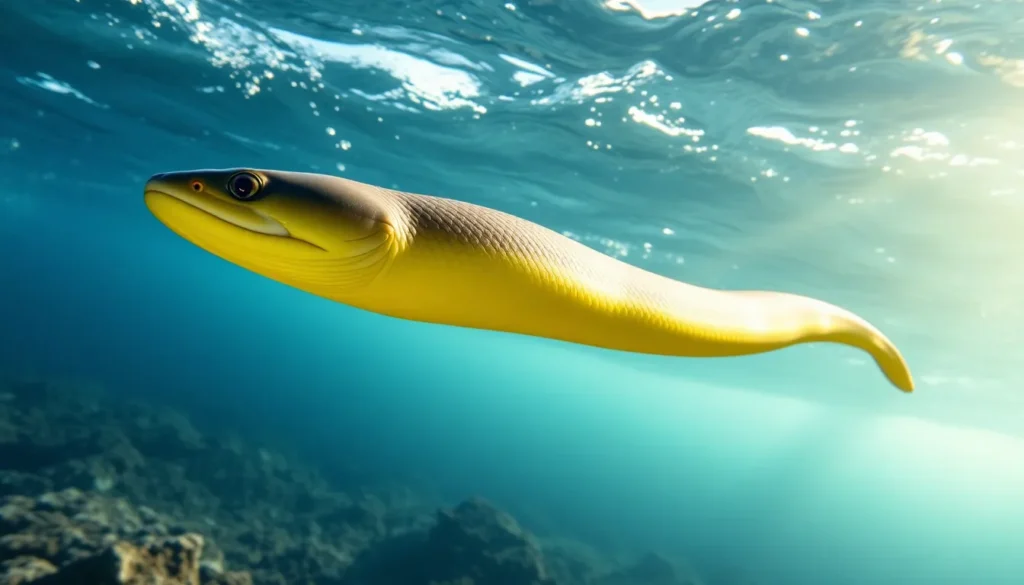
- Distinctive Coloration: They are named for their bright yellow underside contrasted with a darker top side, which can range from black to brown.
- Fully Aquatic: Unlike many sea snakes, yellow-bellied sea snakes are completely aquatic and rarely come onto land.
- Size: Adults typically reach lengths of 70 to 90 centimeters (about 2.3 to 3 feet), making them medium-sized sea snakes.
- Venomous Nature: They possess potent neurotoxic venom used primarily to immobilize prey, though they are generally not aggressive toward humans.
- Diet: Their diet mainly consists of small fish and fish larvae caught near the ocean surface.
- Breathing Adaptations: Yellow-bellied sea snakes can hold their breath for extended periods and surface regularly to breathe air through lungs.
- Salt Excretion: They have specialized salt glands that help excrete excess salt from their bodies, an adaptation to living in marine environments.
- Reproduction: They are ovoviviparous, giving birth to live young rather than laying eggs, which is common among fully aquatic snakes.
- Behavior: Typically solitary except during mating, they spend much of their time floating or swimming at the ocean surface.
- Locomotion: Their laterally flattened, paddle-like tails enable efficient swimming in open water.
- Predators: Natural predators include large fish, sea birds, and occasionally sharks.
- Role in Ecosystem: They help control populations of small fish, maintaining balance in marine food webs.
- Surface Orientation: They often float with their head raised above water, using the yellow belly as camouflage from predators below.
- Temperature Regulation: As ectotherms, they regulate body temperature through behavior, such as basking near the surface.
- Conservation Status: Currently, they are not listed as threatened, due to their wide distribution and adaptability.
- Human Interaction: Although venomous, bites are rare and usually occur when the snake is handled or provoked.
- Research Importance: Studies on their venom have contributed to understanding neurotoxins and potential medical applications.
- Unique Among Sea Snakes: They are one of the only sea snakes that spend their entire life fully at sea, never needing land for reproduction.
- Floating Behavior: They can remain afloat for long periods, sometimes in large groups, drifting with ocean currents.
Habitat and Behavior
Yellow-bellied sea snakes inhabit warm tropical and subtropical ocean waters, including coastal regions, open seas, and sometimes estuaries. Their extensive range spans from the eastern coast of Africa, across the Indian Ocean, to the Pacific Ocean near Central and South America. These snakes are highly adapted to aquatic life, possessing paddle-shaped tails for swimming and specialized salt glands for osmoregulation. They are often seen floating on the ocean surface, using their coloration as camouflage against predators from above and below. Their feeding behavior involves hunting small fish near the surface, relying on their venom to immobilize prey quickly. Reproductively, they are ovoviviparous, giving birth to live young in the water, which is rare among snakes and uniquely suited to their marine lifestyle.
Why This Animal Matters
The yellow-bellied sea snake plays a vital ecological role as both predator and prey in marine ecosystems. By feeding on small fish, they help maintain the balance of fish populations, contributing to healthy ocean biodiversity. Their venom has scientific significance, as it contains neurotoxins that have been studied for potential medical uses, including treatments for neurological disorders. Additionally, their widespread distribution and adaptability make them important indicators of ocean health and environmental change. Although generally not harmful to humans, their presence also highlights the diversity of marine life and the evolutionary adaptations required for survival in ocean habitats.
Common Misconceptions
Misconception: Yellow-bellied sea snakes are aggressive and frequently attack humans.
Correction: These snakes are generally shy and avoid human contact. Bites are rare and typically occur only when the snake is provoked or handled.
Misconception: All sea snakes come onto land to lay eggs.
Correction: Yellow-bellied sea snakes are fully aquatic and give birth to live young at sea, never needing to leave the water for reproduction.
FAQ
Are yellow-bellied sea snakes dangerous to humans?
While yellow-bellied sea snakes possess potent venom, they are generally not aggressive and bites to humans are rare, typically occurring only when the snake is provoked or handled.
How do yellow-bellied sea snakes reproduce?
They are ovoviviparous, meaning females give birth to live young in the water rather than laying eggs on land.
Where are yellow-bellied sea snakes found?
They are found widely across tropical ocean waters, including the Indian and Pacific Oceans, often near coastlines and open sea surfaces.


Leave a Reply