
Short Answer
21 Facts About Vervet Monkeys
- Scientific Classification: Vervet monkeys belong to the genus Chlorocebus and the species Chlorocebus pygerythrus.
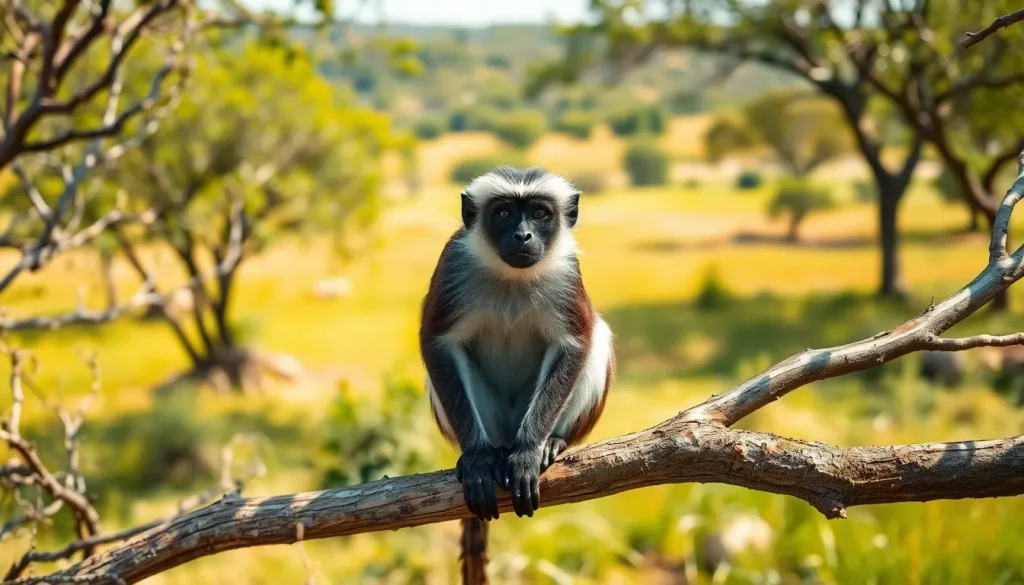
- Physical Appearance: They have a distinctive black face with white fringe fur and a greenish-olive or gray body coat.
- Size and Weight: Adult vervet monkeys typically weigh between 3.5 to 5 kilograms (7.7 to 11 pounds) and measure about 40 to 60 cm in body length, excluding the tail.
- Tail Characteristics: Their tails are long, often longer than their bodies, and are used for balance.
- Geographical Range: Vervet monkeys are found widely across eastern and southern Africa, from Senegal and Ethiopia to South Africa.
- Habitat Preferences: They inhabit savannas, riverine forests, woodlands, and mountainous areas, adapting well to various environments.
- Dietary Habits: Vervets are omnivores, feeding on fruits, leaves, seeds, flowers, insects, and occasionally small vertebrates.
- Social Structure: They live in troops ranging from 10 to over 50 individuals with complex social hierarchies led by dominant males.
- Communication: Vervet monkeys use a variety of vocalizations, facial expressions, and body postures to communicate within their groups.
- Alarm Calls: They have specific alarm calls for different predators such as leopards, eagles, and snakes, indicating a high level of predator awareness.
- Territorial Behavior: These monkeys mark and defend their home ranges, but troop territories often overlap.
- Reproduction: Females typically give birth to a single offspring after a gestation period of about 165 days.
- Infant Care: Infant vervets are nurtured by their mothers and other troop members, with extended social learning periods.
- Lifespan: In the wild, vervet monkeys can live up to 12 years, while in captivity they may live longer.
- Predators: Natural predators include large birds of prey, snakes, leopards, and other carnivores.
- Adaptability: Vervets can live near human settlements and sometimes raid crops, leading to human-wildlife conflicts.
- Research Importance: They are often studied in behavioral ecology, neuroscience, and primatology due to their complex social systems.
- Conservation Status: Currently, vervet monkeys are classified as Least Concern by the IUCN, but habitat loss and hunting pose localized threats.
- Ecological Role: As seed dispersers and prey species, vervets play an important role in maintaining ecosystem balance.
- Unique Adaptations: Their ability to produce distinct alarm calls for different predators is considered an example of proto-language use in non-human primates.
- Interaction with Humans: In some cultures, vervet monkeys hold symbolic value, but they are also sometimes perceived as pests.
Habitat and Behavior
Vervet monkeys are native to a broad range of habitats across sub-Saharan Africa, including savannas, woodlands, and riverine forests. They are highly adaptable, able to thrive in both natural and human-altered environments. Typically, vervets live in social groups known as troops, which can include multiple adult males, females, and their offspring. These troops maintain complex social hierarchies, with dominant males often controlling access to resources and mating opportunities. Vervets are diurnal and spend a large part of their day foraging for fruits, leaves, insects, and small animals. Their communication is sophisticated, incorporating distinct alarm calls to warn group members about specific predators. This ability enhances group survival by eliciting appropriate defensive behaviors. Vervet monkeys also engage in social grooming, which reinforces social bonds and reduces tension within troops. Although arboreal, they spend considerable time on the ground and are skilled climbers and jumpers.
Why This Animal Matters
Vervet monkeys play a crucial ecological role as seed dispersers, contributing to the regeneration of various plant species within their habitats. As prey for larger carnivores and birds of prey, they form an integral part of the food web. From a scientific perspective, vervets have been extensively studied for their social behaviors, communication, and cognitive abilities, offering insights into primate evolution and the origins of human language. Their alarm call system is particularly significant in understanding non-human primate communication. Culturally, vervet monkeys feature in local folklore and traditional beliefs in parts of Africa. Conservation-wise, while currently not endangered, they serve as indicators of environmental health and biodiversity. Their interactions with humans highlight the complexities of wildlife conservation in regions experiencing habitat encroachment and agricultural expansion.
Common Misconceptions
Misconception: Vervet monkeys are aggressive and dangerous to humans.
Correction: While vervet monkeys can defend themselves if threatened, they generally avoid confrontation with humans. Aggression is usually limited to defense of territory or food resources.
Misconception: Vervet monkeys are pests that only cause problems for farmers.
Correction: Although vervets sometimes raid crops, they also provide ecological benefits such as seed dispersal and insect population control. Human-wildlife conflict arises mainly due to habitat loss and fragmentation.
FAQ
Where do vervet monkeys live?
Vervet monkeys are native to eastern and southern Africa, inhabiting savannas, woodlands, riverine forests, and sometimes mountainous areas.
What do vervet monkeys eat?
They have an omnivorous diet that includes fruits, leaves, seeds, flowers, insects, and occasionally small vertebrates.
How do vervet monkeys communicate?
Vervet monkeys use a variety of vocalizations, facial expressions, body postures, and distinct alarm calls to convey information about predators and social interactions.






Leave a Reply