
Short Answer
21 Facts About Numbats
- Numbats are marsupials: Unlike placental mammals, numbats carry their young in a pouch after birth, a characteristic feature of marsupials native to Australia and nearby regions.
- They primarily eat termites: Numbats have a specialized diet consisting almost exclusively of termites, consuming up to 20,000 termites a day.
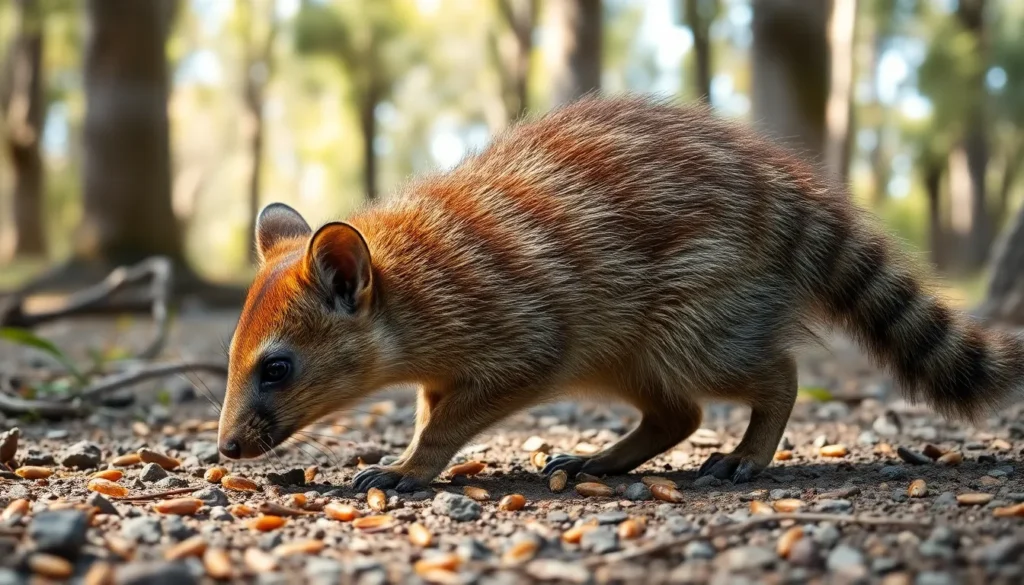
- Distinctive striped coat: Their reddish-brown fur with white stripes across the back helps camouflage them in their natural habitat.
- Termite foraging behavior: Numbats use their long, sticky tongues to extract termites from narrow tunnels and crevices.
- Diurnal activity: Unlike many marsupials, numbats are active during the day, which is relatively unusual for small Australian mammals.
- Small size: Adult numbats typically measure about 35 centimeters (14 inches) in length, including their bushy tails.
- Tail function: Their bushy tails are believed to aid in balance and act as a visual signal to other numbats.
- Solitary animals: Numbats tend to be solitary outside of the breeding season, maintaining individual territories.
- Limited geographic range: Wild numbats are found mainly in southwestern Australia in areas of eucalyptus woodland and shrubland.
- Specialized teeth: Numbats have small, peg-like teeth adapted to crush termites rather than for chewing plants or meat.
- Short digestive tract: Their digestive system is adapted for processing large quantities of termites efficiently.
- Predation threats: Introduced predators such as foxes and feral cats have significantly impacted numbat populations.
- Conservation status: Numbats are classified as endangered due to habitat loss and predation, with conservation efforts underway to protect them.
- Breeding season: Mating usually occurs during the Australian summer, with females giving birth to several underdeveloped young.
- Young development: Newborn numbats are tiny and undeveloped and continue growing in the mother’s pouch for several months.
- Communication: Numbats use scent marking and vocalizations to communicate with other individuals.
- Evolutionary history: Numbats belong to the family Myrmecobiidae and represent a unique evolutionary lineage among marsupials.
- Termite specialist: Unlike many insectivores, numbats focus almost exclusively on termites, avoiding other insects.
- Low body fat: Due to their active lifestyle and diet, numbats have relatively low body fat compared to other mammals.
- Thermoregulation: Numbats have adaptations to cope with the variable temperatures of their habitat, including seeking shade during the hottest parts of the day.
- Role in ecosystem: By controlling termite populations, numbats contribute to the balance of their ecosystem.
Habitat and Behavior
Numbats are native to the southwestern regions of Australia, where they inhabit eucalyptus woodlands and semi-arid shrublands. These areas provide ample termite populations, which are their primary food source. Numbats are diurnal foragers, actively searching for termites during the day using their keen sense of smell and sharp eyesight. They use their long, sticky tongues to probe termite galleries and extract prey. Numbats are solitary animals that maintain exclusive territories marked by scent glands. Their behavior includes sunbathing in the morning to warm up and seeking shelter during the hottest parts of the day to avoid heat stress. Numbats do not burrow extensively but use hollow logs and crevices for shelter and protection from predators.
Why This Animal Matters
Numbats play a significant ecological role by regulating termite populations, which helps maintain the health of their woodland ecosystems. Their specialized diet and behavior make them important bioindicators of environmental health. Culturally, numbats are emblematic of Australian wildlife and are often used in conservation symbolism to raise awareness about habitat protection and invasive species control. Due to their endangered status, numbats are the focus of various conservation programs that aim to protect and restore their populations through habitat preservation and predator management. These efforts highlight the broader importance of conserving Australia’s unique marsupial fauna.
Common Misconceptions
Misconception: Numbats are related to anteaters.
Correction: Despite their termite-eating habits and similar appearance, numbats are marsupials native to Australia, while anteaters are placental mammals found in the Americas, belonging to a completely different evolutionary lineage.
Misconception: Numbats are nocturnal.
Correction: Unlike many small marsupials, numbats are diurnal, meaning they are active during the day.
FAQ
What do numbats eat?
Numbats primarily eat termites and are highly specialized to consume large numbers of these insects daily using their long, sticky tongues.
Are numbats endangered?
Yes, numbats are classified as endangered due to habitat loss and predation by introduced species like foxes and feral cats.
Where do numbats live?
Numbats are native to southwestern Australia, inhabiting eucalyptus woodlands and shrublands where termites are abundant.



Leave a Reply