
Short Answer
21 Facts About Zorillas (African Skunks)
- Zorillas belong to the family Mustelidae. They are closely related to weasels, ferrets, and otters, sharing similar physical traits and behaviors.
- They are native to sub-Saharan Africa. Their range includes various countries south of the Sahara Desert, adapting to diverse habitats.
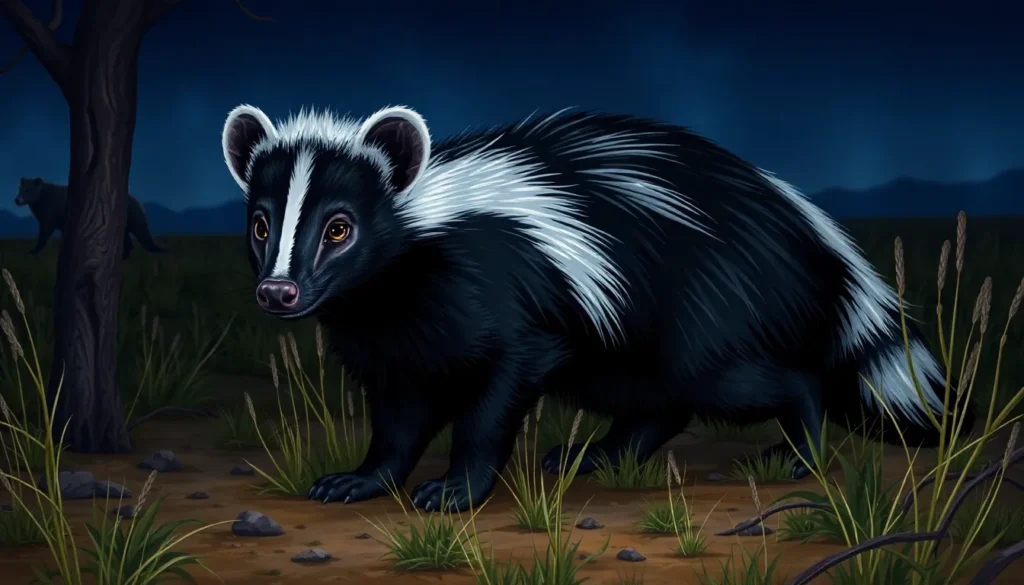
- Zorillas are sometimes called African skunks. This nickname arises from their resemblance in coloration and defensive spray to the American skunk, although they are not closely related.
- The scientific genus for zorillas is Ictonyx. There are two recognized species: the striped polecat (Ictonyx striatus) and the Saharan striped polecat (Ictonyx libycus).
- Zorillas have distinctive black and white coloration. Their fur pattern typically consists of broad white stripes against black fur, which serves as a warning to predators.
- They have a strong defensive spray. Similar to skunks, zorillas can eject a foul-smelling secretion from anal glands to deter potential threats.
- The spray can cause irritation. The secretion is known to cause temporary blindness and a strong burning sensation if it contacts eyes or mucous membranes.
- Zorillas are primarily nocturnal animals. They are most active at night when they hunt and forage.
- They are carnivorous and opportunistic feeders. Their diet includes small mammals, insects, amphibians, and birds, adapting to available prey.
- Zorillas have relatively short legs and a stocky build. This body shape aids in digging and navigating dense underbrush.
- They are solitary creatures. Zorillas mainly live and hunt alone, coming together only during mating season.
- Reproduction involves typically one to four offspring. After a gestation period of about 44 to 46 days, females give birth to kits that develop rapidly.
- Zorillas communicate through scent marking. They use their anal glands not only for defense but also for marking territory.
- Their fur has been used traditionally in African cultures. Some communities have utilized zorilla pelts for ceremonial purposes or clothing.
- Zorillas have few natural predators. Their potent spray and warning coloration help deter many would-be attackers.
- They are agile climbers but spend most time on the ground. While capable of climbing, zorillas prefer terrestrial habitats.
- Zorillas are known to be aggressive when threatened. They may hiss, stamp their feet, and raise their tails before spraying.
- Their habitat includes savannas, grasslands, and open forests. They avoid dense rainforest and desert extremes.
- Zorillas play an important role in controlling insect and rodent populations. By preying on these species, they help maintain ecological balance.
- They are not currently considered endangered. While some populations may be affected locally, zorillas generally have stable numbers.
- Research on zorillas remains limited compared to their American counterparts. Much of their behavior and ecology is still being studied to understand their role in African ecosystems.
Habitat and Behavior
Zorillas inhabit a variety of environments in sub-Saharan Africa, including savannas, grasslands, shrublands, and open woodlands. They prefer areas where they can find ample cover such as dense bushes, rocky crevices, or abandoned burrows. Although they can climb, zorillas spend most of their time on the ground. Being nocturnal, they emerge at night to forage for food, primarily hunting small mammals, insects, and birds. Their solitary nature means they establish and defend territories marked by scent. When threatened, they rely on their distinctive black and white warning coloration and potent spray for defense. Zorillas are generally aggressive when cornered, using hisses, foot stomping, and tail raising to warn predators before releasing their noxious secretion.
Why This Animal Matters
Zorillas contribute significantly to their ecosystems by controlling populations of insects and small vertebrates, which can be pests to agriculture and human settlements. Their presence indicates a healthy, balanced environment. Culturally, zorillas have been recognized in certain African traditions, with their fur sometimes used in rituals or clothing. From a conservation perspective, while they are not currently endangered, habitat loss and hunting pressures in some areas warrant monitoring. Studying zorillas also enriches scientific understanding of Mustelidae diversity and adaptation in African habitats, providing comparative insights alongside their North American skunk relatives.
Common Misconceptions
Misconception: Zorillas are the same species as American skunks.
Correction: Zorillas and American skunks are different species belonging to distinct genera. Although they share similar appearances and behaviors like spraying, they evolved separately.
Misconception: Zorillas are harmless and do not spray unless provoked.
Correction: While zorillas use their spray defensively, they can be aggressive when threatened and will readily spray to protect themselves.
FAQ
Are zorillas dangerous to humans?
Zorillas are not typically aggressive towards humans but will spray a foul-smelling liquid if threatened. The spray can cause irritation and temporary discomfort but is not lethal.
Do zorillas live in groups?
No, zorillas are solitary animals. They maintain individual territories and usually come together only for mating.
How do zorillas defend themselves?
Zorillas use a combination of warning coloration, aggressive behaviors like hissing and stamping, and a potent anal gland secretion to deter predators.



Leave a Reply