
Short Answer
21 Facts About Indri (Lemur)
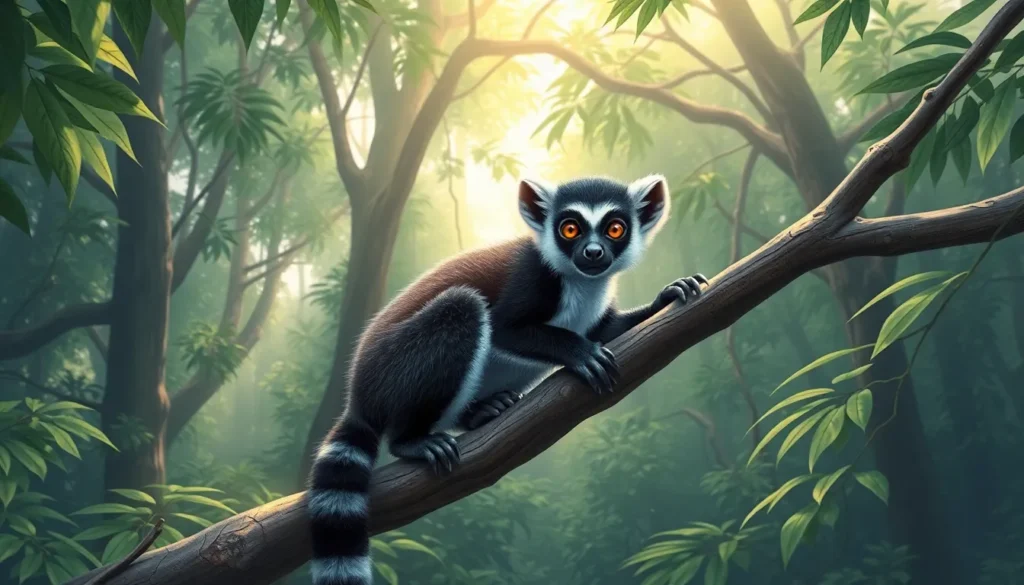
- Largest living lemur: The indri (Indri indri) is the largest extant lemur species, reaching up to 90 cm in length including its body and head.
- Distinctive vocalizations: Indris are famous for their loud, eerie calls that can be heard over long distances, used for communication and territory marking.
- Limited tail length: Unlike many lemurs, the indri has a very short tail, which is unusual among primates.
- Endemic to Madagascar: The indri is found only in the eastern rainforests of Madagascar.
- Herbivorous diet: Indris primarily feed on leaves, fruits, and flowers, relying on a specialized digestive system to process fibrous plant material.
- Monogamous social structure: Indris usually live in small family groups consisting of a mated pair and their offspring.
- Strong leapers: They have powerful hind legs enabling them to leap between trees, sometimes up to 10 meters in a single bound.
- Day-active primates: Indris are diurnal, being active during the day and resting at night.
- Vertical clinging and leaping locomotion: They move through the forest by clinging vertically to tree trunks and leaping across gaps.
- Low reproductive rate: Females typically give birth to a single infant every two to three years.
- Infant care: Indri infants cling to their mother’s belly for the first few weeks before riding on her back.
- Limited dispersal: Young indris often remain in their natal group until maturity.
- Threatened species: The indri is classified as critically endangered due to habitat destruction and hunting pressures.
- Habitat specialization: Prefers primary and mature secondary rainforests with dense canopy cover.
- Communication includes scent marking: Besides vocalizations, indris use scent glands to mark territory.
- Highly territorial: Groups defend their home ranges against neighboring groups.
- Short lifespan in the wild: Typically live up to 15 years in natural conditions.
- Important seed dispersers: By consuming fruits, indris help in forest regeneration.
- Unique evolutionary lineage: Indris belong to the family Indriidae, which is distinct from other lemur families.
- Cultural significance: In Malagasy culture, indris are often associated with spiritual beliefs and taboos against hunting them.
- Research subject: Indris have been studied extensively to understand primate communication and social behavior.
Habitat and Behavior
The indri inhabits the eastern rainforests of Madagascar, favoring dense, primary, and mature secondary forests. It is an arboreal species, spending most of its life in the canopy where it moves by vertical clinging and powerful leaping between tree trunks. Indris live in small, cohesive family groups typically composed of a monogamous breeding pair and their offspring. They are diurnal, active during the day, and rely heavily on vocal communication through their distinctive calls to maintain group cohesion and defend territories. Their diet mainly consists of leaves, fruits, and flowers, which they digest with the help of an enlarged cecum adapted for fermenting plant material. Reproduction is slow, with females giving birth to one offspring every two to three years. The species is highly territorial and uses both vocalizations and scent marking to communicate and mark boundaries.
Why This Animal Matters
The indri plays a vital ecological role as a seed disperser, contributing to the health and regeneration of Madagascar’s unique rainforest ecosystems. Its presence indicates a well-preserved forest habitat, making it an important species for conservation efforts. Culturally, the indri holds significance in Malagasy traditions, where it is often protected by taboos that discourage hunting. From a scientific perspective, the indri is valuable for studies on primate communication, social systems, and evolutionary biology. Conservation of the indri helps to preserve biodiversity and maintain ecological balance in one of the world’s most distinctive and threatened biomes.
Common Misconceptions
Misconception: Indris are monkeys.
Correction: Indris are lemurs, which are a type of prosimian primate distinct from monkeys. They belong to a different evolutionary branch.
Misconception: Indris have long tails like other lemurs.
Correction: Unlike many lemurs, indris have very short tails, which is one of their distinguishing physical characteristics.
FAQ
Where is the indri lemur found?
The indri is native exclusively to the eastern rainforests of Madagascar and is not naturally found anywhere else in the world.
What does the indri eat?
Indris are primarily herbivorous, feeding on leaves, fruits, and flowers that they find in their forest habitat.
Why is the indri considered critically endangered?
The indri is critically endangered due to habitat loss from deforestation and hunting pressures, leading to declining populations in the wild.


Leave a Reply