
Short Answer
21 Facts About Zonkeys
- Hybrid Origin: Zonkeys are the offspring of a zebra and a donkey, combining traits from both species.
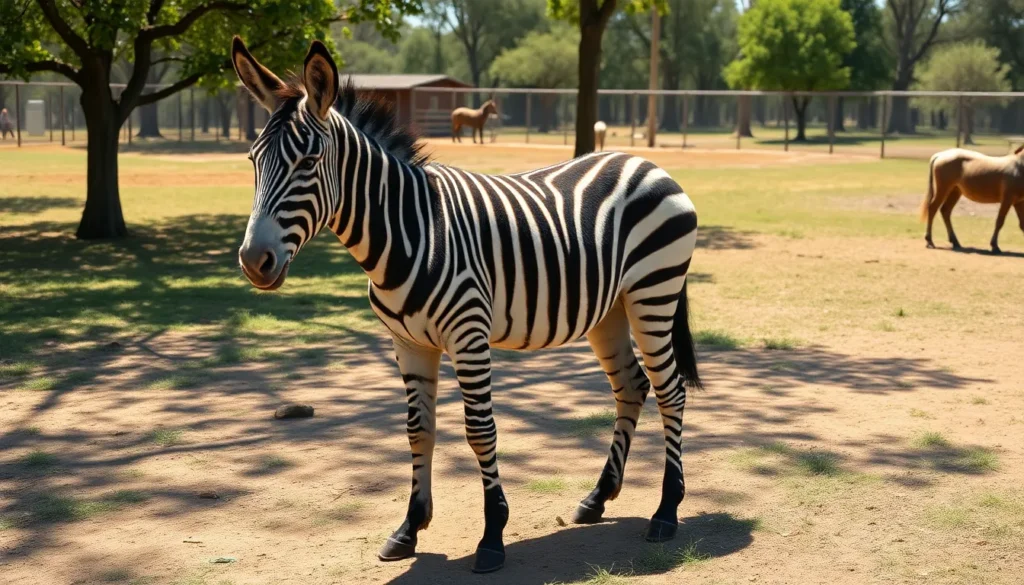
- Physical Appearance: They typically have the body shape of a donkey with distinct zebra-like stripes, especially on their legs and torso.
- Genetic Makeup: As interspecies hybrids, zonkeys possess chromosomes from both parents, but their chromosome number differs from either parent, often resulting in sterility.
- Sterility: Most zonkeys are sterile due to mismatched chromosome pairing, similar to many other hybrids like mules.
- Behavioral Traits: Zonkeys may exhibit a combination of donkey docility and zebra wariness or alertness.
- Size Variation: Their size can vary widely depending on the specific zebra and donkey breeds involved.
- Stripe Patterns: The extent and visibility of stripes can differ, with some zonkeys showing faint markings and others very bold stripes.
- Rare Occurrence: Zonkeys are rare in the wild due to geographical and behavioral differences between zebras and donkeys.
- Captive Breeding: Most zonkeys are bred in captivity, including zoos and private farms.
- Longevity: Zonkeys generally have lifespans similar to donkeys, often living 25 to 30 years under favorable conditions.
- Diet: Their diet mirrors that of donkeys and zebras, primarily grasses and other vegetation.
- Adaptability: Zonkeys can adapt to various climates but generally require care suited to domesticated equids.
- Communication: They use vocalizations and body language similar to donkeys and zebras.
- Use by Humans: Zonkeys have been used occasionally as pack animals or for riding, though their use is limited due to rarity and temperament.
- Reproductive Challenges: Fertility issues make it difficult to establish stable zonkey populations.
- Conservation Status: Neither zebras nor donkeys specifically protect zonkeys, as they are hybrids and not a naturally occurring species.
- Hybrid Vigor: Some zonkeys may demonstrate hybrid vigor, exhibiting traits like increased strength or disease resistance, though this is not universally documented.
- Historical Records: Zonkeys have been documented since the 19th century, primarily in captivity.
- Genetic Studies: Scientific research on zonkeys is limited but provides insight into hybridization and genetics in equids.
- Public Fascination: Zonkeys attract interest due to their unusual appearance and hybrid nature.
- Ethical Considerations: The breeding of zonkeys raises ethical questions regarding animal welfare and hybridization practices.
Habitat and Behavior
Zonkeys do not have a natural habitat as they are hybrids typically bred in captivity. Zebras are native to African savannas and grasslands, while donkeys have origins linked to African and Arabian wild asses and have been domesticated worldwide. The differing natural ranges and social behaviors of the parent species contribute to the rarity of zonkeys in the wild. In captivity, zonkeys are generally kept in environments suitable for donkeys and zebras, requiring adequate space, vegetation, and shelter. Behaviorally, zonkeys tend to be a blend of their parents; they may inherit the social tendencies and cautious nature of zebras combined with the hardiness and sometimes more docile attitude of donkeys. Their survival depends largely on human care because they lack a natural ecological niche and are usually sterile, preventing the establishment of wild populations.
Why This Animal Matters
While zonkeys do not hold a significant ecological role due to their hybrid and sterile nature, they are important in understanding hybridization processes among equids and the genetic barriers that maintain species boundaries. Culturally, zonkeys have captured public interest and curiosity, contributing to educational and scientific discussions about animal breeding, genetics, and biodiversity. Their unique appearance has also made them subjects in zoos and wildlife parks, where they can help raise awareness about the conservation of their parent species, many of which face threats in the wild. Moreover, zonkeys exemplify the complexities and ethical considerations involved in human-directed animal breeding.
Common Misconceptions
Misconception: Zonkeys are a naturally occurring species in the wild.
Correction: Zonkeys are hybrids typically bred in captivity and are rare in the wild due to differing habitats and behaviors of zebras and donkeys.
Misconception: Zonkeys can reproduce and form stable populations.
Correction: Most zonkeys are sterile because of genetic incompatibilities, making stable populations impossible to establish naturally.
Misconception: Zonkeys have zebra patterns all over their bodies.
Correction: Stripe patterns on zonkeys vary widely; some have stripes only on parts of their body, while others may have faint or partial striping.
Misconception: Zonkeys behave exactly like zebras.
Correction: Zonkeys exhibit a mix of behavioral traits inherited from both zebras and donkeys, which can affect their temperament and social interactions.
Misconception: Zonkeys are widely used as working animals.
Correction: Due to their rarity and hybrid status, zonkeys are not commonly used for work compared to donkeys or mules.
FAQ
Are zonkeys fertile?
Most zonkeys are sterile due to the differing number of chromosomes inherited from their zebra and donkey parents, which prevents normal reproductive cell formation.
Where can zonkeys be found?
Zonkeys are primarily found in captivity such as zoos, wildlife parks, and private farms, as they rarely occur naturally in the wild.
How do zonkeys differ from mules?
Zonkeys are hybrids of zebras and donkeys, while mules result from horses and donkeys. Both are usually sterile but differ in physical appearance and genetic makeup.
Leave a Reply