
Short Answer
21 Facts About Horses
- Horses have excellent memory. They can remember places, other horses, and humans for years, which helps in their social interactions and training.
- They sleep both standing up and lying down. Horses can doze while standing due to a unique locking mechanism in their legs but require lying down for deep REM sleep.
- Horses communicate through body language. Their ears, eyes, and nostrils express their mood, intentions, and reactions to their environment.
- They have nearly 360-degree vision. Their eyes are positioned on the sides of their heads, allowing them to see almost all around without moving.
- Horses are herbivores with a unique digestive system. They digest fibrous plant material efficiently through hindgut fermentation.
- The average horse’s heart weighs about 9 to 10 pounds (4 to 4.5 kg). This large heart supports their capacity for sustained exercise and speed.
- Horses have a gestation period of approximately 11 months. Foals are usually able to stand and walk within hours of birth.
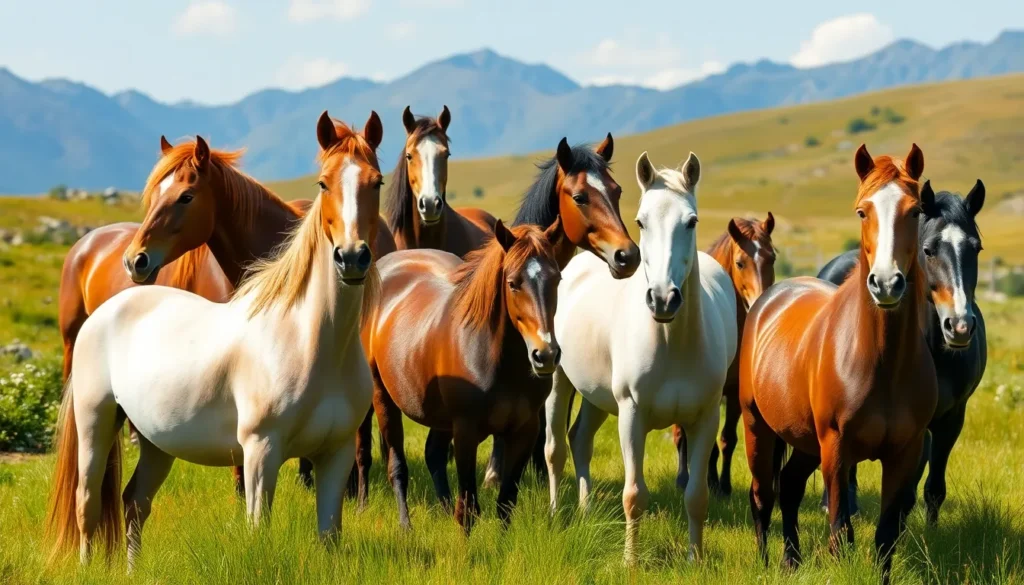
- There are over 300 different horse breeds worldwide. These breeds vary in size, color, and abilities, adapted to various climates and human needs.
- Horses have been domesticated for over 5,000 years. Their domestication revolutionized transportation, agriculture, and warfare.
- They are social animals that live in herds. Herd structure is important for their safety and social stability.
- Horses can run shortly after birth. This ability is crucial for survival in the wild to keep up with the herd and avoid predators.
- They have sensitive hearing and can rotate their ears about 180 degrees. This helps them detect sounds from different directions efficiently.
- Horses use their sense of smell for recognition and communication. They can smell predators, food, and other horses.
- A horse’s speed can reach up to 55 miles per hour (88 km/h) in short bursts. Thoroughbreds are among the fastest breeds.
- They have a highly developed sense of balance and coordination. This enables them to perform complex movements and navigate diverse terrains.
- Horses have unique hoof structures that require regular care. Their hooves are essential for movement and must be trimmed or shod by farriers.
- They form strong bonds with humans and other horses. These bonds can influence their behavior and training success.
- Horses communicate distress through vocalizations like neighing and whinnying. These sounds carry different meanings depending on context.
- They have a natural flight response to threats. This instinct helps them escape predators quickly.
- Horses have contributed significantly to human culture and development. They have been featured in art, religion, sports, and transportation throughout history.
- The color of a horse’s coat can change over time. Some breeds exhibit color changes as they age, such as graying.
Habitat and Behavior
Horses originally evolved in open grasslands and steppes, environments that favored their speed and stamina to evade predators. Today, domesticated horses live worldwide in a variety of habitats, including farms, ranches, and equestrian centers. Wild and feral horse populations inhabit grasslands, deserts, and mountainous regions. Horses are primarily grazing animals that feed on grasses and other plant materials. Their social structure typically involves living in herds that provide protection and social interaction. Behaviorally, horses rely on acute senses such as vision, hearing, and smell to detect dangers and communicate. Their flight response is a key survival mechanism, prompting rapid movement away from perceived threats. Horses also exhibit a range of social behaviors including grooming, play, and hierarchical interactions within the herd.
Why This Animal Matters
Horses hold ecological, cultural, and economic significance. Ecologically, they can influence vegetation patterns through grazing and serve as prey for some predators in wild ecosystems. Culturally, horses have shaped human history by enabling transportation, agriculture, and warfare, thus impacting societal development globally. They are central to many traditions, sports, and recreational activities. Conservation-wise, some wild horse populations face threats from habitat loss and competition, leading to efforts to manage and protect these animals. Horses also contribute to therapeutic practices and community programs that support human health and well-being.
Common Misconceptions
Misconception: Horses sleep only standing up.
Correction: While horses can doze standing up due to a unique leg mechanism, they require lying down to experience deep REM sleep necessary for complete rest.
Misconception: Horses are naturally aggressive.
Correction: Horses are generally gentle and social animals; they may show defensive or flight behaviors when frightened but are not inherently aggressive.
Misconception: Horses can vomit.
Correction: Horses are physiologically unable to vomit, which makes digestive health particularly important to prevent colic or other serious conditions.
Misconception: All horses are fast runners.
Correction: While many horse breeds can run quickly, speed varies widely by breed, age, and training, with some breeds optimized for strength or endurance instead of speed.
FAQ
How long do horses typically live?
Horses generally live between 25 to 30 years, though some can live into their 40s with proper care.
What do horses eat?
Horses are herbivores that primarily consume grasses, hay, grains, and sometimes supplements to meet their nutritional needs.
Why do horses sleep standing up?
Horses can sleep standing up thanks to a stay apparatus in their legs that allows them to relax muscles without collapsing, but they need to lie down to enter deep REM sleep.




Leave a Reply