
Short Answer
21 Facts About Wolverines
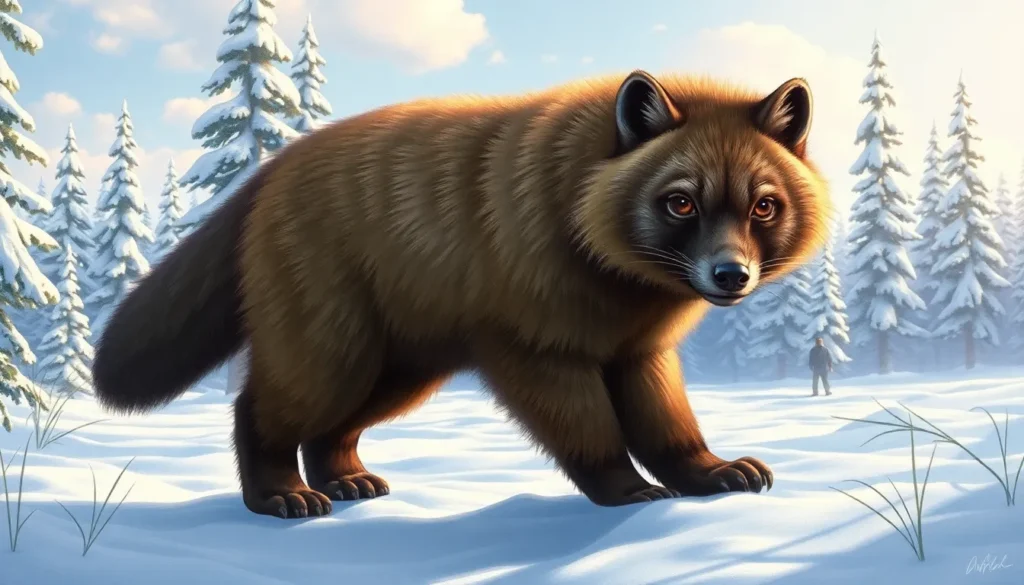
- Wolverines are the largest land-dwelling members of the weasel family. They belong to the family Mustelidae, which also includes otters, badgers, and weasels.
- They have a distinctive, stocky build with short legs and a bushy tail. This body shape aids their mobility in snowy and rugged terrain.
- Wolverines possess powerful jaws and sharp teeth. Their strong bite allows them to crush frozen meat and bones, which is essential for scavenging in winter conditions.
- They are primarily solitary animals. Wolverines generally live and hunt alone, marking large territories to avoid overlap with others.
- Wolverines are adapted to cold climates. Their thick fur provides insulation against harsh Arctic and subarctic environments.
- Their diet is omnivorous but mainly carnivorous. They feed on small to medium-sized mammals, carrion, and occasionally berries and roots.
- Wolverines have an exceptional ability to travel long distances. They can cover up to 15 miles in a single day while searching for food.
- They have large paws with fur-covered soles. These adaptations help them move efficiently on snow by acting like natural snowshoes.
- Wolverines are known for their remarkable strength relative to size. They can take down prey much larger than themselves, including deer and caribou.
- Their reproductive cycle is unique due to delayed implantation. After mating, the fertilized egg remains dormant before implanting in the uterus several months later.
- Litters typically consist of two to three kits. The young stay with their mother for up to a year before becoming independent.
- Wolverines communicate through scent marking and vocalizations. They use scent glands to mark territory and warn others to stay away.
- They have few natural predators. Wolves, bears, and humans are the main threats to wolverines in the wild.
- Wolverines are mostly nocturnal and crepuscular. They are most active during dawn, dusk, and nighttime hours.
- They play a crucial role as scavengers in their ecosystems. By consuming carrion, they help recycle nutrients and reduce disease spread.
- Wolverines have a low population density. Their territories can span hundreds of square miles due to their large home ranges.
- They are found primarily in northern boreal forests, tundra, and mountainous regions. Their range includes parts of Alaska, Canada, northern Europe, and Siberia.
- Wolverines have been the subject of folklore and mythology. In some cultures, they symbolize strength, ferocity, and endurance.
- Conservation concerns exist due to habitat loss and climate change. Warmer temperatures threaten the snowpack they depend on for denning and hunting.
- Despite their fierce reputation, wolverines generally avoid humans. They are elusive and rarely encountered in the wild.
- Scientific research on wolverines is challenging. Their remote habitats and low densities make study and monitoring difficult.
Habitat and Behavior
Wolverines inhabit the cold northern regions of North America, Europe, and Asia, thriving in boreal forests, tundra, and alpine environments. They prefer areas with deep snow, which supports their hunting and scavenging strategies. Wolverines are highly territorial and solitary, with individuals maintaining expansive home ranges that minimize encounters with others. Their thick fur and large, padded paws allow them to travel efficiently across snow and ice. Being opportunistic feeders, wolverines consume a varied diet of carrion, small mammals, birds, and plant matter, adapting their feeding habits according to seasonal availability. Reproduction involves delayed implantation, ensuring that offspring are born when environmental conditions are favorable. Wolverines are most active during dawn and dusk, using scent marking to communicate and avoid conflict.
Why This Animal Matters
Wolverines are important ecological players as scavengers and predators. By consuming carrion, they help prevent the spread of disease and contribute to nutrient cycling in their habitats. Their ability to hunt and scavenge a wide range of prey supports ecosystem balance, particularly in harsh environments where food can be scarce. Wolverines also serve as indicators of ecosystem health, with their presence reflecting intact wilderness areas. Culturally, wolverines have featured in indigenous folklore symbolizing strength and endurance. Conservation efforts focus on protecting their habitats from the impacts of climate change and human encroachment, as these factors threaten their survival in northern ecosystems.
Common Misconceptions
Misconception: Wolverines are aggressive man-eaters.
Correction: Wolverines are generally elusive and avoid humans, showing aggression only when threatened or cornered. There are no well-documented cases of wolverines attacking humans unprovoked.
Misconception: Wolverines are related to bears.
Correction: Wolverines belong to the weasel family (Mustelidae) and are more closely related to otters and badgers than to bears, despite their robust appearance.
Misconception: Wolverines only scavenge and do not hunt.
Correction: While wolverines are opportunistic scavengers, they are also skilled hunters capable of killing prey much larger than themselves.
FAQ
What do wolverines eat?
Wolverines are omnivorous but primarily carnivorous. They feed on carrion, small to medium-sized mammals, birds, and occasionally vegetation such as berries.
Where do wolverines live?
Wolverines inhabit cold northern regions including boreal forests, tundra, and mountainous areas across North America, Europe, and Asia.
Are wolverines dangerous to humans?
Wolverines are generally shy and avoid humans. They are not considered a threat and attacks on humans are extremely rare or undocumented.

Leave a Reply