
Short Answer
21 Facts About Ibexes
- Ibexes are wild goats. They belong to the genus Capra and are closely related to domestic goats.
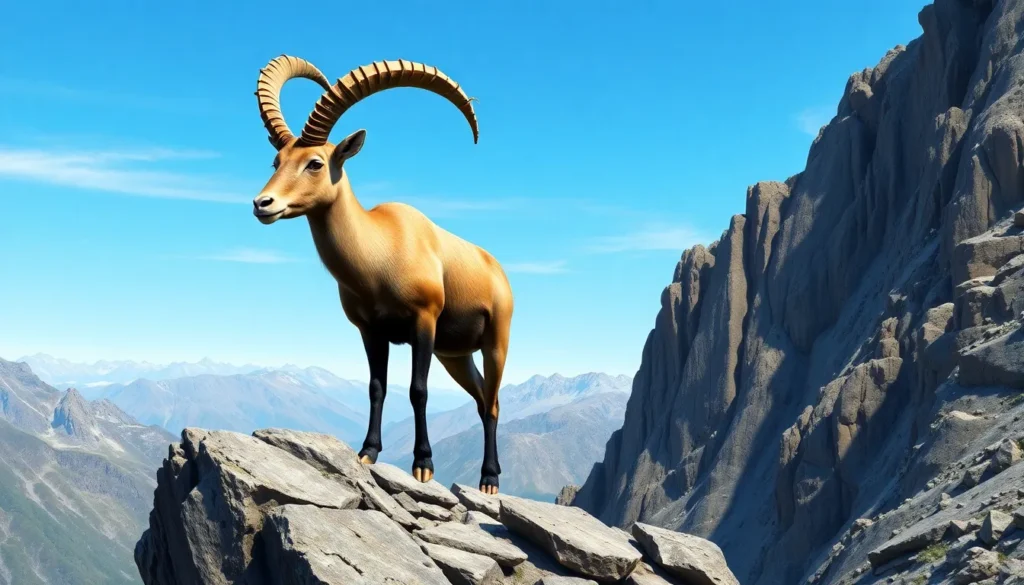
- They have large, curved horns. Both males and females can have horns, but males typically have much larger and more curved ones.
- Ibexes are expert climbers. They can scale nearly vertical rock faces to escape predators and reach food.
- Several species exist. These include the Alpine ibex, Nubian ibex, Spanish ibex, and Siberian ibex, among others.
- They inhabit mountainous regions. Their range includes the European Alps, North African mountains, and parts of Central and Western Asia.
- Ibex horns grow throughout their lives. The horns develop rings that can be used to estimate the animal’s age.
- They are herbivores. Their diet consists mainly of grasses, herbs, shrubs, and other vegetation found in their rugged habitats.
- Ibexes have adapted to cold climates. Many species develop thick winter coats to survive harsh mountain winters.
- They live in groups called herds. Herds typically consist of females and their young, while males often form separate bachelor groups.
- During mating season, males compete for females. Using their horns, males engage in battles to establish dominance.
- Ibexes use their horns for defense and dominance. The horns serve to protect against predators and to assert hierarchy within groups.
- They have excellent balance and agility. This helps them navigate precarious cliffs and rocky terrain.
- Ibexes contribute to their ecosystem. By grazing, they help maintain the balance of mountain vegetation.
- Some ibex populations have recovered due to conservation efforts. For example, the Alpine ibex was once nearly extinct but has been successfully reintroduced in parts of Europe.
- Ibexes have cultural significance. They appear in folklore, art, and symbolism in various cultures across their range.
- They have a keen sense of smell and hearing. These senses help detect predators and navigate their environment.
- Ibexes can live up to 15-20 years in the wild. Lifespan varies depending on species and environmental conditions.
- They are preyed upon by large carnivores. Predators include wolves, lynxes, and eagles, depending on the region.
- Ibexes regulate their body temperature well. They seek shade or sun exposure as needed and use their thick fur to insulate.
- Population sizes vary widely. Some species are abundant, while others are vulnerable or near threatened.
- Ibexes communicate with vocalizations and body language. These signals help maintain group cohesion and warn of danger.
Habitat and Behavior
Ibexes primarily inhabit mountainous terrains characterized by steep, rocky cliffs and sparse vegetation. They are found across parts of Europe, North Africa, and Asia, with species adapted to different altitudes and climates. Their ability to climb and balance on almost vertical surfaces allows them to access food sources unavailable to many other herbivores and evade predators effectively. These animals are social and live in herds, which typically separate by sex outside the breeding season. Ibexes graze on grasses, herbs, and shrubs, and their seasonal movements often depend on weather conditions and food availability. Their adaptations, including specialized hooves with rough pads for grip and thick coats, enable survival in harsh mountain environments.
Why This Animal Matters
Ibexes play a vital ecological role by influencing vegetation dynamics through their grazing habits, which helps maintain biodiversity in mountainous ecosystems. Their presence supports predator species such as wolves and large birds of prey, contributing to balanced food webs. Culturally, ibexes have been featured in folklore, art, and mythology across regions where they live, symbolizing strength, agility, and resilience. Conservation efforts for certain ibex species, particularly the Alpine ibex, illustrate successful wildlife management and reintroduction programs, serving as models for protecting other mountain-dwelling species. Maintaining ibex populations is important for ecological health and preserving cultural heritage.
Common Misconceptions
Misconception: Ibexes are domesticated animals.
Correction: Ibexes are wild animals and have never been domesticated, unlike their close relatives, domestic goats.
Misconception: All ibex species look identical.
Correction: Several ibex species exist with distinct physical characteristics, horn shapes, and habitat preferences.
Misconception: Ibexes can survive only on cliffs.
Correction: While expert climbers, ibexes also spend time in alpine meadows and forests, depending on the species and season.
Misconception: Ibex horns are used primarily as weapons against humans.
Correction: Ibex horns are primarily used for intraspecies competition and defense against natural predators, not humans.
FAQ
What distinguishes ibexes from domestic goats?
Ibexes are wild species with larger, more curved horns and adaptations for mountainous habitats, whereas domestic goats have been selectively bred and exhibit more varied appearances and behaviors.
How do ibexes survive in steep mountainous terrain?
Ibexes have specialized hooves with rough pads for gripping rocks, excellent balance, and agility, allowing them to climb steep cliffs to evade predators and access food.
Are all ibex species endangered?
No, the conservation status of ibex species varies. Some, like the Alpine ibex, have recovered due to conservation efforts, while others remain vulnerable or near threatened.






Leave a Reply