
Short Answer
21 Facts About Nudibranchs (Sea Slugs)
- Nudibranchs are soft-bodied marine gastropods. They belong to the order Nudibranchia and are known for lacking a protective shell in their adult form.
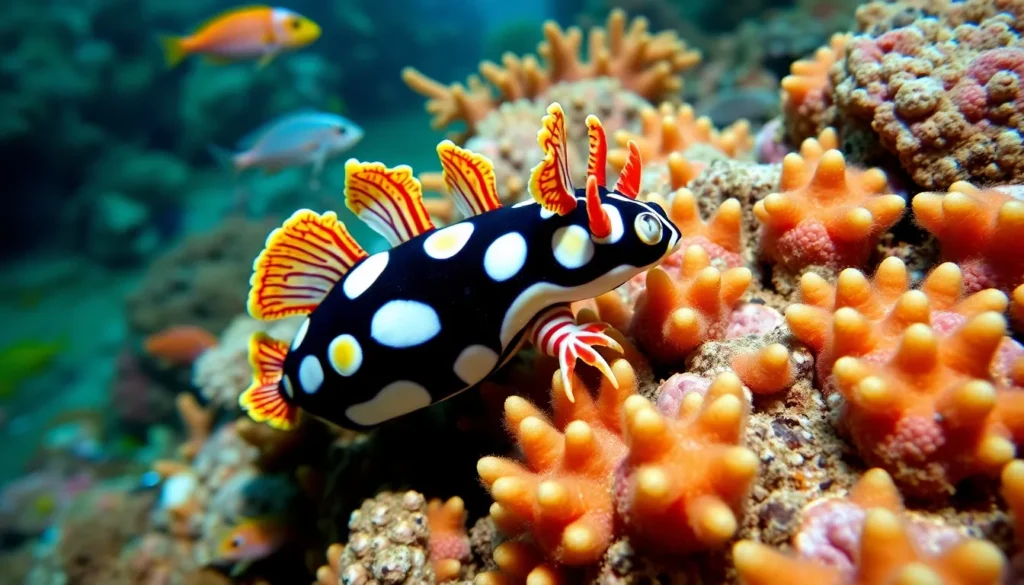
- They are famous for their bright and diverse coloration. Their vivid colors serve as warnings to predators about their toxicity or unpleasant taste.
- Nudibranchs are hermaphroditic. Each individual possesses both male and female reproductive organs, allowing them to mate with any mature member of their species.
- The term “nudibranch” means “naked gills.” This refers to the exposed gill structures found on the backs of many species.
- Many nudibranchs have specialized diets. Some feed exclusively on sponges, others on hydroids, anemones, or even other sea slugs.
- Some species incorporate toxins or stinging cells from their prey. They use these defenses for their own protection, a process called kleptocnidae.
- The size of nudibranchs varies widely. Most species are small, ranging from 0.25 inches (6 mm) to about 12 inches (30 cm) long.
- Nudibranchs display a range of body shapes. From smooth and rounded to spiky or frilly, their forms often aid in camouflage or defense.
- They have a worldwide distribution. Nudibranchs can be found in oceans from tropical reefs to cold polar waters.
- Some nudibranchs are bioluminescent. They can produce light through chemical reactions, which may help in communication or predator deterrence.
- They have a short lifespan. Most nudibranchs live from a few weeks up to a year.
- Nudibranchs move using a muscular foot. This foot allows them to crawl slowly over surfaces such as rocks, coral, and seaweed.
- They have simple sensory organs called rhinophores. These structures detect chemicals in the water, helping nudibranchs find food and mates.
- Some species exhibit remarkable mimicry. They can resemble toxic or venomous organisms to avoid predation.
- Nudibranchs play important roles in marine ecosystems. As predators, they help control populations of sponges, hydroids, and other invertebrates.
- They have few natural predators. Their toxins, bright warning colors, and ability to secrete unpleasant chemicals deter many potential threats.
- Research on nudibranchs contributes to science. Studies of their toxins have potential pharmaceutical applications, including cancer research.
- Their vivid appearance makes them popular subjects for underwater photographers. Nudibranch diversity adds to the visual richness of coral reef environments.
- Despite their beauty, nudibranchs are sensitive to environmental changes. Pollution, habitat destruction, and climate change can negatively impact their populations.
- There are over 3,000 described species of nudibranchs. New species are still being discovered, reflecting their vast diversity.
- Nudibranch classification is complex and evolving. Advances in genetic analysis continue to refine their taxonomy and evolutionary relationships.
Habitat and Behavior
Nudibranchs inhabit a wide range of marine environments, from shallow tidal pools and coral reefs to deep ocean floors. They are benthic creatures, meaning they live on or near the seabed. Their behavior primarily revolves around foraging and reproduction. Nudibranchs use their chemical sensors, rhinophores, to detect prey and mates. They feed on sessile animals like sponges, hydroids, anemones, and sometimes other nudibranchs. Movement is slow and deliberate, facilitated by a muscular foot that glides over surfaces. Many nudibranchs use their bright colors and chemical defenses as protection from predators. Reproduction involves reciprocal fertilization, as they are hermaphrodites, and many species lay eggs in distinctive, often spiral-shaped gelatinous ribbons.
Why This Animal Matters
Nudibranchs play a significant ecological role as specialized predators in marine ecosystems, helping regulate populations of various invertebrates. Their unique chemical compounds have attracted scientific interest for potential medical applications, including drug development. Moreover, their vivid colors and diversity contribute to the aesthetic and biological richness of coral reefs and other ocean habitats, making them valuable indicators of environmental health. Conservation of nudibranchs is important because their sensitivity to pollution and habitat changes reflects broader oceanic ecosystem conditions.
Common Misconceptions
Misconception: Nudibranchs are harmful to humans.
Correction: Nudibranchs are generally harmless to humans. While they may carry toxins for defense, these are not dangerous unless ingested or handled improperly, which is rare.
Misconception: Nudibranchs are the same as slugs found on land.
Correction: Although both are gastropods, nudibranchs are marine animals with distinct adaptations and biology, unlike terrestrial slugs that live on land.
Misconception: All nudibranchs have the same diet.
Correction: Nudibranch species have diverse and often highly specialized diets, feeding on a range of sessile marine organisms.
FAQ
What do nudibranchs eat?
Nudibranchs have varied diets depending on the species; many feed on sponges, hydroids, anemones, or other sea slugs. Some even consume toxic prey and incorporate their defenses.
Are nudibranchs dangerous to humans?
Nudibranchs are generally not dangerous to humans. While they may carry toxins for defense, these are not harmful unless ingested or handled improperly.
Why are nudibranchs so colorful?
Their bright colors often serve as warning signals to potential predators about their toxicity or unpleasant taste, a defense mechanism called aposematism.


Leave a Reply