
Short Answer
21 Facts About Umbrella Birds
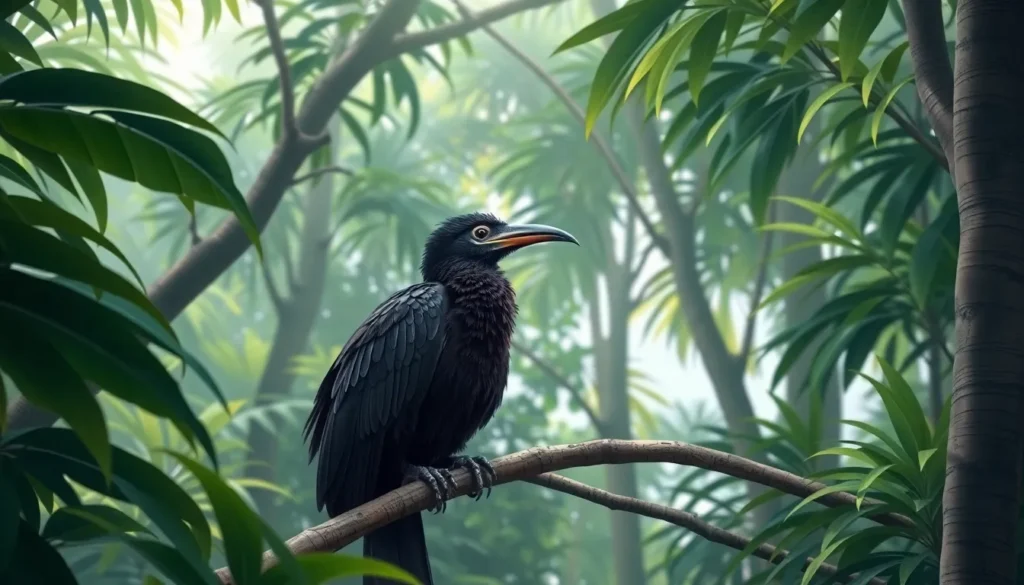
- Distinctive Crest: Umbrella birds are named for the large, umbrella-shaped crest of feathers on their heads, which can be raised or lowered.
- Species Diversity: The genus Cephalopterus contains three recognized species of umbrella birds: the Amazonian, Long-wattled, and Bare-necked umbrella birds.
- Habitat Range: These birds are native to the tropical rainforests of Central and South America, particularly in countries such as Brazil, Colombia, and Ecuador.
- Size and Appearance: Umbrella birds are relatively large passerines, measuring up to 40 cm (16 inches) in length, with predominantly black plumage.
- Wattles: The Long-wattled umbrella bird is notable for its long, fleshy wattle that hangs from its throat and can be inflated during courtship displays.
- Vocalizations: Umbrella birds produce deep, booming calls that can be heard over long distances in dense forest environments.
- Diet: Their diet mainly consists of fruits, particularly figs, but they also consume insects and small animals occasionally.
- Sexual Dimorphism: Males generally have larger crests, wattles, and produce louder calls than females, traits linked to mating displays.
- Breeding Displays: Males perform elaborate courtship displays, including inflating their wattles and raising their crests to attract females.
- Nesting: Umbrella birds build relatively small nests in trees, where females lay one or two eggs.
- Conservation Status: While some species are not currently endangered, habitat destruction poses a threat to umbrella bird populations.
- Flight: These birds are strong fliers but tend to stay within forest canopies and avoid open areas.
- Camouflage: Their dark plumage helps them blend into the dim forest understory, providing protection from predators.
- Social Behavior: Umbrella birds are generally solitary or found in pairs, especially outside the breeding season.
- Longevity: In the wild, umbrella birds can live up to 10 years or more, though detailed lifespan studies are limited.
- Ecological Role: As frugivores, they play an important role in seed dispersal for many tropical plant species.
- Taxonomy: Umbrella birds belong to the family Cotingidae, a group known for their diverse and often visually striking members.
- Research Interest: Their unique vocalizations and displays make them a subject of interest in studies of avian communication and mating systems.
- Climate Sensitivity: Changes in climate and deforestation can impact their habitat, making umbrella birds indicators of rainforest health.
- Human Interaction: These birds are rarely kept in captivity due to their specialized habitat needs and behaviors.
- Cultural Significance: In some indigenous cultures, umbrella birds are part of local folklore and considered symbols of the rainforest.
Habitat and Behavior
Umbrella birds inhabit the lowland and foothill rainforests of Central and South America, where dense canopy cover provides shelter and abundant food resources. They are primarily canopy dwellers but may occasionally be seen in mid-level forest layers. Their behavior is adapted to a life in dense forest environments; they use their loud, resonant calls to communicate over long distances amidst thick foliage. Feeding mainly on fruit, especially figs, they play a vital role in seed dispersal. During breeding seasons, males engage in conspicuous displays involving their crests and wattles to attract mates, while females take on the role of nest building and incubation. Umbrella birds tend to be solitary outside mating periods, avoiding large flock formations, which helps reduce competition for food and nesting sites.
Why This Animal Matters
Umbrella birds contribute significantly to the ecology of tropical rainforests through their role as seed dispersers, aiding in forest regeneration and biodiversity maintenance. Their presence indicates healthy forest ecosystems, making them important bioindicators for conservationists. Additionally, their striking appearance and unique behaviors have cultural importance in indigenous traditions and attract scientific interest in ornithology, particularly in the study of avian communication and mating strategies. While not all species are currently threatened, ongoing habitat loss underscores the need for monitoring and protective measures to preserve these emblematic rainforest birds and the environments they inhabit.
Common Misconceptions
Misconception: Umbrella birds use their crest to shield themselves from rain like an umbrella.
Correction: The crest is primarily a display feature used in courtship and communication, not for practical shelter from rain.
Misconception: All umbrella birds have long wattles.
Correction: Only the Long-wattled umbrella bird species has a prominent wattle; other species have smaller or no wattles.
FAQ
Where are umbrella birds found?
Umbrella birds are found primarily in the tropical rainforests of Central and South America, including countries such as Brazil, Colombia, Ecuador, and Panama.
What do umbrella birds eat?
Their diet mainly consists of fruits, particularly figs, but they also occasionally consume insects and small animals.
Why do umbrella birds have such a distinctive crest?
The umbrella-shaped crest is used mainly for communication and courtship displays, helping males attract females during the breeding season.



Leave a Reply