
Short Answer
21 Facts About Rhinoceroses
- Ancient lineage: Rhinoceroses belong to an ancient group of mammals called Perissodactyla, which also includes horses and tapirs.
- Five species: There are five extant species: White, Black, Indian, Javan, and Sumatran rhinoceroses.
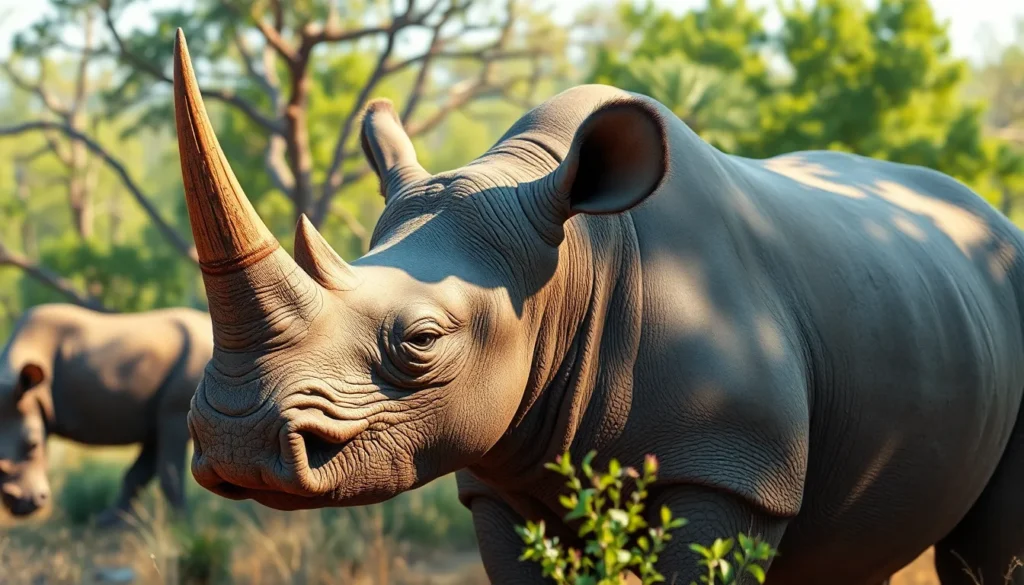
- Distinctive horns: Most rhinoceroses have one or two horns made of keratin, the same substance as human hair and nails.
- Thick skin: Their skin can be up to 5 cm thick, providing protection but is sensitive to sunburn and insect bites.
- Large size: Rhinos are among the largest land mammals, with the white rhino weighing up to 2,300 kg (5,000 lbs).
- Herbivorous diet: They mainly consume grasses, leaves, shoots, and fruits depending on the species and habitat.
- Poor eyesight: Rhinos have relatively poor vision but compensate with excellent senses of smell and hearing.
- Solitary animals: Most rhino species are solitary except for mothers with calves or occasional small groups.
- Territorial behavior: Males often mark territory with dung piles and urine to communicate with others.
- Speed and agility: Despite their large size, rhinos can run at speeds up to 50 km/h (31 mph).
- Communication: Rhinos communicate through vocalizations, scent markings, and body language.
- Reproduction: Female rhinos have a gestation period of 15 to 16 months and typically give birth to one calf.
- Conservation status: Most rhino species are threatened or endangered due to poaching and habitat loss.
- Poaching crisis: Rhino horns are highly valued in traditional medicine and as status symbols, driving illegal hunting.
- Ecological role: Rhinos help shape their environments by grazing and dispersing seeds.
- Skin care: Rhinos often wallow in mud to cool down and protect their skin from parasites and sun damage.
- Unique footprints: Each rhino’s foot has three toes with distinct footprints used in tracking.
- Sumatran rhino uniqueness: The Sumatran rhino is the smallest and hairiest species, with a more forest-adapted lifestyle.
- White rhino misnomer: The ‘white’ in white rhino is a mistranslation of the Afrikaans word ‘wyd’ meaning ‘wide’, referring to its mouth shape.
- Longevity: Rhinos can live up to 40-50 years in the wild.
- Captive breeding: Conservation programs have had success breeding some rhino species to help prevent extinction.
Habitat and Behavior
Rhinoceroses inhabit a variety of environments ranging from African savannas and grasslands to Asian tropical forests and swamps. The white and black rhinos are primarily found in southern and eastern Africa, while the Indian, Javan, and Sumatran rhinos are native to parts of South and Southeast Asia. Rhinos are mostly solitary, except for mothers and calves or temporary aggregations at waterholes. They use their acute sense of smell and hearing to navigate their environment and detect threats. Rhinos are herbivores that feed on grasses, leaves, and shoots, playing a vital role in maintaining the ecosystem balance. To protect themselves from heat and insects, rhinos often wallow in mud pools. They are territorial creatures, marking their ranges with dung and urine. Despite their bulk, rhinos can charge quickly if threatened but generally exhibit calm behavior unless provoked.
Why This Animal Matters
Rhinoceroses serve an important ecological role by shaping vegetation patterns through their grazing and browsing, which helps maintain diverse habitats for other species. Their seed dispersal through dung promotes forest regeneration. Culturally, rhinos have been significant in various societies for centuries, symbolizing strength and resilience. However, rhinos face serious threats from poaching and habitat loss, making them critical species for conservation efforts worldwide. Protecting rhinos helps preserve biodiversity and supports ecosystems that benefit many other species, including humans. International cooperation and conservation programs have highlighted the rhino as a flagship species for wildlife protection.
Common Misconceptions
Misconception: Rhino horns are made of bone.
Correction: Rhino horns are composed of keratin, a fibrous protein also found in human hair and nails, not bone.
Misconception: Rhinos have poor senses overall.
Correction: While rhinos have relatively poor eyesight, they have highly developed senses of smell and hearing that compensate for this.
Misconception: All rhino species have two horns.
Correction: Some species, such as the Indian rhinoceros, typically have one horn, while others like the white and black rhinos have two.
FAQ
Why are rhinoceroses endangered?
Rhinoceroses are endangered primarily due to poaching for their horns, which are highly valued in traditional medicine and as status symbols, as well as habitat loss from human activities.
How many species of rhinoceros are there?
There are five living species of rhinoceros: White, Black, Indian, Javan, and Sumatran rhinoceroses.
What do rhinoceroses eat?
Rhinoceroses are herbivores that eat a diet consisting mainly of grasses, leaves, shoots, and fruits, depending on the species and their habitat.

Leave a Reply