
Short Answer
Betelgeuse is one of the most captivating stars in the night sky, renowned for its brilliance and enigmatic nature. Located in the constellation Orion, Betelgeuse is a red supergiant star that has piqued the interest of astronomers and stargazers alike for centuries. In this article, we’ll explore nine cosmic facts about Betelgeuse, each illuminating its unique characteristics and the important role it plays in our understanding of the universe.
1. A Revered Ancestor of Red Supergiants
Betelgeuse, designated Alpha Orionis, resides approximately 642.5 light-years from Earth. As one of the nearest red supergiants to our planet, it forms part of a select cadre of massive stars that are in the later stages of stellar evolution. Betelgeuse’s immense size, roughly 1,000 times larger than our Sun, positions it as a towering colossus in the cosmos. This quintessentially red hue, resulting from its cooler surface temperature, gives it a striking presence in the constellation Orion, often deemed a celestial hunter.
2. A Stellar Pulse: Variability at Its Core
What sets Betelgeuse apart from its stellar peers is its variation in brightness, a phenomenon known as pulsing or irregular variability. Betelgeuse experiences fluctuations in luminosity, leading to its brightness changing between magnitudes 0.3 and 1.2. This remarkable variability can be attributed to its immense size and the complex processes occurring within its core. Periodically, Betelgeuse becomes more luminous, capturing the attention of observers and reminding us of the dynamic nature of the universe.
3. An Imminent Transformation: The Supernova Saga
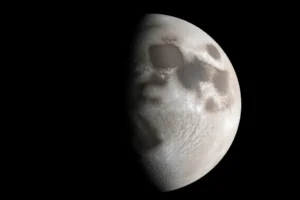
Betelgeuse stands at a pivotal juncture in its life cycle. Astronomers estimate that this stellar behemoth is nearing the end of its life, with a potential supernova explosion on the horizon. In a cosmic sense, this event could catalyze the creation of new stellar material, enriching the interstellar medium. The prevailing theories suggest that Betelgeuse could explode within the next 100,000 years, a mere blink in the cosmic timeline. When it does go supernova, it may shine brighter than the Moon for a brief period, captivating the night sky and leaving an indelible mark on future generations.
4. A Whimsical Spectacle: The Surface Temperature
Betelgeuse exhibits a surface temperature of approximately 3,200 Kelvin, considerably cooler than that of the Sun, which averages around 5,500 Kelvin. This comparatively lower temperature contributes to the star’s crimson hue. Moreover, the cooler temperature plays a vital role in the star’s extensive atmospheric structure, which is thought to be incredibly complex and turbulent. The star’s outer layer is festooned with stellar winds that stretch far into space, hinting at its dynamic nature.
5. A Celestial Scale: Size and Distance
Imagine the enormity of Betelgeuse. Its colossal radius allows for a staggering number of Suns to fit within it—estimates suggest that about 1.5 million Suns could be nested within its vast expanses. This introduces a fascinating visualization of scale in the galaxy. Its extreme distance of over 640 light-years can be daunting, yet it emphasizes how interconnected our universe remains, linking us to this colossal entity with the light that crossed near-empty voids to reach our eyes.
6. An Elemental Playground: Composition and Fusion
The core of Betelgeuse is a hotbed of nuclear fusion, where hydrogen transforms into helium, and subsequently, helium into heavier elements like carbon and oxygen. This stellar alchemy is essential for the universe’s enrichment, promoting the formation of new stars and planets. The ongoing fusion process will eventually lead to a supernova, wherein the heavier elements birthed in Betelgeuse will disseminate across the cosmos, contributing to the primordial soup needed for life as we know it.
7. A Swirling Dance: Movement Patterns
Betelgeuse’s motion within our Milky Way Galaxy is as fascinating as its nature. This star exhibits a peculiar motion, as it oscillates through space, moving towards the constellation Taurus. Its projected trajectory illustrates the complex gravitational interplay between stars and the galactic center. Consequently, Betelgeuse serves as a reminder of the constantly changing fabric of our celestial surroundings as it orbits through the eons.
8. Cultural Significance: The Mythology of Betelgeuse
Throughout history, Betelgeuse has captured the imagination of countless civilizations. Known by various names and cultural significances, it has been revered across different cultures. In Arabic, its name translates to ‘the armpit of the giant,’ a reference to its position in Orion. The star’s visibility and prominence have made it a talking point in folklore and navigation, highlighting the interwoven nature of human culture and celestial phenomena.
9. An Ongoing Enigma: Future Studies
Despite the plethora of information collected, Betelgeuse remains an enigma invoking both awe and curiosity. Its unique properties and impending demise grant an opportunity for astronomers to study the life cycles of massive stars. Future observations with advanced technology like the James Webb Space Telescope promise to unravel more cosmic secrets, allowing humankind to gain deeper insights into the evolution of such monumental entities.
In conclusion, Betelgeuse is not merely a luminary in our night sky; it embodies the profound depth and complexity of stellar life cycles. From its captivating size and mesmerizing brightness to the impending supernova that signals its final act, Betelgeuse continues to intrigue both scientists and enthusiasts alike. Each of these cosmic facts about Betelgeuse invites us to ponder our place in the universe and the monumental processes that govern existence beyond our earthly confines. Indeed, it is a star that captivates, educates, and inspires, reminding us of the grand tapestry woven across the cosmos.
FAQ
What is Betelgeuse?
Betelgeuse is a red supergiant star located in the constellation Orion, known for its large size and brightness variability.
Why does Betelgeuse change brightness?
Its brightness changes due to pulsations and irregular stellar processes occurring within the star.
How large is Betelgeuse compared to the Sun?
Betelgeuse is roughly 1,000 times larger in radius than the Sun.
When might Betelgeuse go supernova?
It is expected to explode as a supernova within the next 100,000 years.
What cultural importance does Betelgeuse have?
Betelgeuse has been significant in various cultures, often referenced in folklore and navigation.




Leave a Reply