
Short Answer
When we think of fish, we often conjure images of shimmering scales gliding through clear waters, yet these exquisite creatures harbor an array of astonishing secrets beneath the surface. The underwater world is as enigmatic as it is vast, filled with intricate ecosystems and captivating behaviors that challenge our conventional understanding of life in the deep. Herein lies a collection of ten remarkable facts about fish that will enchant your imagination and inspire a newfound appreciation for aquatic life, inviting you to look beyond the surface.
1. Adaptive Camouflage Mastery
Fish have evolved to become unparalleled masters of disguise. Many species possess specialized skin cells known as chromatophores that allow them to change color and pattern to blend seamlessly into their surroundings. The flounder, for example, can mimic the ocean floor, evading predators with ease. This adaptive camouflage not only serves as a survival mechanism but also plays a vital role in communication and mating rituals, underscoring the complexity of underwater artistry.
2. The Symphony of Sounds Underwater
While fish may appear to be silent swimmers, they engage in a rich auditory landscape. They produce sounds through various mechanisms, such as grinding their teeth, vibrating their swim bladders, or even rubbing their bodies against rough surfaces. The enigmatic grouper employs a series of low-frequency booms to attract mates, while the parrotfish creates a unique croaking noise. This underwater symphony is crucial for social interaction, predator alerting, and territorial claims.
3. Dazzling Bioluminescence
In the inky abyss, some fish have transformed their bodies into natural light displays through bioluminescence. The lanternfish, for instance, possesses light-emitting organs that enable it to glow in the dark depths of the ocean. This captivating phenomenon serves multiple purposes, from attracting prey to evading predators and facilitating communication among shoals. The ethereal glow of these creatures is a testament to the wonders of evolution and adaptation.
4. Schools: The Power of Unity
Many species exhibit the remarkable behavior of schooling, swimming in coordinated formations that enhance their survival in the vast ocean. This social structure not only confuses predators through sheer numbers but also facilitates efficient foraging and navigation. A school of herring can number in the millions, moving as a fluid entity, demonstrating the elegance of collective behavior in countering threats. This harmony in movement inspires endless fascination, reflecting the unity of life beneath the waves.
5. Sensational Electroreception
Fish like the cartilaginous sharks and rays possess an astounding sense called electroreception, enabling them to detect electric fields generated by other organisms. This sixth sense is facilitated by specialized organs known as ampullae of Lorenzini, allowing these predators to hunt down prey even when hidden beneath the sand. The capacity to sense the heartbeat of a hidden fish or the slight electrical disturbances in their environment is a stunning example of nature’s ingenuity and adaptation.
6. The Phenomenon of Migration
Fish are renowned for their migratory journeys, traversing vast distances in search of breeding grounds or favorable feeding conditions. The salmon’s remarkable odyssey is a quintessential illustration; they navigate upstream against powerful currents to return to their birthplace. This arduous journey, guided by an innate sense of smell and the Earth’s magnetic fields, highlights an almost superhuman commitment to survival and reproduction. Such migrations mark cycles of life that are both awe-inspiring and crucial for ecological balance.
7. Predatory Strategies: The Art of Ambush
The underwater realm is rife with cunning tactics employed by fish to ensnare unsuspecting prey. The anglerfish, with its bioluminescent lure, epitomizes the art of ambush. By enticing smaller fish within striking distance, it reveals the dark allure of deep-sea hunting. Similarly, the predator fish such as the pike utilizes its lightning-fast bursts of speed to capture prey in the blink of an eye. Such predatory strategies are not just instinctual but showcase the evolutionary innovations essential for survival in a competitive environment.
8. Heartwarming Parental Care
Contrary to the belief that many fish simply spawn and abandon their eggs, numerous species exhibit remarkable parental care. For instance, the seahorse stands out, with males carrying and nurturing fertilized eggs in a pouch until they are ready to face the world. This nurturing behavior reflects a unique evolutionary adaptation, breaking the stereotype of fish parenting. Such investment in offspring growth highlights an endearing aspect of their biology and territorial instincts.
9. The Color Spectrum: Beyond Our Vision
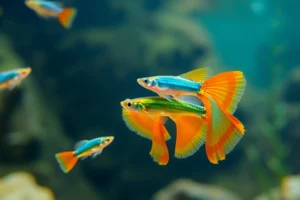
Fish inhabit a world characterized by vibrant and diverse colors, some of which are undetectable to the human eye. Their eyes are equipped with specialized photoreceptors that allow them to see a broader spectrum of colors, including ultraviolet light. This perception not only aids in spotting predators and prey but also influences mating displays and territory marking. The underwater explosion of colors forms an intricate system of signaling that fuels the rich tapestry of aquatic life.
10. Resilience in Extremes
Some fish species are exceptional for their ability to thrive in extreme environments, adapting to conditions that would seem inhospitable to most life forms. The Antarctic icefish, for example, flourishes in frigid waters, possessing a unique antifreeze glycoprotein that prevents its blood from freezing. Such resilience speaks volumes of nature’s creativity, allowing life to persist and flourish even in the harshest circumstances, inspiring awe and curiosity about the potential for life beyond our planet.
Fish, with their unparalleled adaptations and rich behavioral tapestry, beckon us to delve deeper into the underwater world’s astonishing mysteries. These ten facts merely scratch the surface, revealing the complexity and beauty that exist beneath the waves. A shift in perspective allows us to appreciate fish not merely as fleeting shadows but as intricate beings intertwined in the fabric of marine ecosystems. As custodians of this planet, understanding the lives of these magnificent creatures is essential to preserving their habitats and ensuring the continuity of life in our oceans.
FAQ
What are some unique adaptations of fish?
Fish have various adaptations like bioluminescence, camouflage, and electroreception that help them survive in their environments.
Why do fish migrate?
Fish migrate to find breeding grounds or favorable feeding conditions, often navigating vast distances.




Leave a Reply