
Short Answer
The Harpy Eagle, often regarded as one of the most formidable avian predators, commands attention with its impressive stature and unparalleled hunting prowess. But what makes this extraordinary bird truly deserving of the title “strongest bird alive”? Are you ready to embark on a fascinating exploration of the Harpy Eagle’s remarkable attributes and behaviors? Join us as we unravel the characteristics that make this magnificent creature a living testament to nature’s evolutionary marvels. Perhaps by the end, you may find yourself pondering: what challenges does the Harpy Eagle face in the contemporary world?
1. Physical Characteristics: Majestic and Powerful
The Harpy Eagle stands as a paragon of strength, boasting the ability to reach weights of up to 10 kilograms (22 pounds) and a wingspan stretching nearly 2.2 meters (7.2 feet). Its powerful legs and formidable talons, which can measure up to 13 centimeters (nearly 5 inches) in length, enable it to grasp and dispatch prey with astonishing efficacy. The rugged, muscular physique of this eagle is adorned with striking feathers that vary from slate-gray to bold black, complemented by a distinctive white face and sharp, piercing eyes. This striking coloration serves not only aesthetic purposes but also aids in camouflage amidst the dappled light of their tropical rainforest habitats.
2. Habitat and Distribution: Kings of the Rainforest
Predominantly found in the canopies of central and South American rainforests, the Harpy Eagle requires expansive territories rich in biodiversity. They thrive in environments replete with large trees, as these provide both nesting sites and ample hunting grounds. This eagle’s range extends from southern Mexico down to Argentina, demonstrating a preference for moist lowland forests where prey abundance is high. However, as the human footprint continues to encroach upon these habitats, the survival of such majestic creatures hangs in a delicate balance.
3. Diet and Hunting Techniques: Apex Predators
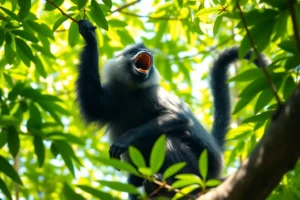
As an apex predator, the Harpy Eagle’s diet primarily consists of medium-sized mammals, such as monkeys and sloths, along with birds and reptiles. Its hunting strategy is a fascinating spectacle; the eagle utilizes a combination of strength, stealth, and acute vision to zero in on its prey. Rather than relying on swift aerial pursuits, the Harpy Eagle often opts for patience, waiting to ambush its next meal from a concealed perch. When it strikes, the immense power of its talons ensures a swift and lethal capture. Observing this process raises a playful question: could humans replicate such focused and deliberate hunting techniques in their own lives?
4. Reproductive Behavior: Nurturers of the Sky
The Harpy Eagle is not only a fierce hunter but also a devoted parent. They typically mate for life, creating strong bonds that last through years of raising their young. Nesting takes place high in the forest canopy, where they construct large nests made of sticks, lined with softer materials to cradle their eggs. The female lays one to three eggs, though often only one chick survives, benefiting from the intense attention of both parents. This parental investment is essential for the chick’s successful growth, preparing it for the challenges it will face upon fledging.
5. Behavioral Traits: Intelligence and Adaptability
The Harpy Eagle exhibits remarkable intelligence and adaptability, traits that enhance its survival prospects. They demonstrate problem-solving abilities in hunting and nest building, utilizing environmental features to their advantage. Observing their interaction with the environment raises a poignant challenge for wildlife conservation: how can we cultivate our understanding of such intelligent species in order to better protect their habitats? The Harpy Eagle’s ability to adapt to changing ecosystems underscores the resilience of wildlife in the face of adversity.
6. Conservation Status: A Growing Concern
Despite its position atop the avian hierarchy, the Harpy Eagle faces significant threats from habitat destruction, deforestation, and human encroachment. In many areas, their populations are dwindling due to the loss of suitable nesting sites and prey availability. Conservation efforts are paramount to ensure the survival of this iconic species. Organizations and researchers are mobilizing to educate communities about the ecological significance of the Harpy Eagle and to foster initiatives that promote habitat preservation. The challenge lies before us: how can we work together to secure a future for the Harpy Eagle amid the rapid changes reshaping our world?
In conclusion, the Harpy Eagle stands as a symbol of evolutionary prowess and ecological significance. Its unparalleled physical attributes, formidable hunting skills, and complex social behaviors render it a captivating subject of study. Yet, as human activity continues to affect its environment, the survival of this majestic eagle is increasingly at risk. The Harpy Eagle not only captivates us with its strength and grace but also ignites a call to action to protect the intricate web of existence in which it plays a crucial role. Will we accept the challenge of safeguarding our planet’s biodiversity, ensuring that the Harpy Eagle—and many other remarkable species—continue to thrive for generations to come?
FAQ
What is the habitat of the Harpy Eagle?
The Harpy Eagle primarily inhabits the canopies of central and South American rainforests, requiring large trees for nesting and hunting.
What does the Harpy Eagle eat?
The Harpy Eagle’s diet consists mainly of medium-sized mammals like monkeys and sloths, as well as birds and reptiles.
What is the conservation status of the Harpy Eagle?
The Harpy Eagle faces threats from habitat destruction and human encroachment, leading to a decline in its populations.



Leave a Reply