
Short Answer
21 Facts About Beavers
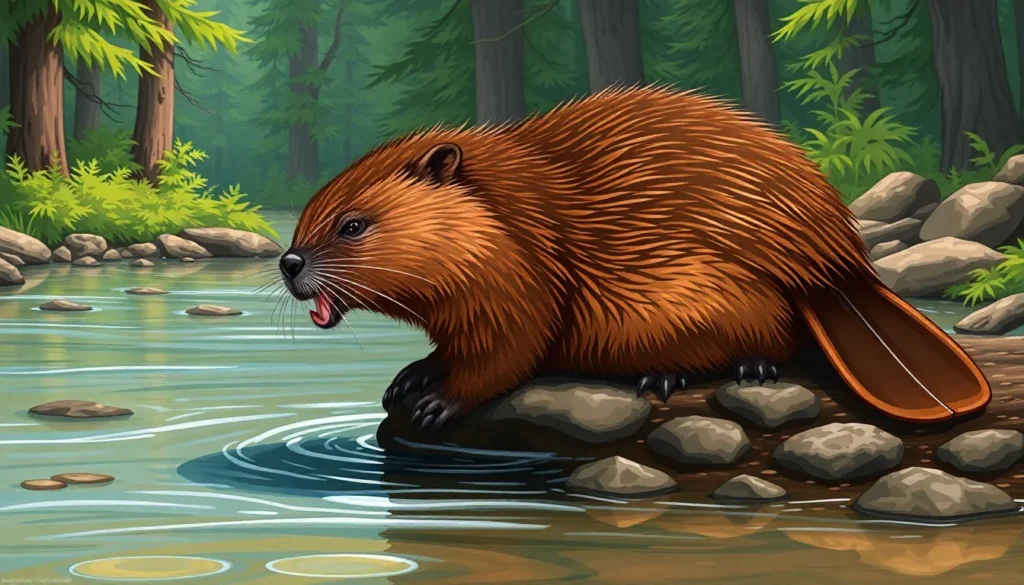
- Beavers are the second-largest rodents in the world. The largest rodent is the capybara. Adult beavers can weigh up to 60 pounds (27 kilograms).
- Beavers have large, orange, ever-growing incisors. Their teeth continuously grow to compensate for the extensive gnawing on wood, which wears them down.
- They are expert builders known for constructing dams and lodges. These structures create ponds that provide protection from predators and access to food during winter.
- Beaver dams can significantly alter local ecosystems. By creating wetlands, they increase biodiversity and improve water quality.
- Beavers are primarily nocturnal. They are most active during the night when they gather food and maintain their dams.
- Beavers have webbed hind feet. This adaptation aids in swimming, making them efficient aquatic animals.
- Their flat, scaly tails serve multiple purposes. They use their tails for balance, fat storage, swimming propulsion, and as a warning signal by slapping the water.
- Beavers communicate through vocalizations, scent marking, and tail slapping. Scent glands near their tails help mark territory.
- They are herbivores. Beavers primarily feed on the bark, leaves, and twigs of trees such as aspen, willow, birch, and maple.
- Beavers live in family groups called colonies. Colonies typically consist of a monogamous pair, their offspring, and sometimes older juveniles.
- Beaver dams can be quite large. Some dams stretch hundreds of meters and can be several feet high.
- They have transparent eyelids called nictitating membranes. These allow them to see underwater while swimming.
- Beavers are native to North America and parts of Europe and Asia. The North American beaver (Castor canadensis) and the Eurasian beaver (Castor fiber) are the two extant species.
- Beavers play a role in flood control. Their dams slow water flow and reduce downstream flooding.
- Beavers can close their ears and nostrils underwater. This adaptation prevents water from entering while submerged.
- They groom themselves regularly. Their dense fur requires maintenance to remain waterproof and insulating.
- Beavers have a lifespan of about 10 to 20 years in the wild. Predators include wolves, bears, and coyotes.
- Beavers can dive for up to 15 minutes underwater. This allows them to gather food and build their dams without surfacing frequently.
- They are ecosystem engineers. By modifying their environment, beavers create habitats for many other species.
- Beavers were heavily trapped for their fur in the 18th and 19th centuries. This led to local population declines but conservation efforts have since helped populations recover.
- Beavers are symbols in some cultures. For example, they are the national animal of Canada and represent industriousness.
Habitat and Behavior
Beavers inhabit freshwater environments such as rivers, streams, ponds, and lakes in temperate regions of North America, Europe, and Asia. Their preference for slow-moving water allows them to construct dams and lodges that provide shelter and protection. Beavers are primarily nocturnal, spending nights gathering food and maintaining their structures. They build dams to create ponds in which their lodges sit; these lodges have underwater entrances to deter predators. Beavers are highly social animals, living in family groups that cooperate in building and maintaining their habitat. Their diet consists mainly of tree bark, cambium, and aquatic plants, which they store underwater to access during winter when food is scarce. Their physical adaptations—including webbed feet, a flat tail, and waterproof fur—enable them to be proficient swimmers and divers.
Why This Animal Matters
Beavers have an important ecological role as ecosystem engineers. By building dams and creating wetlands, they increase habitat complexity and biodiversity, benefiting many species including fish, amphibians, birds, and plants. Their dams help regulate water flow, improve water quality by trapping sediments, and reduce flooding downstream. These wetlands can also act as carbon sinks, contributing to climate regulation. Culturally, beavers have been significant to indigenous peoples and are recognized symbols in various regions, notably Canada. Conservation of beavers is important as their presence indicates healthy aquatic ecosystems. Their activities demonstrate the interconnectedness of species and the impact a single species can have on an environment.
Common Misconceptions
Misconception: Beavers cut down trees indiscriminately, causing widespread forest destruction.
Correction: While beavers do fell trees, they typically select specific species and sizes to maintain their food supply and habitat. Their tree cutting can promote forest diversity and create openings for new growth.
Misconception: Beavers are aggressive and dangerous to humans.
Correction: Beavers are generally shy and avoid human contact. They may defend themselves if threatened but are not naturally aggressive toward people.
Misconception: Beaver dams always cause flooding problems.
Correction: Beaver dams usually regulate water flow and reduce downstream flooding. In some cases, their dams may cause localized flooding, but this is part of their natural ecological function.
FAQ
What do beavers eat?
Beavers are herbivores that primarily eat the bark, leaves, twigs, and roots of trees such as aspen, willow, birch, and maple, as well as aquatic plants.
Why do beavers build dams?
Beavers build dams to create ponds which provide protection from predators, access to food during winter, and a stable aquatic environment for their lodges.
Are beavers dangerous to humans?
Beavers are generally shy and avoid humans. While they can defend themselves if threatened, they are not normally aggressive toward people.


Leave a Reply