
Short Answer
Have you ever pondered the mysteries that lie beneath the ocean’s surface? The vast expanse of water, brimming with life and unfathomable wonders, invites both curiosity and respect. Enigmatic creatures, unique ecosystems, and jaw-dropping phenomena are all waiting to be discovered. Below are twelve astonishing facts about sea life that will not only expand your understanding but may leave you contemplating the complexities of the aquatic world. Ready to dive in?
1. The Immortal Jellyfish
Imagine a creature that can essentially reverse its aging process. Enter the Turritopsis dohrnii, widely known as the immortal jellyfish. When faced with physical damage or environmental stress, it can revert back to its juvenile polyp form, beginning its life cycle anew. This astonishing biological quirk leads to a perpetual cycle of life and death—an eternal dance that defies the typical boundaries of existence.
2. Bioluminescence: Nature’s Own Light Show
Have you ever wondered how certain sea creatures emit an ethereal glow in the dark depths of the ocean? Creatures like the anglerfish, jellyfish, and certain types of plankton possess bioluminescent capabilities. This phenomenon occurs due to biochemical reactions within their bodies, allowing them to produce light. It serves various purposes, from attracting mates to luring unsuspecting prey, making the underwater world a dazzling spectacle.
3. The Mantis Shrimp: A Color-Sensing Marvel
Prepare to be amazed by the mantis shrimp, a small yet formidable predator that possesses an extraordinary vision system. Unlike humans, who have three types of photoreceptors for color detection, mantis shrimp boast an astounding sixteen. This allows them to perceive colors beyond human comprehension, including ultraviolet light. Their intricate visual capabilities enable them to navigate and communicate in their colorful underwater habitats effectively.
4. The Great Barrier Reef’s Size
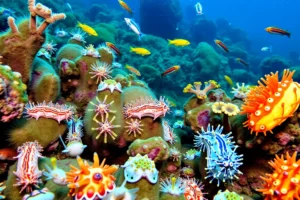
Stretching over 1,400 miles, the Great Barrier Reef is not only the largest coral reef system on Earth but also one visible from space. This UNESCO World Heritage site, composed of approximately 2,900 individual reefs and 900 islands, harbors a staggering diversity of marine life. From vibrant corals to countless fish species, this ecosystem showcases the richness and fragility of our oceans.
5. The Blue Whale: The Largest Animal on the Planet
When you think of scale, nothing compares to the blue whale. Weighing up to 200 tons and measuring up to 100 feet long, this majestic marine mammal holds the title of the largest animal to ever exist on Earth. Its heart alone can weigh as much as a small car! Despite their enormous size, blue whales primarily consume tiny shrimp-like animals called krill, illustrating the paradox of size and diet in the animal kingdom.
6. Sea Otters and Their Tool Use
What would it be like to use tools underwater? For sea otters, this is routine. Highly intelligent and resourceful, these adorable mammals use rocks to crack open shellfish, showcasing a form of tool use rarely seen in the animal kingdom. This behavior not only demonstrates their cognitive abilities but also highlights the intricate relationships within marine ecosystems, where sea otters play a vital role in maintaining kelp forest health.
7. Deep-Sea Hydrothermal Vents
Imagine a world where life thrives in the absence of sunlight. Hydrothermal vents, often found at the ocean floor, emit superheated water rich in minerals, creating unique ecosystems inhabited by extremophiles—organisms that thrive in extreme conditions. Tube worms and various microorganisms rely on chemosynthesis, utilizing chemical reactions rather than sunlight to produce energy. This discovery has redefined our understanding of life on Earth and the possibilities for life beyond.
8. The Seahorse’s Unique Reproductive Role
In the realm of animal reproduction, seahorses offer a remarkable twist: the males, not females, carry the fertilized eggs. The male seahorse incubates the eggs in a brood pouch, nurturing them until they hatch. This role reversal in the animal kingdom is both captivating and thought-provoking, challenging traditional perceptions of gender roles in reproduction.
9. The Enigmatic Octopus
An octopus is an intriguing specimen not just for its intelligence but also for its incredible adaptability. With three hearts and blue blood, these cephalopods are designed for survival in diverse underwater environments. They can camouflage themselves with astonishing speed, changing colors and textures to blend seamlessly into their surroundings. This remarkable skill serves as a defense mechanism, showcasing their expertise in evading predators.
10. The Sound of the Ocean
Have you ever considered how underwater sounds might affect marine life? The underwater environment is a cacophony of noises. From echolocation clicks of dolphins to the songs of humpback whales, sound plays a critical role in communication, navigation, and survival. Unfortunately, human-made noises like shipping and sonar can disrupt these vital acoustic signals, posing challenges for marine creatures and their habitats.
11. The Plastic Problem
As you contemplate the beauty of ocean life, what challenges do you think they face? One pressing issue is plastic pollution, which has infiltrated even the most remote marine environments. Millions of tons of plastic debris end up in the oceans every year, endangering wildlife, disrupting ecosystems, and affecting human health. This stark reality calls for collective action to preserve the fragile marine ecosystems we cherish.
12. The Cultural Importance of Marine Life
Finally, consider how sea life influences human culture and history. From ancient maritime myths to contemporary art inspired by ocean creatures, the sea has been a source of fascination and inspiration for civilizations throughout time. Our relationship with the ocean is multifaceted, representing a connection to nature that is essential for our survival and heritage.
As you surface from this exploration of the underwater world, take a moment to reflect on these astonishing facts. The ocean is a vast, mysterious realm full of life and stories waiting to be told. How will you engage with this knowledge? Each of us possesses the potential to contribute positively to ocean conservation, ensuring these incredible marine wonders endure for generations to come. The challenge is before you—will you take action to protect the depths and the amazing creatures that call it home?
FAQ
What is the most astonishing fact about sea life?
The immortal jellyfish can revert back to its juvenile form, allowing it to avoid death.
How does bioluminescence work in sea creatures?
Certain sea creatures produce light through biochemical reactions, serving various purposes like attracting mates or luring prey.
What role do sea otters play in the ecosystem?
Sea otters use tools to crack open shellfish, helping maintain the health of kelp forests.


Leave a Reply