
Short Answer
Space—an enigmatic canvas painted with the hues of cosmic wonders—has always mesmerized humanity. Like a twilight tapestry embroidered with threads of starlight, our universe unfolds tales of grandeur and mystery that defy human comprehension. As we embark on this journey through the cosmos, prepare to be captivated by a collection of mind-blowing space facts that you’ll want to revisit time and again.
1. The Breathtaking Depths of Space
When gazing into the night sky, it’s crucial to grasp the sheer enormity of the universe. The observable universe is about 93 billion light-years in diameter, a vast expanse that challenges the very limits of our imagination. To illustrate, if you could travel at the speed of light, it would take you over 93 billion years to traverse the universe from one end to the other. This colossal stretch can feel like standing at the edge of an ocean, where the horizon seems to extend infinitely, beckoning you to explore beyond.
2. A Symphony of Celestial Bodies
Within the cosmic ballet, there exists a symphony composed of celestial bodies. Our Milky Way galaxy, a mere speck in a universe teeming with galaxies, contains an estimated 100 to 400 billion stars. Among them, the largest known star, UY Scuti, surpasses the dimensions of our sun by over 1,700 times! Imagine a celestial giant, as monumental as an all-encompassing shadow, casting radiance across the vastness, while whispering secrets of nuclear fusion and the birth of new worlds.
3. The Sound of Silence in Space
Intriguingly, space is a realm devoid of sound. The vacuum that separates stars and planets is barren of air, and sound waves require a medium to travel. Consequently, if you were to float amidst the cosmos, enveloped by the starlit abyss, you would encounter profound silence—a stark contrast to the cacophony of life on Earth. Picture this: an infinite stillness, punctuated only by the illumination of distant galaxies, inviting you to ponder the mysteries of existence.
4. Time: A Relative Concept
Time unfolds differently in the cosmic theatre. According to Einstein’s theory of relativity, the fabric of space and time is intertwined. As an object approaches the speed of light, time slows down for it relative to an outside observer. Thus, astronauts aboard the International Space Station experience time at a slower pace than those on Earth. It’s as if the universe is a masterful illusionist, bending reality to challenge our perceptions of moments, past and future.
5. The Interstellar Ocean: Dark Matter
Enigmatic and elusive, dark matter makes up about 27% of the universe, yet remains largely undetectable. It does not emit, absorb, or reflect light—rendering it almost ghost-like. Imagine navigating an ocean where the surface appears serene and placid, while a formidable current flows beneath, unseen and powerful, shaping the very structure of the cosmos. This enigmatic substance holds the key to understanding the universe’s evolution and expansion.
6. Cosmic Recycling: The Life Cycle of Stars
Stars live, age, and die—each cycle a testament to the magnificent dance of cosmic rebirth. After exhausting their nuclear fuel, massive stars may explode in brilliant supernovae, scattering elemental debris across the cosmos. These remnants provide the building blocks for new stars, planets, and even life. It’s akin to a forest, where fallen trees nourish the soil, nurturing the growth of new woodland life—each generation crafting a richer tapestry of existence.
7. The Boundless Nature of Black Holes
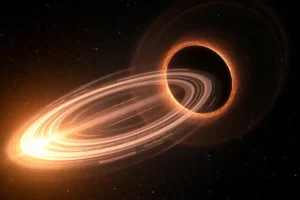
Black holes, the ultimate enigmas of the universe, possess gravitational forces so powerful that not even light can escape their grasp. Formed from the remnants of massive stars, black holes warp spacetime around them, creating regions of intense gravitational pull. Imagine a whirlpool in the fabric of reality—where all paths lead inward, and the concept of escape becomes obsolete. The event horizon represents the point of no return, compelling explorers to confront the very limits of understanding.
8. The Unique Chemistry of Extraterrestrial Worlds
Beyond our Earthly horizons lie planets with peculiar compositions. For example, Jupiter’s moon Europa is encased in a thick layer of ice, beneath which scientists believe an ocean of liquid water resides. Its environment could harbor life forms that thrive in darkness—a stark contrast to our sun-kissed world. Envision this icy labyrinth, as alien and inviting as a hidden kingdom, teasing the imagination with possibilities of life beneath its frozen veil.
9. The Infinite Nature of Exoplanets
Exoplanets—worlds orbiting stars beyond our solar system—number in the thousands. Some exist in the habitable zone of their stars, where conditions might permit liquid water. With an iridescent spectrum of atmospheres and compositions, these planets evoke visions of alien landscapes. Imagine peering through a cosmic portal into vibrant ecosystems unlike anything we’ve ever known—each world a chapter in the grand epic of the universe.
10. The Evolving Quest for Knowledge
As technology advances, so too does our understanding of the cosmos. The relentless pursuit of knowledge has birthed extraordinary missions, such as the Hubble Space Telescope and Mars rovers, each unveiling new facets of the universe. This journey is a tapestry woven with curiosity and innovation, revealing a universe that continually challenges and inspires humankind.
In conclusion, the universe remains a boundless repository of wonders, each fact a thread woven into the fabric of our cosmic understanding. Such revelations not only deepen our appreciation for the cosmos but also ignite our imaginations, beckoning us to delve further into the unknown. Each mind-blowing fact stands as a testament to the intriguing nature of existence—an invitation to explore the celestial mysteries that lie just beyond our grasp.
FAQ
Why is space silent?
Space is a vacuum without a medium for sound waves, so no sound can travel through it.
What is dark matter and why is it important?
Dark matter is an unseen substance that influences the structure and expansion of the universe, making up about 27% of its total mass-energy.
How do black holes form?
Black holes form from the remnants of massive stars that collapse under gravity after exhausting their nuclear fuel.
What is the significance of exoplanets?
Exoplanets help scientists understand planetary formation and the potential for life beyond our solar system.
How does time behave differently in space?
According to Einstein’s theory of relativity, time slows down near massive objects or at speeds close to light, affecting astronauts relative to observers on Earth.



Leave a Reply