

Short Answer
21 Facts About Yellowfin Tuna
- Scientific Name: The yellowfin tuna is scientifically known as Thunnus albacares. It belongs to the family Scombridae.
- Size and Weight: Yellowfin tuna can grow up to 2 meters (6.6 feet) in length and weigh as much as 200 kilograms (440 pounds), though average sizes are smaller.
- Distinctive Coloring: They are named for their distinctive bright yellow dorsal fin and finlets, which contrast with a metallic dark blue back.
- Speed and Agility: Yellowfin tuna are among the fastest fish in the ocean, capable of swimming speeds up to 75 km/h (47 mph).
- Global Distribution: They are found in tropical and subtropical oceans worldwide, including the Atlantic, Pacific, and Indian Oceans.
- Diet: Their diet mainly consists of other fish, squid, and crustaceans, making them apex predators.
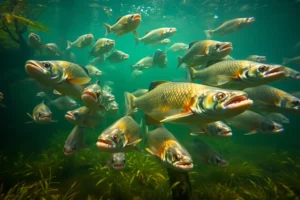
- Schooling Behavior: Yellowfin tuna often form large schools, sometimes mixing with other tuna species for feeding and migration.
- Reproduction: Spawning occurs in warm waters, with females releasing millions of eggs over their lifetime.
- Endothermy: Yellowfin tuna can regulate their body temperature above ambient water temperature, aiding in their high-speed swimming and deep diving abilities.
- Commercial Importance: They are highly valued in commercial and recreational fisheries worldwide, especially for sashimi and canned tuna products.
- Fishing Methods: Common fishing techniques include purse seining, longlining, and trolling.
- Migration: Yellowfin tuna undertake extensive migrations across ocean basins, often linked to water temperature and food availability.
- Longevity: They typically live up to 8 years, though some individuals may reach 10 to 12 years.
- Conservation Status: The species is currently listed as Near Threatened by the IUCN due to overfishing and habitat pressures.
- Role in Ecosystem: As predators, yellowfin tuna help maintain healthy marine food webs by controlling populations of smaller fish and squid.
- Temperature Range: They prefer water temperatures between 18 and 31°C (64 to 88°F), thriving in warm oceanic waters.
- Physiology: Yellowfin tuna have a streamlined body shape and powerful muscles optimized for long-distance fast swimming.
- Economic Value: The yellowfin tuna fishery generates billions of dollars annually worldwide.
- Cultural Significance: In many coastal communities, yellowfin tuna fishing is a traditional livelihood and an important cultural practice.
- Bycatch Issues: Yellowfin tuna fisheries sometimes result in bycatch of non-target species, raising ecological concerns.
- Research Importance: Studies on yellowfin tuna contribute to understanding fish migration, population dynamics, and sustainable fisheries management.
Habitat and Behavior
Yellowfin tuna inhabit warm tropical and subtropical ocean waters globally, typically found in epipelagic zones ranging from the surface to depths of around 250 meters. They prefer open ocean environments rather than coastal or reef areas. These fish are highly migratory, moving vast distances in search of food and suitable spawning grounds. Yellowfin tuna often form large schools, which can include thousands of individuals, and sometimes mix with other tuna species. Their behavior is characterized by active, fast swimming, which is supported by their physiological adaptations such as a streamlined body and partial endothermy that helps maintain muscle efficiency in cooler waters. Feeding primarily on smaller fish, squid, and crustaceans, yellowfin tuna are opportunistic predators that use speed and agility to capture prey. They reproduce by broadcast spawning, releasing eggs into the water column where fertilization occurs externally. Their spawning typically happens in warm waters, with peak seasons varying by region.
Why This Animal Matters
Yellowfin tuna play a critical ecological role as apex predators in marine ecosystems, helping to regulate populations of smaller fish and maintaining the balance of oceanic food webs. Their wide distribution and migratory habits link different ocean regions ecologically. Economically, yellowfin tuna is one of the most important commercial fish species worldwide, supporting large-scale fisheries and providing significant income for many coastal communities. The species is also culturally important, especially in regions where fishing is a traditional livelihood. However, intense fishing pressure has led to concerns about overfishing and stock depletion, making yellowfin tuna a focus of conservation and sustainable management efforts. Understanding their biology and migration patterns is essential for developing effective fishery policies that can ensure the species’ long-term viability and ecosystem health.
Common Misconceptions
Misconception: Yellowfin tuna are the same as albacore tuna.
Correction: Despite some similar names, yellowfin tuna (Thunnus albacares) and albacore tuna (Thunnus alalunga) are distinct species with different physical characteristics and habitats.
Misconception: All tuna species are slow swimmers.
Correction: Yellowfin tuna are among the fastest fish in the ocean, capable of rapid bursts of speed, which is an adaptation for hunting and migration.
Misconception: Yellowfin tuna live near the ocean floor.
Correction: Yellowfin tuna are pelagic fish, meaning they live in the open ocean water column rather than near the seabed.
Misconception: Tuna meat is always red.
Correction: The flesh color can vary among tuna species; yellowfin tuna meat is typically a lighter pink compared to the deep red of species like bluefin tuna.
Misconception: Tuna fishing has no environmental impact.
Correction: Some yellowfin tuna fishing methods can cause bycatch and overfishing, which have ecological consequences requiring management.
FAQ
Where are yellowfin tuna commonly found?
Yellowfin tuna are found in tropical and subtropical waters across the Atlantic, Pacific, and Indian Oceans, favoring open ocean habitats.
How fast can yellowfin tuna swim?
They can reach speeds of up to 75 km/h (47 mph), making them one of the fastest fish species.
What is the conservation status of yellowfin tuna?
Yellowfin tuna are currently classified as Near Threatened by the International Union for Conservation of Nature (IUCN) due to overfishing and habitat pressures.




Leave a Reply