
Short Answer
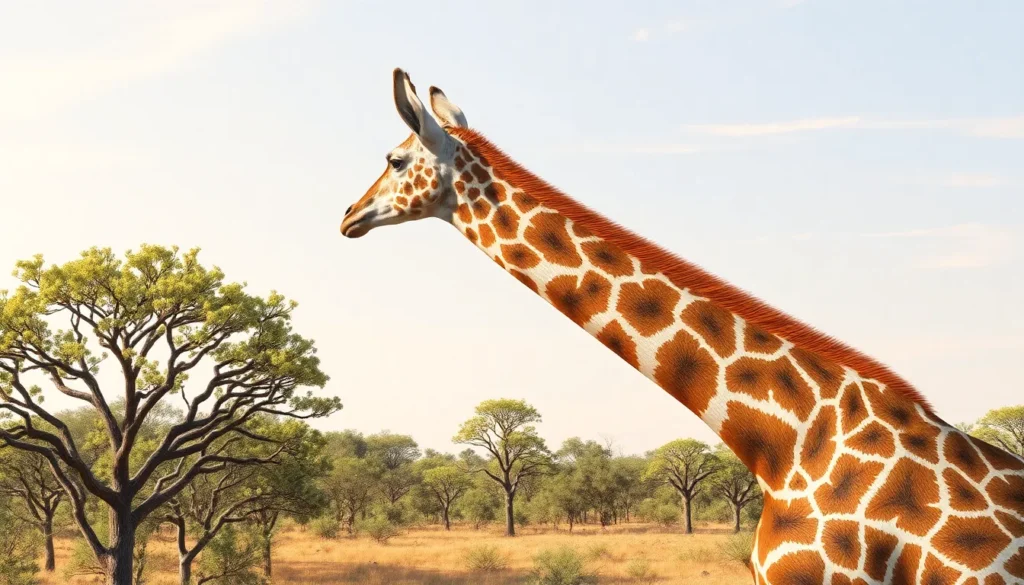
21 Facts About Giraffe Necks
- Length of the Neck: A giraffe’s neck can be up to 6 feet (1.8 meters) long, making it one of the longest necks among land animals.
- Number of Vertebrae: Despite its length, a giraffe’s neck contains only seven cervical vertebrae, the same number as most mammals, including humans.
- Size of Vertebrae: The cervical vertebrae in giraffes are greatly elongated, which accounts for the neck’s exceptional length.
- Neck Musculature: Strong muscles and ligaments support the neck and allow giraffes to lift and move their heads with precision.
- Blood Pressure Adaptations: Giraffes have a specialized cardiovascular system, including a powerful heart and tight skin, to maintain blood flow to the brain when the head is raised.
- Ossicones: The bony protuberances atop a giraffe’s head, called ossicones, are connected to the skull and neck muscles, aiding in neck movements during fights.
- Necking Behavior: Male giraffes use their necks as weapons in combat, swinging them to deliver powerful blows to rivals during mating competition.
- Feeding Advantages: The long neck allows giraffes to browse leaves and shoots from tall trees, especially acacias, inaccessible to many other herbivores.
- Evolutionary Puzzle: The giraffe’s neck has long been a subject of evolutionary study, illustrating natural selection in response to feeding competition and social behavior.
- Flexible Neck Joints: The joints between cervical vertebrae allow a wide range of motion, enabling giraffes to bend their necks down to drink water.
- Neck and Thermoregulation: The surface area of the neck helps dissipate heat, playing a role in thermoregulation in hot African climates.
- Neck Growth Rate: Giraffe necks grow rapidly during the early years of life, reaching full length by the age of four to five years.
- Heart-to-Neck Coordination: The giraffe’s heart pumps blood at high pressure, synchronized with the neck’s position to prevent fainting when raising or lowering the head.
- Neck and Vision: Height from the neck gives giraffes excellent vantage points for spotting predators over large distances.
- Neck Skin Thickness: The skin on a giraffe’s neck is thicker and tougher than in other body parts, providing protection during necking battles.
- Neck and Vocalization: The long neck influences the giraffe’s vocal tract, contributing to their low-frequency sounds, some of which are below human hearing.
- Neck Blood Vessels: Giraffes have specialized valves in neck veins to control blood flow and prevent excessive blood pressure changes.
- Neck in Different Giraffe Species: Neck length and shape vary slightly among giraffe subspecies, reflecting adaptations to local environments.
- Neck and Predation: The height advantage from the neck helps giraffes detect and avoid predators like lions and hyenas.
- Neck and Social Interaction: Neck length and strength influence social hierarchy among males, affecting reproductive success.
- Neck and Evolutionary Relatives: Fossil evidence shows ancestors of giraffes had shorter necks, highlighting the gradual evolutionary development of this trait.
Habitat and Behavior
Giraffes inhabit savannas, grasslands, and open woodlands across sub-Saharan Africa. Their long necks allow them to feed on foliage beyond the reach of other herbivores, primarily targeting acacia leaves. Giraffes are social animals, often found in loose groups. Necking behavior, where males swing their necks to strike opponents, plays a crucial role in establishing dominance and mating rights. Despite their height, giraffes must bend down to drink water, a vulnerable position that makes them cautious of predators. Their necks also help them keep watch for danger over large distances.
Why This Animal Matters
The giraffe’s neck is not only a distinctive physical characteristic but also a vital adaptation that supports its survival and ecological role. By browsing high vegetation, giraffes influence plant community dynamics and facilitate access to food for other species through leaf trimming. Culturally, giraffes are iconic symbols of African wildlife and biodiversity. Conservation of giraffes and their habitats is important, as populations face threats from habitat loss, poaching, and human-wildlife conflict. Understanding giraffe neck anatomy and behavior enhances knowledge of evolutionary biology and animal adaptation.
Common Misconceptions
Misconception: Giraffes have more neck bones than humans.
Correction: Giraffes have the same number of cervical vertebrae as humans, seven, but each bone is much longer.
Misconception: The giraffe’s neck evolved solely for feeding.
Correction: While feeding played a major role, neck length also evolved due to sexual selection and social behaviors like necking.
Misconception: Giraffes cannot bend their necks due to their length.
Correction: Giraffes have flexible neck joints that enable them to bend down for drinking and other movements.
FAQ
Why do giraffes have such long necks?
Giraffes have long necks primarily to reach food in tall trees and to compete for mates through necking battles, which involves swinging their necks to strike rivals.
How many bones are in a giraffe’s neck?
A giraffe has seven cervical vertebrae in its neck, the same number as most mammals, including humans, but each vertebra is greatly elongated.
How do giraffes manage blood flow to their brains with such long necks?
Giraffes have a powerful heart that pumps blood at high pressure and specialized valves in neck veins to regulate blood flow, preventing blood pooling or fainting when raising or lowering their heads.






Leave a Reply