
Short Answer
21 Facts About X-ray Tetras
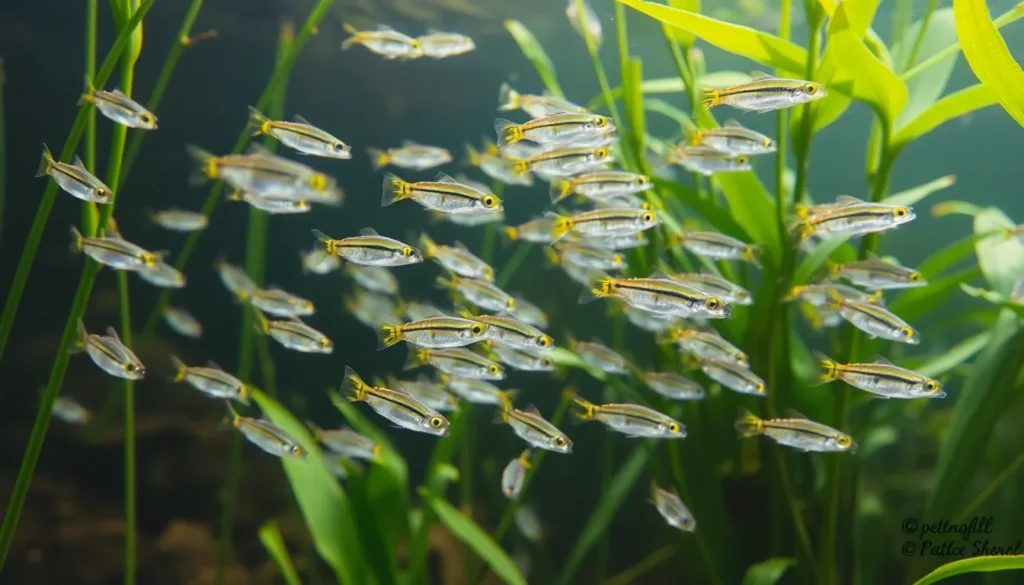
- Translucent Body: X-ray tetras are named for their nearly transparent bodies, which allow internal organs and bones to be faintly visible, giving them a distinctive appearance.
- Scientific Name: The species is scientifically known as Pristella maxillaris.
- Size: They typically grow to about 3.5 to 4 cm (1.4 to 1.6 inches) in length.
- Coloration: Apart from their clear bodies, they display a silvery sheen with yellow and black markings on their fins.
- Habitat: X-ray tetras are native to the Amazon, Orinoco, and Paraguay river basins in South America.
- Water Conditions: They thrive in warm, soft, and slightly acidic to neutral water environments.
- Diet: X-ray tetras are omnivorous, feeding on small insects, crustaceans, and plant matter.
- Social Behavior: They are schooling fish that prefer to live in groups to reduce stress and exhibit natural behaviors.
- Temperament: X-ray tetras are peaceful and compatible with many other small, non-aggressive fish species.
- Breeding: They are egg scatterers, releasing eggs among plants or substrate without parental care.
- Lifespan: In captivity, they typically live for about 3 to 5 years with proper care.
- Adaptability: X-ray tetras are tolerant of a range of water parameters, making them popular for beginner aquarists.
- Activity: They are active swimmers, often seen darting in the middle to upper levels of the aquarium.
- Predation: Their translucent bodies may serve as a form of camouflage against predators in the wild.
- Scientific Study: Their transparent bodies make them useful in scientific research, particularly in studies of fish anatomy and physiology.
- Popularity: They are widely kept in home aquariums around the world due to their unique appearance and peaceful nature.
- Tank Requirements: A minimum tank size of 15 gallons is recommended for a small school to provide adequate swimming space.
- Lighting: Moderate lighting enhances their coloration without causing stress.
- Community Tank: X-ray tetras are suitable for community tanks with other small, peaceful species like neon tetras and rasboras.
- Conservation Status: Currently, X-ray tetras are not listed as threatened or endangered.
- Natural Role: In their native habitat, they play a role in controlling insect populations and serving as prey for larger predators.
Habitat and Behavior
X-ray tetras inhabit slow-moving rivers, streams, and flooded forest areas within the Amazon, Orinoco, and Paraguay basins in South America. These environments typically feature soft, acidic water with abundant vegetation and leaf litter, providing both food sources and shelter. Their behavior is characterized by schooling and active swimming, which helps them avoid predators and find food efficiently. As omnivores, they feed on small invertebrates, insect larvae, and plant material. Their translucent body acts as a natural camouflage, helping them blend into the dappled light of their aquatic surroundings. They reproduce by scattering eggs among plants or substrate, with no parental care after spawning.
Why This Animal Matters
X-ray tetras contribute ecologically by maintaining insect populations in check and serving as a food source for larger predatory species, thus supporting the aquatic food web. Their peaceful temperament and adaptability have made them popular in the aquarium trade, contributing to education and awareness about freshwater biodiversity. Scientifically, their transparent bodies offer valuable insights into fish anatomy and physiology. Currently, they are not under significant conservation threat, but their presence in diverse South American freshwater ecosystems highlights the importance of preserving aquatic habitats that support a wide range of species.
Common Misconceptions
Misconception: X-ray tetras are fragile and difficult to keep in home aquariums.
Correction: While sensitive to poor water quality, X-ray tetras are generally hardy and adaptable, making them suitable for beginner aquarists when proper conditions are maintained.
Misconception: Their translucent bodies mean they are invisible to predators.
Correction: Although their transparency provides some camouflage, it does not render them invisible; they still face predation risks in the wild.
Misconception: X-ray tetras require very specialized diets.
Correction: They are omnivores and can thrive on a varied diet including flake foods, small live or frozen prey, and plant matter.
FAQ
What do X-ray tetras eat?
X-ray tetras are omnivorous and consume a diet including small insects, crustaceans, and plant matter. In captivity, they can eat flake foods, frozen or live brine shrimp, and other small aquatic foods.
How large do X-ray tetras grow?
They typically reach a size of about 3.5 to 4 cm (1.4 to 1.6 inches) when fully grown.
Are X-ray tetras suitable for beginner aquarium hobbyists?
Yes, X-ray tetras are considered hardy and adaptable fish, making them suitable for beginners provided their water quality and social needs are met.



Leave a Reply