
Short Answer
21 Facts About Venomous Animals
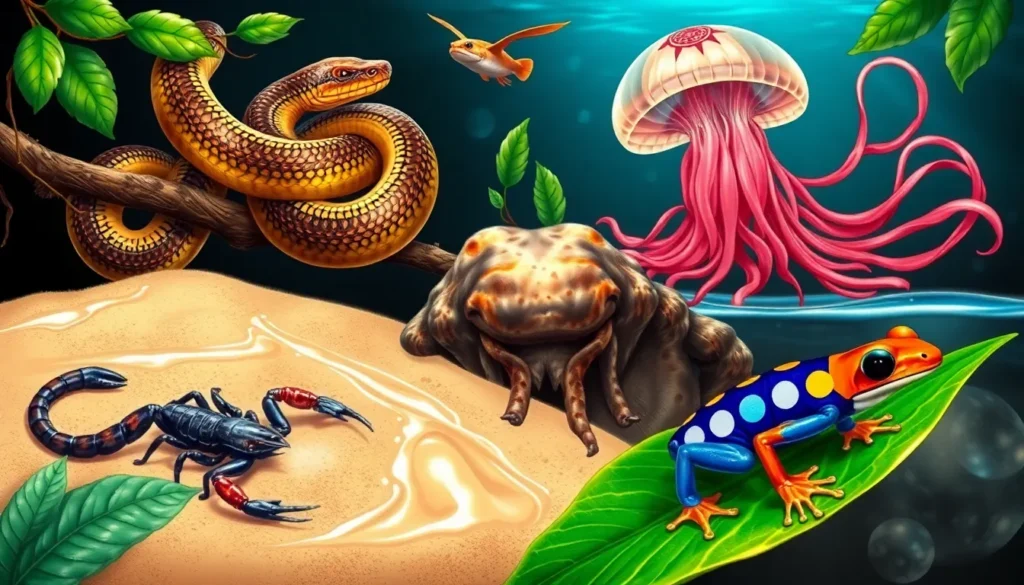
- Venom and poison are different. Venomous animals inject venom through bites or stings, whereas poisonous animals release toxins when touched or eaten.
- Venom evolved multiple times independently. Different animal groups like snakes, spiders, and scorpions have developed venom separately in evolutionary history.
- Not all venomous animals are harmful to humans. Many produce venom effective only against their prey and pose little threat to people.
- The box jellyfish has one of the most potent venoms. Its venom can cause heart failure and death in humans within minutes.
- Some venomous animals use their toxins for defense, others for hunting. For example, many snakes use venom to immobilize prey, while some frogs use skin toxins primarily for protection.
- Venom composition is complex and varies widely. It can include proteins, enzymes, and other molecules targeting the nervous system, blood, or tissues.
- Venoms have medical applications. Researchers study venom components for potential drugs and treatments.
- Some animals can control venom delivery. For example, certain snakes can regulate the amount of venom injected depending on the situation.
- Venomous animals exist in all major animal groups. They include reptiles, amphibians, fish, insects, arachnids, mollusks, and even some mammals.
- Slow lorises are one of the few venomous mammals. They produce venom from glands in their elbows, which they mix with saliva to deliver a toxic bite.
- Venomous snakes are often misunderstood and killed unnecessarily. Many species help control pest populations and maintain ecological balance.
- The stonefish is the most venomous fish known. Its spines deliver venom that can cause excruciating pain and even death.
- Some venomous animals use bright colors as a warning. This phenomenon, called aposematism, helps deter predators.
- Venom potency can vary within a species. Factors include age, diet, and environmental conditions.
- Spiders have diverse venom effects. While most are harmless to humans, a few species like the black widow have venom that affects the nervous system seriously.
- Venom delivery methods differ significantly. For example, snakes use fangs, scorpions use stingers, and cone snails use harpoon-like radulae.
- Some animals combine venom with other defensive strategies. For instance, the slow loris also uses its biting behavior alongside venom to ward off threats.
- Venomous animals contribute to biodiversity. Their adaptations highlight evolutionary innovation and ecological specialization.
- Venomous animals often have specialized glands for venom production. These glands are typically connected to structures used for injection or delivery.
- Venoms can cause a range of symptoms. Effects include paralysis, tissue damage, blood clotting disorders, and pain.
- Conservation of venomous animals is important. Habitat loss and persecution threaten many species, some of which have ecological importance or potential medical value.
Habitat and Behavior
Venomous animals inhabit diverse environments worldwide, from tropical rainforests and deserts to oceans and freshwater systems. Their behaviors vary according to their ecological niches. For example, venomous snakes often rely on ambush tactics or active hunting to capture prey, while venomous spiders may build webs to trap insects before injecting venom. Some animals use venom primarily as a defense mechanism against predators, while others depend on it to subdue prey. Many venomous species are nocturnal, reducing encounters with predators and humans. The ability to produce and deliver venom often allows these animals to exploit specific habitats and prey types, contributing to their survival and evolutionary success.
Why This Animal Matters
Venomous animals play crucial roles in ecosystems by controlling prey populations, which helps maintain ecological balance. Their venoms have inspired scientific research leading to the development of new medications, including painkillers, blood thinners, and treatments for various diseases. Culturally, venomous animals have been significant in folklore, mythology, and traditional medicine across many societies. However, human fear and misunderstanding have led to unnecessary killings and habitat destruction, threatening some venomous species. Conservation efforts are essential to preserve their biodiversity and the ecological services they provide.
Common Misconceptions
Misconception: All venomous animals are deadly to humans.
Correction: While some venomous species can cause serious harm, many have venom that is not dangerous to humans or they rarely come into contact with people.
Misconception: Venomous and poisonous animals are the same.
Correction: Venomous animals inject toxins via bites or stings, whereas poisonous animals release toxins when touched or ingested.
Misconception: Venomous animals always attack humans unprovoked.
Correction: Most venomous animals use venom defensively or to capture prey and typically avoid human contact when possible.
Misconception: Venomous animals are aggressive by nature.
Correction: Many venomous species are shy and only use venom when threatened or hunting.
Misconception: Venomous animals are found only in tropical regions.
Correction: Venomous animals live in many climates and habitats worldwide, including temperate and even cold regions.
FAQ
What is the difference between venomous and poisonous animals?
Venomous animals inject toxins into other organisms through bites or stings, while poisonous animals release toxins when touched or eaten.
Are all venomous animals dangerous to humans?
No, many venomous animals have venoms specialized for their prey and pose little or no threat to humans.
How do venomous animals use their venom?
Venom is used primarily for hunting prey or defense against predators, depending on the species.

Leave a Reply