
Short Answer
21 Facts About Ultrasound in Rodents
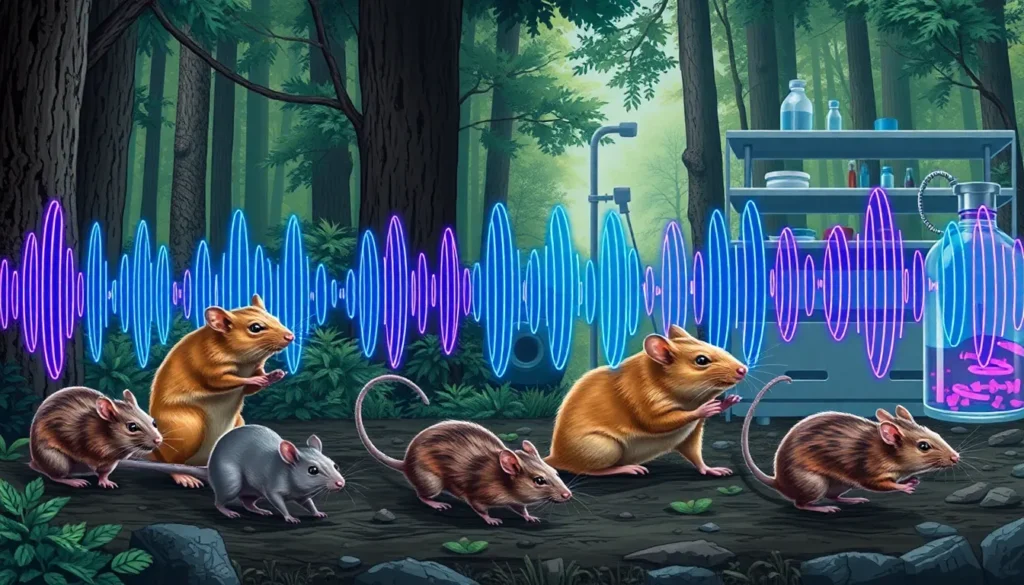
- Rodents produce ultrasonic vocalizations (USVs). These are sounds above 20 kHz, inaudible to humans, used for communication.
- USVs serve social communication purposes. Rodents use ultrasound to express emotions, establish social hierarchy, and coordinate group behavior.
- Male rodents emit ultrasonic courtship calls. These vocalizations attract females and play a role in mating rituals.
- Rodent pups use ultrasound to signal distress. Infant rodents emit ultrasonic calls when separated from their mother to elicit care.
- Ultrasound helps rodents avoid predators. Some ultrasonic signals may warn conspecifics of danger or help detect predators through echolocation-like mechanisms.
- Different species produce distinct ultrasonic patterns. The frequency, duration, and modulation of USVs vary between rodent species and even individuals.
- USV research aids neuroscience studies. Scientists study rodent ultrasound to understand brain function, emotional states, and communication disorders.
- Rodents can hear ultrasound frequencies well above human limits. Their auditory system is specialized to detect frequencies from approximately 20 kHz up to 100 kHz or more.
- USVs can indicate emotional states such as anxiety or pleasure. For example, 50 kHz calls in rats are often associated with positive social interactions.
- Environmental factors influence ultrasonic communication. Noise pollution and habitat structure can affect the transmission and reception of ultrasonic signals.
- Ultrasound is used experimentally to assess rodent health. Changes in USV patterns can indicate neurological or developmental disorders.
- Rodent ultrasonic calls have structural complexities. Calls can include frequency modulations, trills, and jumps, serving different communicative functions.
- USVs develop with age. Juvenile rodents show different ultrasonic vocalization patterns compared to adults, reflecting developmental stages.
- Ultrasound plays a role in mother-infant bonding. Mothers respond to pup USVs, facilitating nurturing behavior.
- Rodents may use ultrasound for spatial orientation. While not true echolocation, some ultrasonic sounds assist in environmental awareness.
- Technological advances have improved USV detection. Specialized microphones and software allow precise recording and analysis of rodent ultrasound.
- USVs can be experimentally manipulated to study communication. Playback of ultrasonic calls can influence rodent behavior in laboratory settings.
- Ultrasound research contributes to understanding human speech disorders. Rodent USVs serve as models for studying communication deficits relevant to conditions like autism.
- Rodent species commonly studied for ultrasound include rats, mice, and voles. Each species exhibits unique vocalization traits relevant to their ecology and behavior.
- Some rodents emit ultrasound as part of aggressive encounters. Ultrasonic sounds can signal dominance or territorial defense.
- Ultrasound is a non-invasive tool in behavioral science. Monitoring USVs allows researchers to study naturalistic communication without distressing the animals.
Habitat and Behavior
Rodents are a diverse group inhabiting a wide range of environments worldwide, including forests, grasslands, urban areas, and agricultural lands. Their behavior is adapted to survival in these habitats, with social structures that vary from solitary to highly social species. Ultrasound communication is integral to many rodents’ behavior, aiding in mating, parental care, social interaction, and predator avoidance. These ultrasonic signals often occur in contexts such as courtship, alarm, and mother-infant bonding, enabling rodents to communicate effectively even in low-visibility or noisy environments. The ability to produce and perceive ultrasound enhances their capacity to navigate complex habitats and maintain social cohesion.
Why This Animal Matters
Rodents are ecologically significant as seed dispersers, prey for numerous predators, and ecosystem engineers through their burrowing activities. Studying ultrasound in rodents provides insights into animal communication, neurobiology, and behavior, offering models for understanding human speech and neurological disorders. Additionally, research on rodent ultrasound has implications for pest management, conservation biology, and environmental monitoring. Understanding their ultrasonic communication also enriches knowledge of mammalian sensory capabilities and evolutionary adaptations.
Common Misconceptions
Misconception: Rodents use ultrasound only for mating calls.
Correction: While mating calls are important, rodents use ultrasound for various purposes, including social bonding, distress signaling, territorial defense, and predator warnings.
Misconception: Ultrasound in rodents is similar to bat echolocation.
Correction: Rodent ultrasound primarily serves communication rather than navigation; unlike bats, most rodents do not use ultrasonic calls for echolocation.
Misconception: Humans can hear rodent ultrasonic vocalizations.
Correction: Most rodent USVs occur above human hearing range, typically above 20 kHz, making them inaudible without specialized equipment.
Misconception: All rodent species produce ultrasonic vocalizations.
Correction: While many species emit ultrasonic sounds, not all rodents rely on ultrasound for communication; the presence and complexity of USVs vary among species.
FAQ
What is ultrasound in rodents?
Ultrasound in rodents refers to high-frequency vocalizations above 20 kHz that these animals use for communication, which are inaudible to humans without special equipment.
Why do rodents produce ultrasonic vocalizations?
Rodents produce ultrasonic vocalizations to communicate social information including mating readiness, distress signals, social bonding, and alarm calls.
Can humans hear rodent ultrasounds?
No, most rodent ultrasounds are at frequencies above the human hearing range, so they are typically inaudible without specialized recording and playback devices.





Leave a Reply