
Short Answer
21 Facts About Stick Insects
- Camouflage Masters
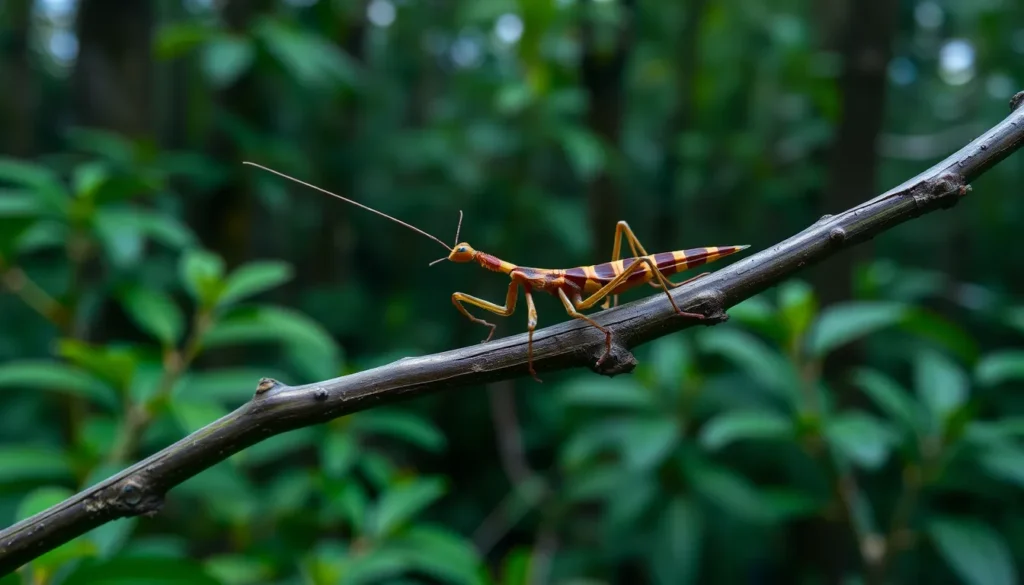
Stick insects are renowned for their exceptional camouflage, resembling twigs, sticks, or leaves to evade predators. - Varied Sizes
They range in size from about 1.5 cm (0.6 inches) to over 30 cm (12 inches) in length, depending on the species. - Wide Distribution
Stick insects are found on every continent except Antarctica, with the greatest diversity in tropical regions. - Nocturnal Behavior
Most stick insects are nocturnal, feeding and moving primarily during the night to avoid detection. - Herbivorous Diet
They primarily feed on leaves from a variety of plants, including bramble, ivy, and eucalyptus. - Parthenogenesis
Some species can reproduce asexually through parthenogenesis, where females produce offspring without males. - Slow Movement
They typically move very slowly, aiding their disguise as plant material. - Defensive Behaviors
When threatened, some species sway to mimic leaves blowing in the wind, while others may release defensive chemicals or drop limbs. - Molting Process
Stick insects undergo several molts as they grow, shedding their exoskeletons to increase in size. - Long Lifespan
In captivity, some species have been noted to live up to two years, which is relatively long for insects. - Egg Mimicry
The eggs of many stick insect species resemble seeds, aiding in protection from predators. - Leg Regeneration
They can regenerate lost legs during subsequent molts if injured. - Wing Variability
While many species are wingless, some males possess wings and can fly short distances. - Social Behavior
Generally solitary, but some species display limited social interactions during mating or aggregation. - Predators and Threats
Birds, reptiles, and small mammals are common predators, making camouflage critical for survival. - Use in Biological Research
Stick insects serve as models for studying camouflage, mimicry, and insect physiology. - Popular in Pet Trade
Due to their unique appearance and low maintenance, they are sometimes kept as exotic pets. - Species Diversity
There are over 3,000 known species of stick insects worldwide. - Sexual Dimorphism
Males and females often differ in size, coloration, and wing presence. - Egg Dispersal
Some species flick or drop their eggs onto the ground to disperse them and reduce predation risk. - Evolutionary Adaptations
Stick insects have evolved specialized body shapes and behaviors to blend into their environments effectively.
Habitat and Behavior
Stick insects inhabit a variety of environments, predominantly forests, woodlands, and shrublands where their camouflage is most effective. They are especially abundant in tropical and subtropical regions, including Southeast Asia, Australia, and South America. Their behavior is largely nocturnal, feeding on leaves under the cover of darkness to avoid predators. They rely heavily on their camouflage not only for protection but also to ambush predators or avoid detection while feeding. During the day, they remain motionless, often aligning their bodies with twigs or leaves to enhance their disguise. Reproduction varies among species, with some capable of sexual reproduction while others reproduce parthenogenetically. Their eggs often mimic seeds, aiding in their survival through natural dispersal mechanisms.
Why This Animal Matters
Stick insects play an important ecological role as herbivores, contributing to plant population control and serving as prey for a variety of predators, thus maintaining the balance within their ecosystems. Their unique adaptations provide valuable insights into evolutionary biology, especially in the study of camouflage and mimicry. In some cultures, stick insects hold educational value, helping raise awareness about insect biodiversity and conservation. While most species are not currently endangered, habitat loss and collection for the pet trade can pose threats to certain populations. Understanding and preserving stick insects contributes to broader efforts in biodiversity conservation and ecological research.
Common Misconceptions
Misconception: Stick insects are harmful pests.
Correction: Stick insects generally do not pose significant harm to plants or crops and are not considered pests. They feed selectively and are part of natural ecosystems.
Misconception: All stick insects can fly.
Correction: Not all stick insect species possess wings; many are wingless, and only some males of specific species can fly.
Misconception: Stick insects are dangerous to humans.
Correction: Stick insects are harmless to humans. They do not bite or sting and are generally passive.
FAQ
Are stick insects dangerous to humans?
No, stick insects are harmless to humans. They do not bite or sting and are generally passive creatures.
How do stick insects protect themselves from predators?
Stick insects rely primarily on their camouflage, which makes them resemble sticks or leaves. Some species also use swaying motions to mimic leaves moving in the wind or can release defensive chemicals.
Can stick insects fly?
Not all stick insects can fly. Many species are wingless, while some males of certain species possess wings and are capable of short flights.



Leave a Reply