
Short Answer
21 Facts About Ruminant Digestion
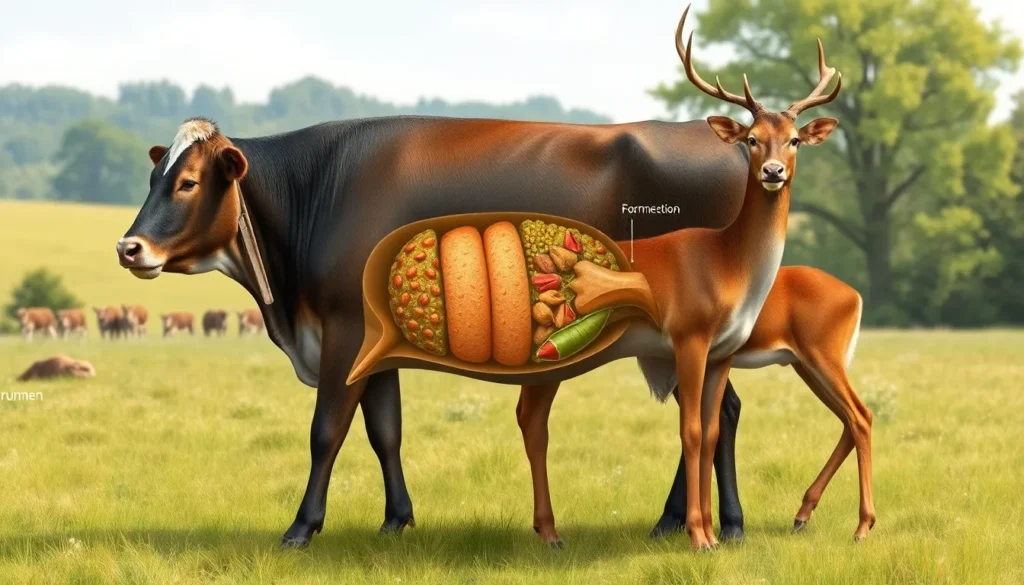
- Ruminants have a four-chambered stomach. The stomach is divided into the rumen, reticulum, omasum, and abomasum, each playing a specific role in digesting fibrous plant material.
- The rumen hosts diverse microbes. This large fermentation chamber contains bacteria, protozoa, and fungi that break down cellulose and other complex carbohydrates.
- Ruminants perform cud chewing. After initial fermentation, they regurgitate partially digested food (cud) to chew it again, increasing digestion efficiency.
- Microbial fermentation produces volatile fatty acids. These fatty acids are absorbed and provide a primary energy source for ruminants.
- Ruminants can digest cellulose, which many animals cannot. The symbiotic microbes enable them to extract nutrients from fibrous plants such as grasses.
- The reticulum helps trap heavy or dense objects. It acts as a sorting chamber, also playing a role in regurgitation of cud.
- The omasum absorbs water and nutrients. It filters out large particles and helps decrease the volume of digesta before it reaches the abomasum.
- The abomasum is the true stomach. It functions similarly to monogastric stomachs, producing acid and enzymes to digest proteins.
- Ruminant digestion is a slow process. It can take up to 70 hours for food to be fully processed, depending on the diet and species.
- Saliva production is crucial. Ruminants produce large amounts of saliva that buffers rumen pH and aids in digestion.
- Ruminants rely on nitrogen recycling. They recycle nitrogen via saliva and urea to support microbial protein synthesis in the rumen.
- Diet influences rumen microbial populations. Changes in diet can alter the types and activities of microbes, affecting digestion and animal health.
- Ruminants produce methane as a byproduct. Methanogenic archaea in the rumen generate methane gas during fermentation, contributing to greenhouse gas emissions.
- Ruminant digestion supports nutrient absorption. Microbial protein and vitamins synthesized in the rumen are essential nutrients for the animal.
- Ruminants have a large capacity to store food. The rumen can hold significant volumes of plant material, allowing them to feed quickly and digest later.
- Temperature and pH of the rumen are tightly regulated. Maintaining an optimal environment is vital for microbial activity and overall digestion.
- Ruminants can adapt to different forage types. Their digestive systems adjust to varying plant qualities and compositions.
- Some deer species have slightly different rumen structures. For example, deer often have a smaller rumen relative to body size compared to cattle, affecting digestion rates.
- Ruminants contribute to nutrient cycling in ecosystems. Their digestion and waste return nutrients to the soil, supporting plant growth.
- Understanding ruminant digestion aids livestock management. Knowledge of digestion processes helps optimize feeding strategies and animal health.
- Ruminant digestion exemplifies symbiosis. The mutualistic relationship between host and microbes is a key evolutionary adaptation.
Habitat and Behavior
Cows and deer are widespread ruminant species inhabiting diverse environments. Cows, primarily domesticated, are found worldwide on farms and ranches, thriving in temperate to tropical climates. Wild deer species occupy forests, grasslands, and mountainous regions, adapting to various vegetation types. Ruminants are herbivores, grazing or browsing on grasses, leaves, and other fibrous plants. Their behavior includes periods of feeding interspersed with rumination (cud chewing), which allows them to maximize nutrient extraction. Social structures vary; cows often form herds, while deer may form smaller groups or be solitary depending on species and season. Their digestive adaptations enable them to exploit plant resources that many other animals cannot efficiently use, supporting survival in habitats with abundant but low-nutrient vegetation.
Why This Animal Matters
Ruminants like cows and deer play vital ecological roles. They influence plant community dynamics through selective grazing and browsing, shaping habitats and promoting biodiversity. Their digestion contributes to nutrient cycling by returning organic matter and nutrients to the soil via feces and urine. In agricultural contexts, cows are economically significant as sources of meat, milk, and leather, supporting global food systems. Deer hold cultural importance in many societies and contribute to wildlife biodiversity. Understanding ruminant digestion is crucial for improving livestock productivity and sustainability while mitigating environmental impacts such as methane emissions. Conservation of wild ruminants supports ecosystem health and the balance of natural landscapes.
Common Misconceptions
Misconception: Ruminants chew their food only once.
Correction: Ruminants regurgitate and chew their cud multiple times to break down tough plant fibers thoroughly.
Misconception: All ruminants have identical digestive processes.
Correction: While similar, digestive efficiency and stomach proportions can vary among species like cows and deer, affecting digestion speed and nutrient absorption.
Misconception: Ruminants digest plants without microbial help.
Correction: The digestion of cellulose and complex carbohydrates depends on a diverse microbial community within the rumen.
Misconception: Methane production by ruminants is negligible.
Correction: Methane emissions from ruminant digestion are a significant source of greenhouse gases globally.
Misconception: Ruminants cannot survive on poor-quality forage.
Correction: Their specialized digestion allows them to extract nutrients from fibrous, low-quality plant material that many other animals cannot utilize effectively.
FAQ
What makes ruminant digestion unique compared to other animals?
Ruminant digestion is unique because it involves a specialized four-chambered stomach that allows microbial fermentation to break down fibrous plant material, enabling digestion of cellulose which most animals cannot process efficiently.
Why do ruminants chew cud?
Ruminants regurgitate partially digested food, called cud, to chew it again. This process increases the surface area of food particles, enhancing microbial breakdown and nutrient absorption.
How does ruminant digestion impact the environment?
Ruminant digestion produces methane, a potent greenhouse gas contributing to climate change. However, ruminants also play important ecological roles by recycling nutrients and maintaining plant community dynamics.



Leave a Reply