
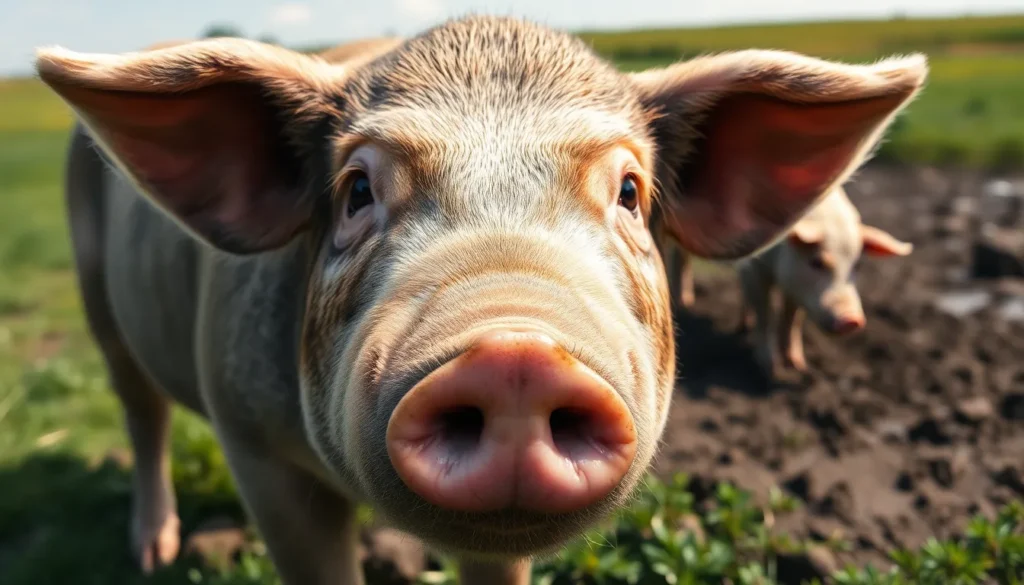
Short Answer
21 Facts About Pigs
- Pigs are highly intelligent animals. Studies show they can learn complex tasks and have excellent long-term memories.
- Pigs have a strong sense of smell. Their snouts are equipped with thousands of sensory cells, used to root out food underground.
- Pigs are social creatures. They form close bonds with other pigs and can communicate using various vocalizations.
- Pigs are omnivores. They have a varied diet that includes plants, insects, and small animals.
- Pigs sweat very little. To regulate body temperature, they often wallow in mud, which also protects their skin from sunburn and parasites.
- Domestic pigs descend from wild boars. They were first domesticated over 9,000 years ago in multiple regions including the Near East and China.
- Pigs are good swimmers. They can cross rivers and cool off in water, which helps with thermoregulation.
- Some pig breeds have distinctive physical traits. For example, the Vietnamese pot-bellied pig is small and known for its rounded belly.
- Pigs have remarkable hearing and can detect sounds outside human auditory range.
- Pigs use their tails for communication. Tail position and movement can indicate mood or health.
- Pigs have a wide range of vocalizations. These include grunts, squeals, and oinks used to express emotions and intentions.
- They are capable of altruistic behavior. Research suggests pigs may help each other out in distressing situations.
- Pigs can learn to play video games with joystick controls. This demonstrates their ability to understand cause-and-effect relationships.
- Wild pigs can be invasive species. In some regions, feral pigs cause ecological damage by rooting up native vegetation.
- Pigs have a gestation period of about 114 days. Typically, sows give birth to litters of 6 to 12 piglets.
- Pigs have been used in medical research. Their physiological similarities to humans make them valuable models for studying diseases and organ transplants.
- In many cultures, pigs symbolize prosperity and fertility. They appear in folklore, religious rituals, and cuisine worldwide.
- Despite their reputation, pigs are clean animals. They designate specific areas for eating, sleeping, and eliminating waste.
- Pigs have a complex digestive system. They are monogastric but have an extended large intestine that aids in fermentation of fibrous materials.
- Pigs have been domesticated for food, companionship, and even pets in recent decades.
- Pigs’ skin is used in various products, including leather goods.
Habitat and Behavior
Pigs inhabit a wide range of environments, from wild forests and grasslands to farms and urban settings. Wild pigs, such as wild boars, are native to much of Europe, Asia, and parts of North Africa. Domestic pigs live worldwide due to farming. They are highly adaptable, often foraging for roots, tubers, insects, and small animals. Social behavior is a hallmark of pigs, with groups called sounders typically consisting of females and their offspring. Males may be solitary or form bachelor groups. Pigs communicate through vocalizations and body language and use their snouts to explore and manipulate their environment. Their rooting behavior helps them find food but can disrupt soil and vegetation in some areas. Pigs regulate body temperature by wallowing in mud or water and avoid overheating by seeking shade.
Why This Animal Matters
Pigs play a crucial ecological role by influencing soil dynamics and plant communities through their rooting and foraging. They also serve as prey for large predators in wild habitats. Culturally, pigs have been significant in agriculture and cuisine for thousands of years, providing meat, leather, and other products. In some societies, pigs are symbols of wealth, fertility, and good fortune. Scientifically, pigs contribute to medical research due to their anatomical and physiological similarities to humans, aiding in studies of organ transplantation, cardiovascular diseases, and skin treatments. Conservation concerns exist mainly for wild pig populations threatened by habitat loss and hunting in some regions, while feral pigs are considered invasive elsewhere, causing ecological challenges.
Common Misconceptions
Misconception: Pigs are dirty and live in filth.
Correction: Pigs are naturally clean animals that designate separate areas for eating, sleeping, and waste elimination. They wallow in mud primarily to cool down and protect against parasites.
Misconception: Pigs are unintelligent and have poor memories.
Correction: Pigs are among the most intelligent domesticated animals, capable of problem solving, learning complex tasks, and remembering people and places.
FAQ
Are pigs really dirty animals?
No, pigs are actually clean animals that keep their living areas tidy. They wallow in mud to cool off and protect their skin, not because they are naturally dirty.
How intelligent are pigs?
Pigs are considered highly intelligent, able to learn complex tasks, recognize individuals, and remember solutions to problems, on par with some primates and dogs.
Where do domestic pigs come from?
Domestic pigs descended from wild boars and were first domesticated over 9,000 years ago in regions including the Near East and China.





Leave a Reply