
Short Answer
21 Facts About Longhorn Beetles
- Longhorn beetles belong to the family Cerambycidae. This family comprises over 35,000 species worldwide, making it one of the largest beetle families.
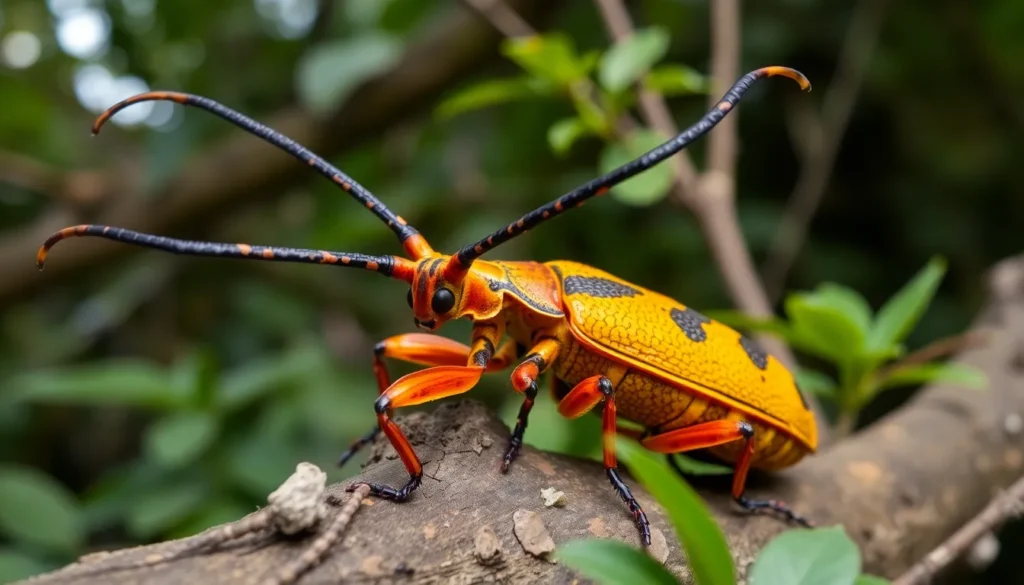
- Their most distinctive feature is their long antennae. Often, these antennae are as long as or longer than the beetle’s body length, which aids in sensory perception.
- Longhorn beetles vary greatly in size. Some species are only a few millimeters long, while others, such as the Titan beetle, can reach lengths of over 16 centimeters.
- They exhibit diverse coloration. Many species display bright colors and patterns, which may serve as camouflage or warning signals to predators.
- Larvae of longhorn beetles are wood-borers. They typically develop inside dead or dying wood, feeding on the cellulose and aiding decomposition.
- Adults are often found on flowers. Many species feed on nectar, pollen, or plant sap, playing a role in pollination.
- Some longhorn beetles are considered pests. Species such as the Asian longhorn beetle can damage living trees and wooden structures, causing economic and ecological impacts.
- Longhorn beetles have a complete metamorphosis lifecycle. Their stages include egg, larva, pupa, and adult, with larval development often lasting several years.
- Their antennae contain sensory organs. These organs help detect pheromones and environmental cues, which are crucial for mating and locating hosts.
- Many species produce sounds. Some longhorn beetles can stridulate, or rub parts of their body together, to communicate or deter predators.
- Longhorn beetles contribute to nutrient cycling. By breaking down wood, they facilitate the recycling of organic matter in forest ecosystems.
- They are found worldwide. Longhorn beetles inhabit diverse environments on every continent except Antarctica.
- Some species mimic other insects. Certain longhorn beetles resemble wasps or ants, which may protect them from predators.
- Longhorn beetle larvae can bore deep into wood. This behavior can weaken trees and timber, making infestation a concern for forestry and lumber industries.
- Adults are generally strong fliers. Their ability to disperse helps colonize new habitats and find mates.
- Longhorn beetles exhibit sexual dimorphism. In many species, males have longer antennae than females, which may aid in detecting female pheromones.
- They have been subjects of scientific study. Research on longhorn beetles contributes to understanding insect ecology, evolution, and pest management.
- Some species are used in art and decoration. Their striking appearance and large size make them popular in insect collections and jewelry.
- They have natural predators. Birds, reptiles, and other insects prey on longhorn beetles, influencing their population dynamics.
- Their population status varies. While many species are common, habitat loss and environmental changes threaten some longhorn beetle populations.
- Longhorn beetles play a role in forest health. By decomposing wood and aiding nutrient cycling, they support forest regeneration and biodiversity.
Habitat and Behavior
Longhorn beetles occupy a wide range of habitats, from tropical rainforests to temperate woodlands. They predominantly live in areas with abundant woody plants, as their larvae require wood to develop. Adults are often found on flowers, tree bark, or foliage, where they feed and mate. The larvae bore into dead, dying, or sometimes live wood, creating tunnels that facilitate decomposition. Their behavior includes using chemical signals for communication and mating, and some species exhibit nocturnal activity patterns. Their ability to fly allows them to find new host plants and avoid predators.
Why This Animal Matters
Longhorn beetles play a critical ecological role by contributing to the decomposition of wood and nutrient cycling in forest ecosystems. This process helps maintain soil fertility and supports plant growth. Some species act as pollinators, aiding in the reproduction of flowering plants. However, certain longhorn beetles can become invasive pests, damaging forests and urban trees, which poses economic and environmental challenges. Moreover, their sensitivity to habitat changes makes them useful indicators of ecosystem health and biodiversity.
Common Misconceptions
Misconception: All longhorn beetles are harmful pests.
Correction: While some species can damage living trees and wooden structures, many longhorn beetles primarily feed on dead wood and play beneficial roles in ecosystems.
Misconception: Longhorn beetles are dangerous to humans.
Correction: Longhorn beetles do not pose a significant danger to humans; they do not bite or sting, although their large mandibles can pinch if handled roughly.
FAQ
What do longhorn beetles eat?
Adult longhorn beetles typically feed on nectar, pollen, or plant sap, while their larvae bore into and consume wood.
Are longhorn beetles harmful to trees?
Some species can damage living trees by boring into healthy wood, but many prefer dead or decaying wood and play beneficial ecological roles.
Why do longhorn beetles have such long antennae?
Their long antennae are equipped with sensory organs that help detect chemical signals, locate mates, and navigate their environment.



Leave a Reply