
Short Answer
21 Facts About Jaguarundis
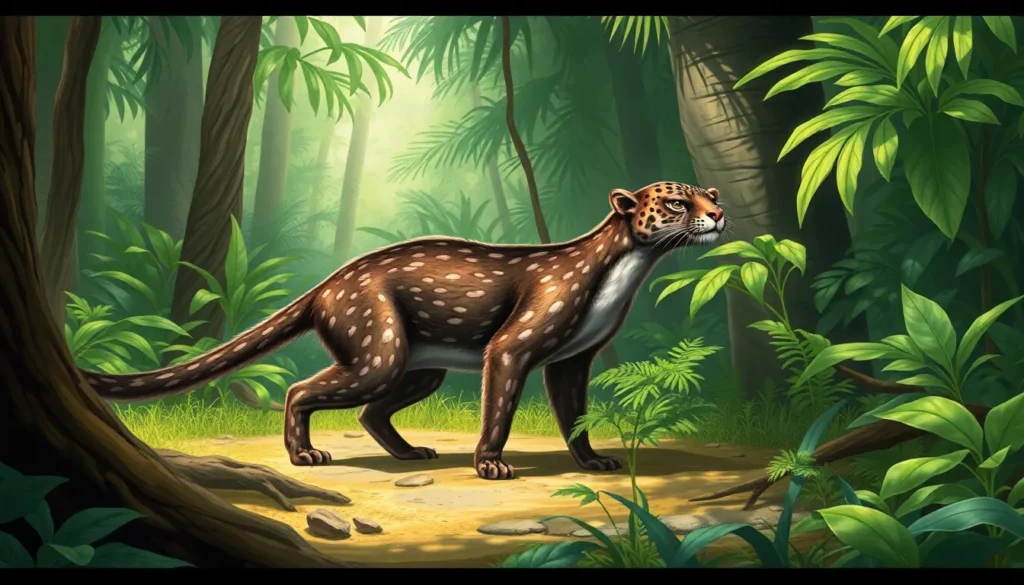
- Distinct Appearance: Jaguarundis have a long, slender body with short legs, differing significantly from other wild cats, and they typically exhibit either a uniform blackish or reddish-grey coat.
- Wide Geographic Range: They are found from southern Texas in the United States through Central America and into South America, as far south as northern Argentina.
- Two Color Morphs: The species displays two main color forms: a dark, almost black variant and a reddish or brownish variant, with no spotted patterns.
- Size and Weight: Jaguarundis are medium-small cats, usually weighing between 3.5 to 7 kilograms (7.7 to 15.4 pounds), with a body length ranging from 53 to 77 centimeters (21 to 30 inches).
- Diurnal Activity: Unlike many other wild cats, jaguarundis are primarily active during the day (diurnal), although they can also show crepuscular activity.
- Habitat Versatility: They inhabit various environments including tropical rainforests, savannas, scrublands, and even semi-arid regions.
- Dietary Habits: Jaguarundis are opportunistic carnivores feeding on small mammals, birds, reptiles, amphibians, and occasionally fruits.
- Excellent Climbers and Swimmers: They are adept at both climbing trees and swimming, which aids in hunting and escaping predators.
- Solitary Lifestyle: Jaguarundis typically live alone except during mating or when females raise cubs.
- Reproductive Behavior: Female jaguarundis give birth to litters of two to four kittens after a gestation period of approximately 70 days.
- Communication: They use a variety of vocalizations, including whistles, purrs, hisses, and screams, which is unusual among small cats.
- Territorial Nature: Jaguarundis mark their territories with scent markings and scratches to communicate with conspecifics.
- Conservation Status: Classified as Least Concern by the IUCN, but some populations face threats from habitat loss and fragmentation.
- Predators and Threats: Larger carnivores such as jaguars and humans pose threats, especially through hunting and habitat encroachment.
- Adaptability: Their ability to live in a range of habitats and varied diet helps them endure environmental changes better than some other small cats.
- Taxonomic Classification: Jaguarundis belong to the genus Herpailurus, which is sometimes included in Puma, highlighting taxonomic debates.
- Historical Range Decline: In the northern part of their range, particularly in the United States, jaguarundis have become extremely rare or locally extinct.
- Unique Evolutionary Lineage: Genetic studies indicate jaguarundis are an ancient lineage distinct from other small neotropical cats.
- Role as Mesopredators: They help control populations of rodents and other small animals, maintaining ecological balance.
- Human Interaction: Jaguarundis rarely come into contact with humans due to their elusive nature but are sometimes affected by road traffic and habitat conversion.
- Scientific Research: Despite being widespread, jaguarundis are less studied than other wild cats, leading to gaps in knowledge about their ecology and behavior.
Habitat and Behavior
Jaguarundis inhabit a diverse array of environments ranging from dense tropical forests to open savannas and scrublands throughout the Americas. They are highly adaptable, capable of living in both lowland and mountainous regions, and sometimes near human settlements if adequate cover is available. Behaviorally, jaguarundis are solitary and territorial animals, communicating through scent marks and vocalizations. Their activity pattern is mostly diurnal, which contrasts with the nocturnal habits of many other wild cats. They are skilled hunters, feeding on a variety of prey including small mammals, birds, reptiles, and amphibians. Their agility in climbing and swimming plays a crucial role in hunting and evading threats.
Why This Animal Matters
Jaguarundis play an important ecological role as mid-sized predators, helping regulate populations of small vertebrates and maintaining ecosystem balance. Their presence indicates healthy habitats, and they contribute to biodiversity in the regions they inhabit. Culturally, while not as prominent as larger cats like jaguars or pumas, jaguarundis are part of indigenous knowledge and folklore in some areas. Conservation-wise, their status as Least Concern masks localized threats, making them a species of interest in habitat preservation efforts. Protecting jaguarundis also helps conserve broader ecological communities, as they share habitats with many other species.
Common Misconceptions
Misconception: Jaguarundis are just small jaguars.
Correction: Although the name suggests a relation, jaguarundis belong to a distinct genus and have different physical and behavioral traits compared to jaguars.
Misconception: They are nocturnal like most wild cats.
Correction: Jaguarundis are primarily diurnal, which is unusual among small wild cats, though they can be active during twilight hours.
Misconception: Jaguarundis are common and not at risk.
Correction: While globally listed as Least Concern, jaguarundi populations have declined in parts of their range due to habitat loss and fragmentation.
FAQ
What is a jaguarundi?
A jaguarundi is a small wild cat native to the Americas, recognized by its slender body, short legs, and uniform coat color.
Where do jaguarundis live?
They inhabit a wide range from southern Texas through Central America and much of South America, living in forests, savannas, and scrublands.
Are jaguarundis endangered?
Jaguarundis are currently classified as Least Concern by the IUCN, but some regional populations face threats from habitat loss and fragmentation.



Leave a Reply