
Short Answer
21 Facts About Indonesia
- Largest Archipelago: Indonesia is the world’s largest archipelagic state, consisting of over 17,000 islands, of which about 6,000 are inhabited.
- Population Diversity: It is the fourth most populous country in the world, with over 270 million people representing more than 300 ethnic groups.
- Language Richness: Indonesia has more than 700 living languages spoken across the country, with Bahasa Indonesia serving as the official national language.
- Volcanic Activity: Indonesia lies on the Pacific Ring of Fire and has around 130 active volcanoes, more than any other country.
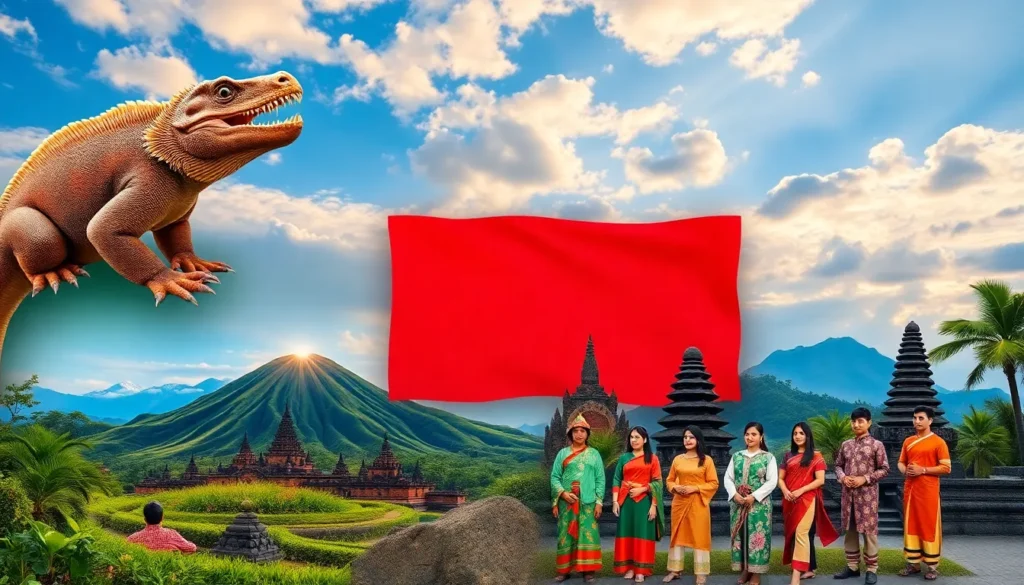
- Biodiversity Hotspot: The nation is one of the world’s megadiverse countries, home to unique species such as the Komodo dragon and orangutans.
- Ancient Human Habitation: Fossils like “Java Man” indicate human presence in Indonesia dating back over a million years.
- Religious Diversity: While predominantly Muslim, Indonesia officially recognizes six religions, including Hinduism and Buddhism.
- World’s Largest Muslim Population: Indonesia has the largest Muslim population globally, with approximately 87% of its citizens identifying as Muslim.
- Rich Cultural Heritage: Traditional arts such as batik textile making, wayang puppet theatre, and gamelan music are integral parts of Indonesian culture.
- Historical Kingdoms: The region was home to powerful ancient kingdoms like Srivijaya and Majapahit, influential in Southeast Asian history.
- Colonial History: Indonesia was colonized by the Dutch for over three centuries before gaining independence in 1945.
- Jakarta as Capital: Jakarta is Indonesia’s capital and largest city, serving as the political, economic, and cultural center.
- Unique Cuisine: Indonesian cuisine is known for its diverse flavors and dishes such as nasi goreng, satay, and rendang.
- Traditional Dance: Numerous traditional dances exist, including the Balinese Legong and Javanese Bedhaya dances, each with distinct meanings and styles.
- Natural Wonders: Indonesia boasts natural landmarks like Lake Toba, the world’s largest volcanic lake, and Raja Ampat islands, renowned for marine biodiversity.
- World Heritage Sites: Several Indonesian sites, including Borobudur and Prambanan temples, are UNESCO World Heritage Sites.
- Economic Diversity: Indonesia has a mixed economy with major sectors including agriculture, manufacturing, and services.
- Traditional Houses: Distinct traditional houses such as the Toraja tongkonan and Minangkabau rumah gadang reflect regional identities.
- National Motto: The country’s motto, “Bhinneka Tunggal Ika,” translates to “Unity in Diversity,” highlighting national cohesion despite cultural variety.
- Sports Popularity: Badminton is a highly popular sport in Indonesia, with the country having produced many world champions.
- Environmental Challenges: Indonesia faces challenges like deforestation, habitat loss, and haze pollution but also undertakes conservation efforts.
Culture and Daily Life
Indonesia’s cultural landscape is deeply influenced by its ethnic diversity, religion, and historical interactions. Traditional customs vary widely across regions but often emphasize community and family. The use of batik in clothing is common, symbolizing cultural identity and craftsmanship. Food plays a central role in social life, with meals often featuring rice accompanied by spicy and aromatic dishes. Religious festivals and ceremonies are important cultural events, reflecting the country’s pluralistic beliefs. Daily life in urban areas blends modernity with tradition, while rural communities often maintain more traditional practices.
History and Geography
Indonesia’s history spans from prehistoric times evidenced by early hominid fossils to the rise of advanced maritime kingdoms that controlled trade routes. Over centuries, it became a meeting point for traders from India, China, the Middle East, and Europe, which shaped its cultural and religious fabric. Dutch colonial rule lasted until the mid-20th century, after which Indonesia declared independence in 1945. Geographically, Indonesia stretches along the equator, resulting in a tropical climate and diverse ecosystems. Its position on tectonic plate boundaries leads to frequent seismic and volcanic activity.
Travel and Landmarks
Indonesia offers numerous attractions for travelers. The island of Bali is internationally renowned for its beaches, temples, and arts scenes. Yogyakarta serves as a cultural hub with access to the ancient temples of Borobudur and Prambanan. Sumatra features natural wonders such as Lake Toba and orangutan habitats. Komodo National Park is famous for the Komodo dragons. The Raja Ampat islands are a premier destination for diving enthusiasts. Urban centers like Jakarta and Surabaya offer a mix of history, commerce, and modern lifestyle.
Common Misconceptions
Misconception: Indonesia is part of India or is culturally Indian.
Correction: While Indonesia has historical influences from India, it is a distinct country with its own unique cultures and histories.
Misconception: Indonesia is a homogenous Muslim country.
Correction: Although predominantly Muslim, Indonesia is religiously diverse and recognizes multiple religions officially.
FAQ
What is the official language of Indonesia?
The official language of Indonesia is Bahasa Indonesia, a standardized form of Malay used throughout the country for communication and administration.
How many islands does Indonesia have?
Indonesia comprises over 17,000 islands, making it the world's largest archipelagic state, though only about 6,000 islands are inhabited.
What is Indonesia's national motto and what does it mean?
Indonesia’s national motto is "Bhinneka Tunggal Ika," which translates to "Unity in Diversity," reflecting the country’s cultural and ethnic diversity unified as one nation.




Leave a Reply