
Short Answer
21 Facts About Brazil
- Brazil is the largest country in South America. It covers approximately 8.5 million square kilometers, making it the fifth-largest country in the world by area.
- It has the world’s largest tropical rainforest, the Amazon. The Amazon rainforest spans over 5.5 million square kilometers and is known for its biodiversity.
- The official language is Portuguese. Brazil is the only Portuguese-speaking country in the Americas, a legacy of its colonial history.
- Brazil is home to more than 200 million people. It is the sixth most populous country globally and has a diverse population with various ethnic backgrounds.
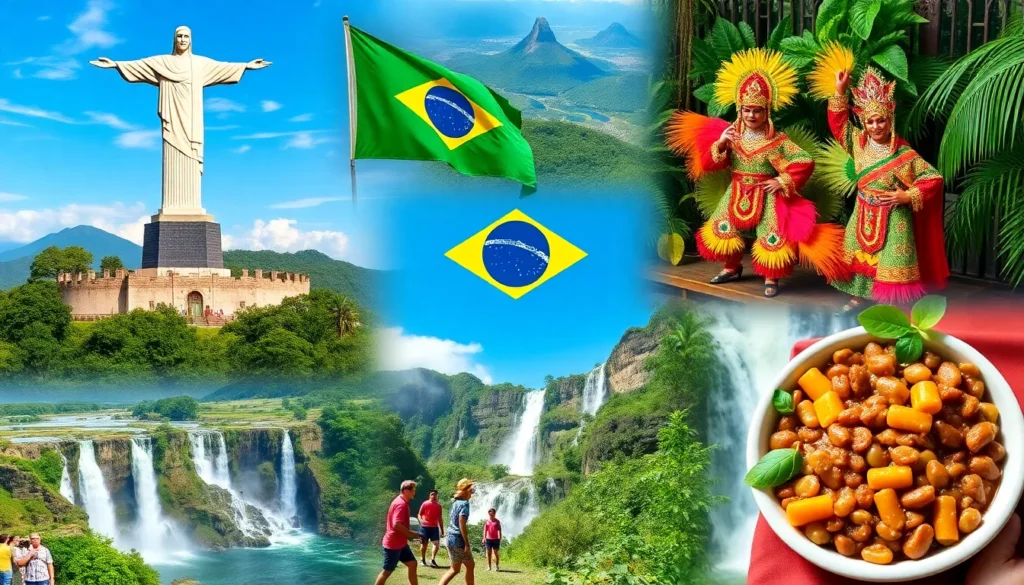
- Brazil is famous for its Carnival festival. Held annually before Lent, Carnival features parades, samba music, and elaborate costumes, especially in cities like Rio de Janeiro and Salvador.
- The country has won the FIFA World Cup five times. Brazil holds the record for the most World Cup victories, reflecting its deep-rooted football culture.
- The Pantanal is the world’s largest tropical wetland area. Located mainly in Brazil, it is a vital ecosystem for wildlife and a popular destination for ecotourism.
- Brazil’s economy is among the largest globally. It is a leading producer of coffee, soybeans, beef, and iron ore.
- The Iguazu Falls are one of the largest waterfall systems on Earth. Situated on the border between Brazil and Argentina, Iguazu Falls consist of over 270 individual falls.
- Brazil has a diverse cultural heritage. Indigenous peoples, Portuguese colonizers, African slaves, and immigrants from Europe, Asia, and the Middle East have all influenced Brazilian culture.
- Brazil’s national dish is feijoada. This hearty stew made with black beans and various meats reflects the country’s culinary traditions.
- Soccer is the most popular sport in Brazil. It plays a significant role in social and cultural life across the country.
- The city of Brasília is the national capital. It was inaugurated in 1960 and designed by architect Oscar Niemeyer to promote development in the country’s interior.
- Brazil has a high level of biodiversity. It hosts about 10-15% of all known species on Earth, including unique animals such as the jaguar and the Amazon river dolphin.
- Brazil’s flag features a blue globe with 27 stars. These stars represent the country’s states and the Federal District, arranged as they appear in the night sky over Rio de Janeiro.
- The country spans four time zones. From UTC-2 to UTC-5, reflecting its vast east-west geographic extent.
- Brazil has a significant Afro-Brazilian population. Their cultural contributions include music styles such as samba and capoeira, an Afro-Brazilian martial art.
- The Amazon River is the largest river by volume in the world. It flows through northern Brazil and is vital to the rainforest ecosystem.
- Carnival in Rio de Janeiro features samba schools competing in elaborate parades. These schools prepare year-round to showcase their themes and choreography.
- Brazil was a Portuguese colony until 1822. It declared independence peacefully and became the Empire of Brazil under Dom Pedro I.
- Brazil has hosted major international events. These include the 2014 FIFA World Cup and the 2016 Summer Olympics in Rio de Janeiro.
Culture and Daily Life
Brazilian culture is a rich blend of indigenous, African, and European influences. Portuguese is universally spoken, and many Brazilians also speak regional indigenous languages. The country is famous for its music genres such as samba, bossa nova, and forró, which reflect its multicultural roots. Traditional cuisine varies by region but often includes rice, beans, manioc (cassava), and meats. Feijoada, a black bean stew with pork, is considered the national dish. Festivals like Carnival and Festa Junina highlight communal celebrations with music, dance, and food. Family and social gatherings play a central role in daily life, and football is a common passion that unites people across social strata.
History and Geography
Brazil was first inhabited by indigenous peoples for thousands of years before Portuguese explorers arrived in 1500. It became a Portuguese colony and grew economically through sugar and coffee plantations, supported by African slave labor. Brazil declared independence in 1822 and transitioned from an empire to a republic in 1889. The country’s geography is diverse, including the Amazon rainforest, Pantanal wetlands, the Brazilian Highlands, and extensive Atlantic coastline. This geographic variety contributes to Brazil’s ecological diversity and makes it a significant player in global environmental discussions.
Travel and Landmarks
Brazil offers numerous natural and urban attractions. The Amazon rainforest and Pantanal wetlands attract ecotourists and researchers interested in wildlife. Iguazu Falls is one of the most spectacular natural landmarks, drawing visitors worldwide. Cities like Rio de Janeiro, São Paulo, and Salvador are well-known for their cultural offerings, architecture, and beaches. Brasília stands out for its modernist architecture and urban planning. Other notable sites include the historic town of Ouro Preto and the Lençóis Maranhenses National Park, famous for its unique sand dunes and lagoons.
Common Misconceptions
Misconception: Brazil is a Spanish-speaking country.
Correction: Brazil’s official language is Portuguese, distinguishing it linguistically from most other South American countries.
Misconception: The Amazon rainforest is entirely untouched wilderness.
Correction: While vast and largely pristine, parts of the Amazon have been altered by indigenous practices and deforestation due to human activities.
Misconception: Brazil is uniformly tropical and hot.
Correction: Brazil’s climate varies widely, with tropical regions in the north and temperate zones in the south, experiencing cooler winters.
FAQ
What is the official language of Brazil?
The official language of Brazil is Portuguese, making it unique among South American countries where Spanish is predominant.
What is Brazil famous for culturally?
Brazil is famous for its Carnival festival, samba music, football culture, and diverse culinary traditions such as feijoada.
What are some major natural landmarks in Brazil?
Brazil is home to the Amazon rainforest, Iguazu Falls, and the Pantanal wetlands, all renowned for their ecological importance and natural beauty.



Leave a Reply