
Short Answer
21 Facts About Great White Sharks
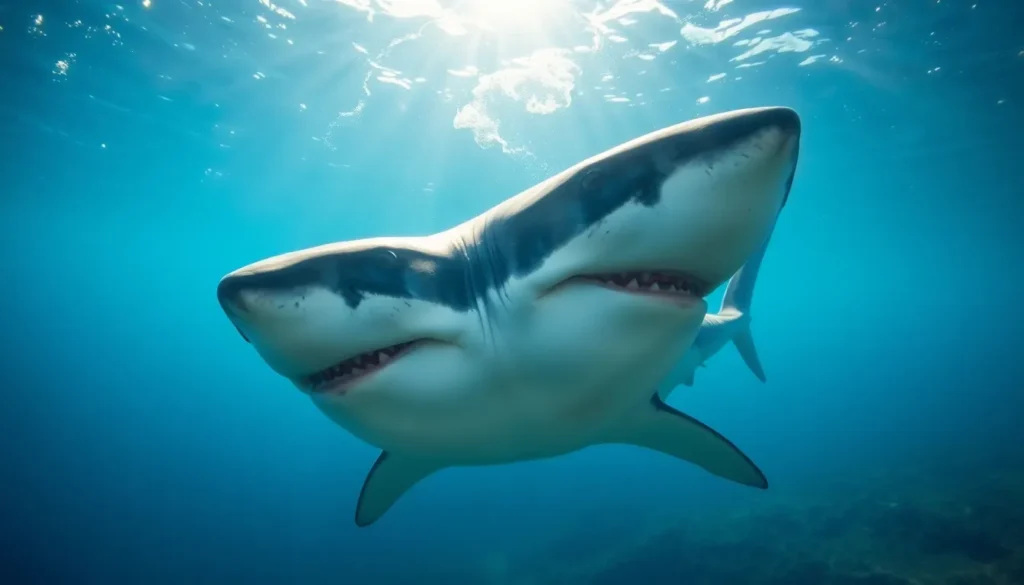
- Largest predatory fish: Great white sharks (Carcharodon carcharias) are the largest predatory fish, reaching lengths of up to 6 meters (20 feet) and weights exceeding 2,000 kilograms (4,400 pounds).
- Powerful bite: Their bite force is among the strongest in the animal kingdom, estimated at around 1.8 tonnes (4,000 pounds) of pressure, allowing them to hunt large marine mammals effectively.
- Distinctive teeth: Great whites have serrated, triangular teeth designed for cutting flesh, which are continuously replaced throughout their lives.
- Endothermic abilities: Unlike most fish, great whites can regulate their body temperature, allowing them to hunt in colder waters by warming their muscles.
- Wide distribution: They inhabit coastal and offshore waters worldwide, primarily in temperate and subtropical regions.
- Long lifespan: Great white sharks can live up to 70 years or more, making them one of the longest-living cartilaginous fish species.
- Slow reproduction: They have a slow reproductive rate with long gestation periods estimated between 11 months to over a year, and females give birth to relatively few pups.
- Electroreception: Great whites have specialized sensory organs called ampullae of Lorenzini that detect electromagnetic fields produced by prey.
- Impressive speed: They can swim at speeds up to 40 km/h (25 mph) in short bursts when attacking prey.
- Ambush predators: Great whites often use stealth and surprise attacks, sometimes breaching the water surface to catch seals and sea lions.
- Social behavior: Although mostly solitary, great whites exhibit social hierarchies when feeding, with larger individuals dominating access to food.
- Role in ecotourism: They attract divers and researchers, contributing to local economies through shark cage diving and ecotourism activities.
- Conservation status: Classified as vulnerable by the IUCN, great white populations face threats from fishing, habitat loss, and accidental catches.
- Misunderstood predators: Despite their fearsome reputation, unprovoked attacks on humans are rare and often involve mistaken identity.
- Genetic studies: Research shows that great whites have distinct populations with some genetic differentiation based on geographic location.
- Unique hunting techniques: They use tail slaps to stun prey and sometimes hunt cooperatively in groups.
- Teeth structure: Their teeth are embedded loosely in the jaw, enabling easy replacement but also allowing effective grasping of slippery prey.
- Juvenile diet: Young great whites primarily feed on fish and smaller sharks before transitioning to marine mammals as adults.
- Interaction with other species: Great whites can compete with other large predators like orcas and tiger sharks for food resources.
- Scientific importance: They are studied extensively to understand shark biology, ecology, and the effects of overfishing on marine ecosystems.
- Symbolic significance: Great white sharks appear in various cultures as symbols of power, danger, and mystery, influencing media and public perception.
Habitat and Behavior
Great white sharks are found in coastal and offshore waters around the world, particularly in temperate and subtropical regions such as the coasts of the United States, South Africa, Australia, and the Mediterranean. They prefer waters ranging from 12 to 24 degrees Celsius but can tolerate a broader range due to their partial endothermy. These sharks are highly mobile, often undertaking long-distance migrations related to feeding and breeding.
Behaviorally, great whites are solitary hunters but show complex social interactions when competing for food. They primarily prey on marine mammals like seals and sea lions but also consume fish and carrion. Their hunting strategy often involves ambush attacks using stealth and speed, sometimes breaching the water surface to surprise prey. Great whites use their acute senses, including electroreception and an excellent sense of smell, to locate prey in diverse marine environments.
Why This Animal Matters
Great white sharks play a critical ecological role as apex predators, helping to maintain the balance of marine ecosystems by regulating populations of prey species. Their presence indicates a healthy ocean environment. Additionally, they contribute to scientific understanding of marine biology, predator-prey dynamics, and conservation biology. Culturally, great whites have fascinated humans for centuries, influencing art, literature, and popular media. Conservation efforts aim to protect these vulnerable animals from threats like overfishing, habitat degradation, and bycatch, ensuring their survival and the health of ocean ecosystems.
Common Misconceptions
Misconception: Great white sharks frequently attack humans deliberately.
Correction: Attacks on humans are extremely rare and are usually cases of mistaken identity, where the shark confuses a swimmer or surfer for its natural prey.
Misconception: Great white sharks are mindless killers.
Correction: These sharks display complex behaviors, including social interactions, learning, and selective hunting strategies, indicating high intelligence.
Misconception: Great whites are invincible and cannot be harmed by humans.
Correction: Great white populations are vulnerable due to fishing pressure, habitat loss, and environmental changes and require conservation efforts to survive.
FAQ
How big do great white sharks get?
Great white sharks can grow up to 6 meters (20 feet) in length and weigh over 2,000 kilograms (4,400 pounds), making them the largest predatory fish.
Are great white sharks dangerous to humans?
While great white sharks have been involved in unprovoked attacks on humans, such incidents are rare and often due to mistaken identity rather than deliberate predation.
What do great white sharks eat?
Their diet primarily consists of marine mammals such as seals and sea lions, but they also consume fish, smaller sharks, and carrion.




Leave a Reply