
Short Answer
21 Facts About Froghoppers
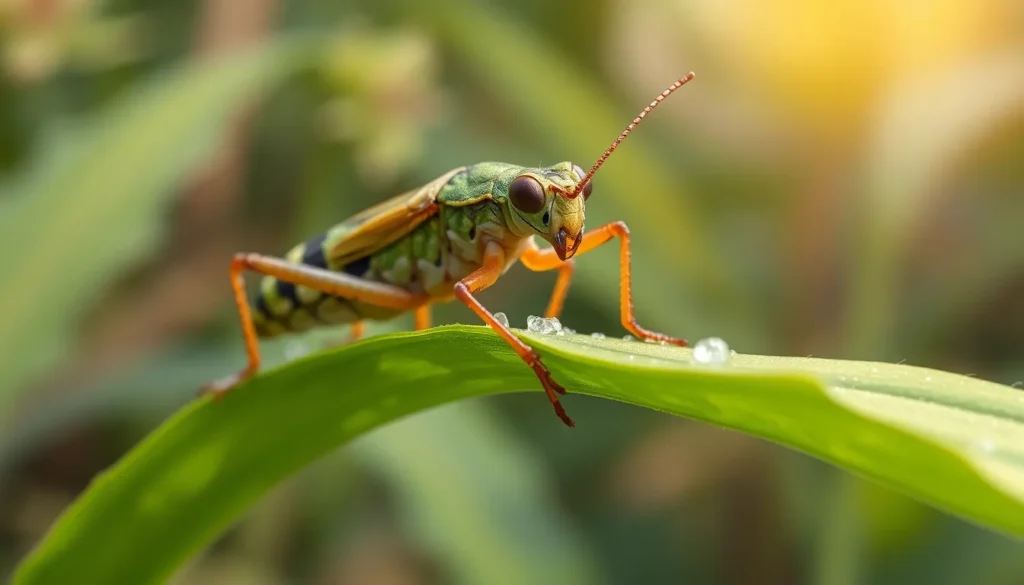
- Froghoppers belong to the family Cercopidae. They are part of the order Hemiptera, commonly known as true bugs.
- They are often called spittlebugs as nymphs produce a frothy ‘spittle’ mass. This foam acts as protection against predators and desiccation.
- Froghoppers are known for their extraordinary jumping ability. Some species can leap over 100 times their body length in a single jump.
- The name “froghopper” derives from their frog-like hind legs and hopping behavior. Their strong hind legs enable powerful jumps.
- They feed primarily on plant sap. Using piercing-sucking mouthparts, they extract nutrients from stems and leaves.
- Froghopper nymphs live inside the foam, which they produce by mixing plant sap with air. This foam keeps them moist and hidden from predators.
- Adults are more mobile and often found on various plants in gardens, fields, and forests. They tend to be small, ranging from 3 to 8 millimeters in length.
- Some froghopper species can be agricultural pests. They may damage crops by feeding and transmitting plant pathogens.
- Froghoppers undergo incomplete metamorphosis. Their life cycle includes egg, nymph, and adult stages but lacks a pupal stage.
- Their jumping mechanism involves a catapult-like action using elastic energy stored in their leg muscles and cuticle. This allows them to accelerate rapidly during jumps.
- Froghoppers are found worldwide, with the highest diversity in tropical regions. They inhabit a wide range of environments from grasslands to woodlands.
- Some species have vivid coloration or patterns that help with camouflage or warning signals. Others are more cryptic to blend into their surroundings.
- Froghoppers communicate through substrate vibrations. These signals are used in mating and territorial behaviors.
- They can be indicators of ecosystem health. Their presence and abundance can reflect environmental conditions.
- Froghopper foam has been studied for its physical and chemical properties. Scientists are interested in biomimicry related to its insulation and water-repellent features.
- They have predators including birds, spiders, and predatory insects. The foam and jumping ability help them evade these threats.
- Their evolutionary history dates back to at least the Cretaceous period. Fossils suggest long-standing ecological roles.
- Some froghopper species exhibit sexual dimorphism. Males and females may differ in size, color, or behavior.
- Froghoppers are part of complex food webs. They provide food for predators and affect plant health through their feeding.
- Research on froghoppers contributes to understanding insect biomechanics and ecology. Their jumping is a model for studying rapid movement in small animals.
- Despite their small size, froghoppers have significant ecological and agricultural impacts. Managing pest species involves understanding their life cycles and behaviors.
Habitat and Behavior
Froghoppers inhabit a diverse range of environments globally, thriving in grasslands, forests, gardens, and agricultural fields. They prefer areas where suitable host plants are abundant, as they feed by sucking sap from stems and leaves. The nymphs are commonly found within masses of protective foam on plants, which they produce themselves. This foam maintains moisture levels and offers protection from predators and environmental stressors.
Adults are agile jumpers, using their powerful hind legs to evade threats or move between plants. They communicate primarily through substrate vibrations, which play a role in mating and territorial displays. Froghoppers undergo incomplete metamorphosis, progressing from eggs to nymphs within the foam and then emerging as winged adults. Their life cycles and behaviors are closely tied to the phenology of their host plants.
Why This Animal Matters
Froghoppers play important ecological roles as herbivores and prey within their ecosystems. By feeding on plant sap, they influence plant health and nutrient cycles. At the same time, they serve as food sources for various predators, contributing to biodiversity. Some species can act as agricultural pests, transmitting plant diseases and damaging crops, which makes understanding their biology critical for pest management.
Beyond agriculture, the unique properties of their protective foam have attracted scientific interest, potentially informing biomimetic applications. Studying froghoppers also enhances knowledge of insect biomechanics, particularly their exceptional jumping ability, which is among the most powerful in the animal kingdom relative to size.
Common Misconceptions
Misconception: Froghoppers are frogs or related to amphibians.
Correction: Despite their name and jumping ability, froghoppers are insects, not amphibians, and belong to the Hemiptera order.
Misconception: The foam produced by nymphs is saliva.
Correction: The foam is a mixture of plant sap and air bubbles, created by the nymph to provide protection and moisture.
Misconception: Froghoppers are harmful to humans.
Correction: Froghoppers do not bite or sting humans and generally pose no direct threat to people.
Misconception: All froghoppers are pests.
Correction: While some species can damage crops, many froghoppers live harmlessly in natural ecosystems and contribute positively to ecological balance.
Misconception: Froghopper jumping is powered solely by muscle contraction.
Correction: Their jumps involve elastic energy storage and release mechanisms in addition to muscle power, enabling their remarkable leaps.
FAQ
What are froghoppers?
Froghoppers are small insects belonging to the family Cercopidae, known for their ability to jump great distances and for producing protective foam during their nymph stage.
Why do froghopper nymphs produce foam?
Nymphs produce foam by mixing plant sap with air to create a frothy mass that protects them from predators, prevents desiccation, and provides a stable microenvironment.
Are froghoppers harmful to crops?
Some froghopper species can damage crops by feeding on plant sap and potentially transmitting plant diseases, but many species do not pose significant threats to agriculture.


Leave a Reply