
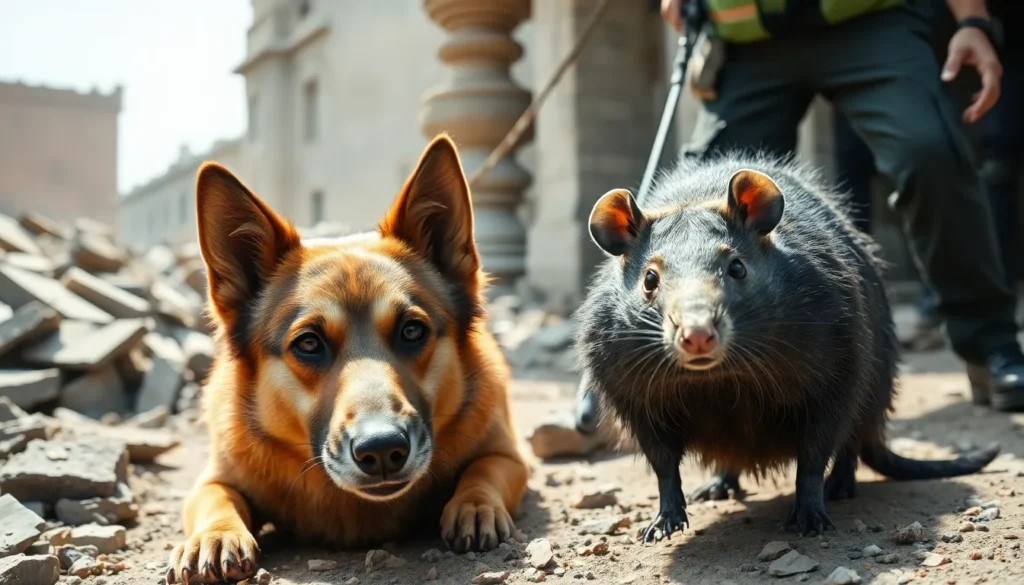
Short Answer
21 Facts About Detection Animals (Sniffer Dogs and Rats)
- Exceptional Olfactory Abilities
Detection animals possess highly sensitive noses capable of detecting scents at extremely low concentrations, far beyond human capacity. - Variety of Detection Tasks
These animals are trained to detect explosives, narcotics, cadavers, diseases, and even invasive species. - Sniffer Dogs Are Most Common
Dogs are the most widely used detection animals due to their trainability, social nature, and strong sense of smell. - Use of Rats in Detection
Certain rat species, such as African giant pouched rats, have been trained to detect landmines and tuberculosis with notable success. - Training Duration
Training for detection animals typically lasts several months, focusing on scent recognition and alert behaviors. - Scent Discrimination
Detection animals can distinguish between very similar odors, allowing them to identify target substances even when mixed with other scents. - Use in Humanitarian Efforts
Rats have been employed in countries like Tanzania to clear landmines, significantly reducing injury risks for people. - Detection Dogs in Medical Fields
Dogs are being researched and trained to detect diseases such as cancer, diabetes, and infections through scent. - Environmental Applications
Detection animals help track endangered species, identify invasive plants, and monitor biodiversity. - Communication Methods
Detection animals are trained to alert handlers through behaviors like sitting, barking, or scratching to indicate a scent match. - Limitations of Detection Animals
Factors like fatigue, environmental conditions, and handler influence can affect detection accuracy. - Longevity in Service
Detection dogs typically serve for 6 to 9 years before retirement, depending on health and performance. - Ethical Training Practices
Modern training emphasizes positive reinforcement and the welfare of detection animals. - Breed Preferences
Breeds such as German Shepherds, Belgian Malinois, and Labradors are popular for detection work due to their temperament and scenting ability. - Rats’ Advantages
Rats are lightweight and small, making them ideal for navigating rubble in search and rescue missions. - Historical Use
The use of dogs for scent detection dates back centuries, with documented military and police applications since the early 20th century. - Global Deployment
Detection animals are employed worldwide by military, police, customs, and health organizations. - Olfactory Receptor Cells
Dogs have approximately 300 million olfactory receptors, while humans have about 5 million, explaining their superior scent detection. - Technological Integration
Detection animals are increasingly paired with technology, such as GPS tracking and scent-detection devices, to enhance effectiveness. - Public Perception
Detection animals are often seen as heroes in media and popular culture, highlighting their specialized roles. - Conservation of Detection Animals
Efforts are made to maintain genetic diversity and health standards to ensure sustainable populations of working detection animals.
Habitat and Behavior
Sniffer dogs typically live in domestic environments and are trained to work alongside humans in various settings, including airports, police stations, disaster sites, and hospitals. They are social animals with a strong bond to their handlers, which facilitates effective communication and teamwork. Their behavior is guided by training, and they undergo regular exercises to maintain sharpness. Rats used for detection, such as the African giant pouched rat, are native to sub-Saharan Africa and are adapted to a wide range of habitats including savannas and forests. In captivity, they are housed in controlled environments where their physical and mental health is monitored closely. Both animals rely on their acute sense of smell to survive and perform detection tasks, using their natural instincts supplemented by specific training.
Why This Animal Matters
Detection animals play a vital role in public safety, medical diagnostics, and environmental conservation. Their unique olfactory capabilities allow early detection of threats such as explosives, narcotics, and diseases, which can save lives and prevent disasters. Rats have contributed significantly to humanitarian demining efforts, reducing casualties in affected areas. Additionally, these animals aid scientific research by providing non-invasive methods to study ecosystems and monitor health. Culturally, detection animals are symbols of cooperation between humans and animals, demonstrating the potential of interspecies collaboration. Their continued use and development reflect important advancements in safety, health, and environmental stewardship.
Common Misconceptions
Misconception: Detection animals can detect any scent instantly and without error.
Correction: While detection animals have highly sensitive noses, their accuracy depends on training, environmental conditions, and handler interaction; errors can occur.
Misconception: Rats are dirty and unsuitable for detection work.
Correction: Detection rats used in programs are specially bred, clean, and highly trained, demonstrating remarkable abilities in mine detection and disease diagnosis.
Misconception: All dog breeds are equally suitable for detection tasks.
Correction: Certain breeds are preferred for their olfactory capabilities, temperament, and trainability, making some breeds more effective for specific detection roles.
Misconception: Detection animals replace technology completely.
Correction: Detection animals often work alongside technology to complement and enhance detection efforts rather than replace tools.
Misconception: Training detection animals is cruel and involves punishment.
Correction: Modern detection training emphasizes positive reinforcement and animal welfare to ensure ethical treatment.
FAQ
How do detection animals learn to identify specific scents?
Detection animals are trained through a process of repeated exposure to target scents accompanied by positive reinforcement when they correctly identify them, allowing them to associate the scent with rewards.
Why are rats used for landmine detection instead of dogs in some areas?
Rats are lightweight and can safely traverse minefields without triggering explosives, and they are cost-effective and easier to maintain in certain environments compared to dogs.
Can detection animals detect diseases in humans?
Yes, some detection dogs have been trained or studied for their ability to detect diseases such as cancer, diabetes, and infections by identifying specific odor signatures associated with these conditions.






Leave a Reply