
Short Answer
21 Facts About Chickens
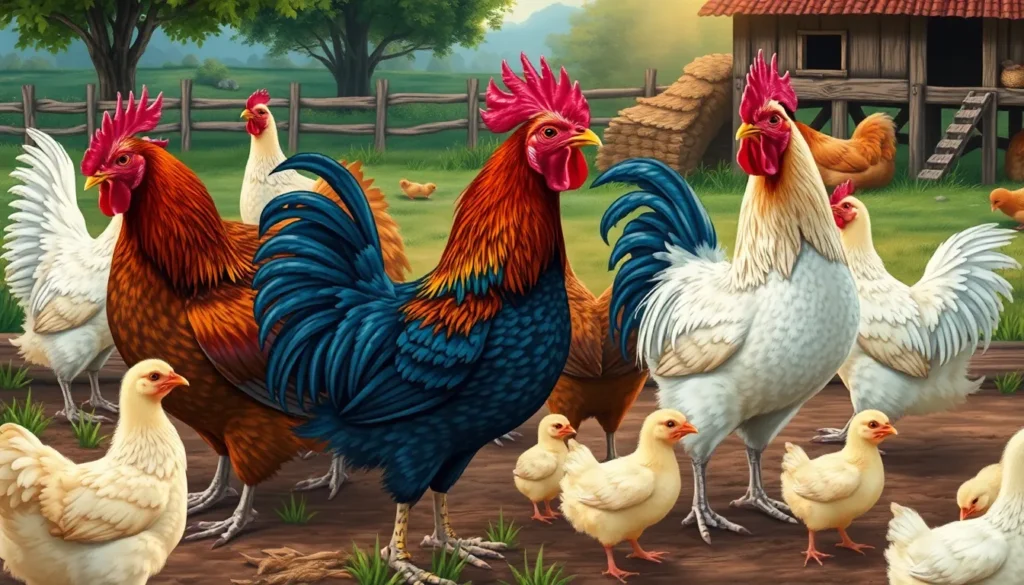
- Chickens are descendants of wild junglefowl. The domestic chicken (Gallus gallus domesticus) originates from the red junglefowl native to Southeast Asia, domesticated over 7,000 years ago.
- Chickens have excellent color vision and can see ultraviolet light. Their eyesight is superior to humans in some ways, allowing them to perceive a broader range of colors including ultraviolet, which helps in foraging and social signaling.
- They are social animals with complex hierarchies. Chickens establish dominance through a pecking order, which determines access to food, mates, and other resources.
- Hens can lay eggs without a rooster. Egg-laying is a natural reproductive cycle that does not require fertilization, so hens lay eggs regularly even without a male present.
- Roosters are known for their crowing, which can occur at any time of day. Although often associated with dawn, roosters crow throughout the day to assert territory or communicate with the flock.
- Chickens are omnivores. They eat a varied diet including seeds, insects, small animals, and even kitchen scraps, which helps them adapt to diverse environments.
- Chickens communicate with over 30 distinct vocalizations. These calls signal different messages such as warning of predators, locating chicks, or establishing social bonds.
- They possess a strong memory. Chickens can remember and recognize more than 100 individual faces of chickens and humans.
- Chickens can experience REM sleep. This suggests they are capable of dreaming similarly to mammals.
- The average lifespan of a chicken varies significantly by breed and environment. While some backyard chickens live 5 to 10 years, commercial chickens often have much shorter lives due to farming practices.
- Feather colors and patterns are genetically diverse. Selective breeding has produced hundreds of chicken breeds with varied plumage colors and patterns.
- Chickens have a specialized digestive system including a crop and gizzard. The crop stores food temporarily, and the gizzard grinds it with ingested stones, aiding digestion.
- Eggshell color depends on the breed, not nutrition or environment. White, brown, blue, and green eggshells are genetically determined and do not affect egg quality or nutrition.
- Chickens can run at speeds up to 9 miles per hour (14 km/h). Their legs are adapted for quick bursts to escape predators or compete within the flock.
- They have a well-developed sense of balance and coordination. This is evident in their ability to perch and navigate uneven terrain.
- Chickens dust-bathe to keep clean and control parasites. This behavior involves rolling in dry dirt or sand to remove oils and pests from their feathers.
- Chickens have been used in scientific research, including studies on genetics and behavior. Their relatively simple care and biological similarities to other vertebrates make them useful research subjects.
- Chickens play a significant role in many cultures and religions. They appear in folklore, rituals, and symbolism worldwide, often representing fertility, prosperity, or vigilance.
- They contribute to sustainable agriculture. Chickens provide eggs and meat, and their manure is valuable as fertilizer, promoting nutrient cycling on farms.
- Urban and backyard chicken keeping has increased in recent decades. This trend reflects interest in local food production and animal welfare.
- Chickens demonstrate problem-solving abilities. Studies show they can learn to navigate mazes and understand simple cause-and-effect relationships.
Habitat and Behavior
Chickens originally evolved in forested areas of Southeast Asia, but domestication has enabled them to thrive in diverse environments globally. Today, they are found in rural farms, urban backyards, and large-scale commercial operations. Chickens are ground-dwelling birds that forage for seeds, insects, and small animals. They are diurnal, active during the day and roost at night to avoid predators. Their social structure is complex, with a clear pecking order that regulates interactions within the flock. Behavioral adaptations such as dust-bathing and vocal communication are essential to their survival and social cohesion. Chickens are highly adaptable, able to live in climates ranging from tropical to temperate with appropriate care.
Why This Animal Matters
Chickens have significant ecological, economic, and cultural roles. Ecologically, they help control insect populations and recycle nutrients through their waste. Economically, they are one of the most important sources of animal protein worldwide, providing meat and eggs to billions of people. Culturally, chickens have been integrated into human traditions, religious practices, and folklore for millennia. Their domestication also represents an important milestone in human agriculture and civilization. Understanding chicken biology and behavior contributes to improving animal welfare and sustainable farming practices. Moreover, chickens are valuable in scientific research, providing insights into genetics, immunology, and animal behavior.
Common Misconceptions
Misconception: Chickens are unintelligent birds.
Correction: Chickens possess complex cognitive abilities, including problem-solving, memory, and social communication, indicating a higher level of intelligence than often assumed.
Misconception: Chickens only crow at dawn.
Correction: Roosters crow throughout the day for various reasons, including territory defense and communication within the flock, not just at sunrise.
Misconception: All eggs laid by hens are fertilized.
Correction: Hens lay eggs regularly regardless of fertilization; only eggs fertilized by a rooster can develop into chicks.
FAQ
Can chickens see colors?
Yes, chickens have excellent color vision and can see a wider range of colors than humans, including ultraviolet light.
Do all hens need a rooster to lay eggs?
No, hens lay eggs regularly without a rooster; fertilization is only necessary if the eggs are to develop into chicks.
How do chickens communicate?
Chickens use over 30 different vocalizations and body language to communicate information such as danger, food location, or social status.



Leave a Reply