
Short Answer
21 Facts About Animal Hybrids
- Hybrids are offspring of two different species. Animal hybrids occur when two different species within the same genus or closely related genera reproduce, producing offspring with mixed genetic traits.
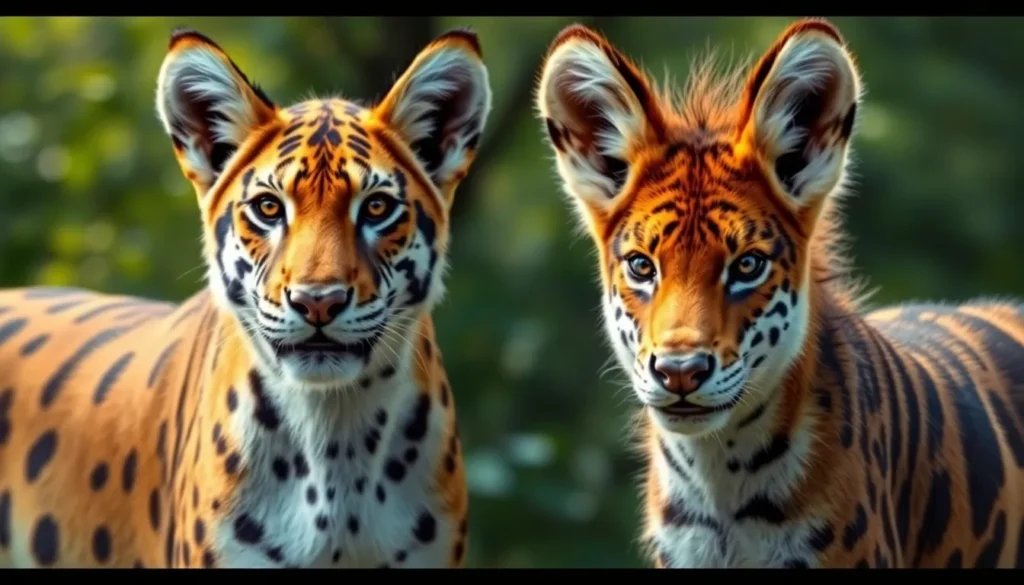
- Ligers are a cross between a male lion and a female tiger. They are the largest of all known big cats, often growing larger than either parent species.
- Zonkeys are hybrids of zebras and donkeys. They typically inherit zebra striping patterns on parts of their bodies, combined with donkey features.
- Hybrids often exhibit characteristics intermediate between the parent species. This can include physical traits, size, coloration, and sometimes behavior.
- Many animal hybrids are sterile. Due to differences in chromosome numbers and genetics, most hybrids like ligers and zonkeys cannot reproduce.
- Hybrids can occur naturally or through human intervention. While some hybrids are bred in captivity, rare natural occurrences happen when species ranges overlap.
- Hybrids challenge traditional species definitions. They demonstrate that species boundaries can be porous and that genetic exchange between species is possible.
- Ligers tend to grow larger due to the absence of growth-inhibiting genes from the tiger mother. This phenomenon is called hybrid vigor or heterosis.
- Zonkeys usually have a donkey’s body shape with zebra-like striping, mostly on legs and neck. The extent of striping varies depending on the individual hybrid.
- Some hybrids like the beefalo (cow and buffalo) are bred for agricultural purposes. These hybrids combine desirable traits from both species for farming benefits.
- Hybrids can suffer from health problems. Hybrid animals may have increased risk of genetic disorders or physical complications due to mixed ancestry.
- Ligers are generally found only in captivity. They do not naturally coexist in the wild since lions and tigers inhabit different geographic regions.
- Hybrids may have unique behavioral traits. For instance, ligers can exhibit social behaviors from lions and swimming affinity from tigers.
- Hybrid animals have been subjects of scientific and genetic research. They provide insights into evolutionary biology, genetics, and developmental processes.
- Conservationists debate the ethical considerations of creating hybrids. Some argue hybrids may undermine species purity, while others see them as tools for study and education.
- Other notable animal hybrids include mules (horse and donkey) and wholphins (false killer whale and bottlenose dolphin). These hybrids demonstrate the wide range of interspecies breeding possibilities.
- Hybrid vigor can sometimes result in enhanced physical characteristics. This is seen in some hybrids that outperform parent species in size or strength.
- Many hybrids have names derived by combining the parent species names. Examples include tigon (tiger and lion), cama (camel and llama), and zorse (zebra and horse).
- Hybrids can have unpredictable lifespans and fertility rates. Some live as long as their parent species, while others have reduced viability.
- In some cultures, hybrids like the liger have symbolic or mythical significance. They appear in folklore, art, and popular media as unique or fantastical creatures.
- Hybrid animals raise important questions about biodiversity and species conservation. They highlight the complexity of ecosystems and evolutionary relationships.
Habitat and Behavior
Animal hybrids such as ligers and zonkeys typically do not have distinct natural habitats because they are often the result of human-managed breeding programs or rare encounters in overlapping habitats. Ligers result from the pairing of lions and tigers, which inhabit different geographical regions—lions primarily in Africa and tigers in Asia—thus ligers are generally found only in captivity. Zonkeys may occur where zebras and donkeys coexist, such as in parts of Africa, but they are more commonly bred in captivity. Behaviorally, hybrids can exhibit a combination of traits inherited from both parent species. For example, ligers may display social behaviors akin to lions and enjoy swimming like tigers. Zonkeys might show the stubbornness of donkeys but also the agility and speed of zebras. Survival in the wild is often limited due to sterility or physical disadvantages compared to purebred species.
Why This Animal Matters
Animal hybrids hold ecological, scientific, and cultural significance. Ecologically, they illustrate the fluidity of species boundaries and the potential for genetic exchange, which can inform understanding of evolution and speciation. Scientifically, hybrids are valuable for studying genetics, developmental biology, and the inheritance of physical and behavioral traits. Culturally, hybrids like the liger have captured public imagination and feature in folklore and popular culture, symbolizing uniqueness and mystery. From a conservation perspective, hybrids raise ethical questions about the impact of human intervention on species integrity and biodiversity. They also provide opportunities for education about genetics, animal behavior, and the importance of preserving natural habitats.
Common Misconceptions
Misconception: All animal hybrids are sterile.
Correction: While many hybrids such as mules and ligers are sterile due to genetic incompatibilities, some hybrids can be fertile depending on the species involved and chromosomal compatibility.
Misconception: Hybrids occur frequently in the wild.
Correction: Natural hybridization is rare and usually occurs only when related species have overlapping ranges or environmental pressures that encourage crossbreeding. Most well-known hybrids are bred in captivity.
Misconception: Hybrids are always stronger or better than their parent species.
Correction: Although some hybrids may exhibit hybrid vigor, others may experience health issues or reduced fitness compared to purebred species.
Misconception: Hybrids represent a new species.
Correction: Hybrids are usually not considered new species because they typically cannot reproduce successfully and do not form stable, self-sustaining populations.
Misconception: Ligers occur in the wild naturally.
Correction: Ligers do not naturally occur in the wild since lions and tigers live in different continents and habitats; ligers are found only in captivity.
FAQ
What is a liger?
A liger is a hybrid animal resulting from the mating of a male lion and a female tiger, known for its large size and mixed traits from both parents.
Are animal hybrids fertile?
Most animal hybrids are sterile due to differences in chromosome numbers between parent species, but some hybrids can be fertile depending on genetic compatibility.
Do ligers occur naturally in the wild?
No, ligers do not occur naturally in the wild because lions and tigers live in separate geographic regions; ligers are typically bred in captivity.


Leave a Reply