
Short Answer
Since its inception, NASA has been a beacon of innovation and discovery, captivating the imagination of generations. As we traverse the cosmos of information about this remarkable agency, we uncover a treasure trove of fascinating facts that shift our perspectives and ignite our curiosity. From pioneering technologies to groundbreaking missions, here are ten exceptional insights into NASA that showcase the depths of human ingenuity and our relentless pursuit of knowledge beyond our planet.
1. The Birth of an Institution
NASA, the National Aeronautics and Space Administration, was established in 1958 amid the Cold War’s space race. Its creation followed the Soviet Union’s successful launch of Sputnik, the first artificial satellite. The urgency of this competition propelled the United States to mobilize its vast resources towards advancing aeronautics and astronautics, fostering an era characterized by audacious ambitions and remarkable technological development.
2. The Golden Record: A Message to the Cosmos
Aboard the Voyager spacecraft, which launched in 1977, sits a time capsule known as the Golden Record. This 12-inch gold-plated copper disc encodes sounds and images that encapsulate the diversity of life and culture on Earth. With greetings in over 50 languages, musical selections from various cultures, and even natural sounds from our planet, the Golden Record serves as a testament to humanity’s existence and a heartfelt greeting to potential extraterrestrial civilizations.
3. The Ingenious Space Shuttle Era
The Space Shuttle program, operational from 1981 until 2011, was a game-changer in space exploration. Known for its reusable design, the shuttle consisted of an orbiter, solid rocket boosters, and an external tank. Each mission enabled astronauts to conduct experiments, deploy satellites, and contribute to the construction of the International Space Station (ISS). This revolutionary approach not only brought costs down but also allowed a variety of scientific inquiries that reshaped our understanding of space physics.
4. Mars: A Beacon of Exploration
Nasa’s fascination with Mars is profound, marked by an array of missions aimed at unraveling the planet’s mysteries. From the Viking landers in the 1970s to the contemporary Perseverance rover, which landed in 2021, each mission incrementally builds our understanding of the Red Planet. More than a quest for extraterrestrial life, these pursuits focus on understanding past climates, geology, and the potential for future human colonization, unlocking secrets that have tantalized scientists for decades.
5. The Hubble Space Telescope’s Cosmic Eye
Launched in 1990, the Hubble Space Telescope has provided astronomical revelations that have tremendously enhanced our comprehension of the universe. Unhindered by Earth’s atmospheric interference, Hubble captures stunning images of distant galaxies, nebulae, and exoplanets. With an instrument suite that includes a wide field camera and spectrographs, Hubble has made breakthroughs such as determining the rate of expansion of the universe, fundamentally altering our perception of cosmic evolution.
6. The Bold Plan for Artemis: Returning to the Moon
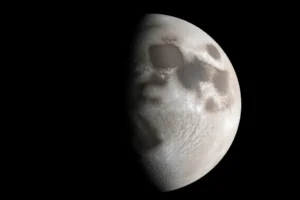
NASA’s Artemis program marks a new epoch in lunar exploration, with a goal to return humans to the Moon by the mid-2020s. Named after the twin sister of Apollo, Artemis aims not merely for a fleeting visit but for sustainable human presence. Utilizing advanced technologies, including the Space Launch System (SLS) and the Orion spacecraft, NASA aspires to establish a base on the Moon, serving as a launchpad for ambitious missions to Mars and beyond.
7. Space Farming: Beyond Earth
As we contemplate long-duration space missions, NASA has turned its gaze towards innovative agriculture. Experiments aboard the ISS have demonstrated the potential for growing food in microgravity. The Veggie project, which successfully grew red romaine lettuce, delves into plant biology’s adaptability in extreme environments. This groundbreaking work echoes humanity’s drive not only to explore but to thrive, suggesting that future extraterrestrial habitats could be self-sustaining.
8. Earth Science at the Forefront
While NASA is often celebrated for its space missions, it also plays a pivotal role in Earth science. Satellites monitor climate change, track natural disasters, and observe weather patterns. These advancements have become indispensable tools in understanding our planet’s health and resiliency. NASA’s Earth Observing System (EOS) empowers scientists with vast datasets, enabling informed decisions to combat environmental challenges that threaten our way of life.
9. The Journey of Voyager: Leaving the Solar System
The Voyager probes, launched in 1977, have ventured farther than any human-made objects, traversing into interstellar space. Voyager 1 and Voyager 2 have transmitted invaluable data about the heliosphere, magnetospheres of outer planets, and cosmic phenomena. They carry the unique distinction of being messengers of Earth, equipped with the Golden Record, preserving Earth’s legacy in the fabric of the cosmos.
10. Human Ingenuity: The Mars Helicopter Ingenuity
The remarkable Ingenuity helicopter represents a triumph of engineering and innovation. It became the first powered aircraft to achieve flight on another planet in April 2021, showcasing the potential of aerial exploration in extraterrestrial environments. Ingenuity’s successful flights allow for scouting locations and analyzing terrains, opening up new vistas for future missions on Mars and beyond. This ingenuity underscores humanity’s relentless spirit to explore and adapt.
In conclusion, NASA’s odyssey through time showcases not just our thirst for knowledge but embodies the essence of exploration itself. Each fact reveals a facet of the agency’s monumental contributions to humanity’s collective understanding of the universe and our place within it. As curiosity continues to propel us forward, these insights remind us that every mission, every experiment, and every endeavor holds the promise of extraordinary discovery. The universe awaits, and with it, endless possibilities.
FAQ
What is NASA?
NASA, the National Aeronautics and Space Administration, is the United States government agency responsible for the nation’s civilian space program and for aeronautics and aerospace research.
When was NASA established?
NASA was established in 1958.
What is the Golden Record?
The Golden Record is a time capsule aboard the Voyager spacecraft that contains sounds and images representing the diversity of life and culture on Earth.
What is the Artemis program?
The Artemis program aims to return humans to the Moon by the mid-2020s and establish a sustainable human presence there.





Leave a Reply