
Short Answer
21 Facts About Entoproct Tentacles
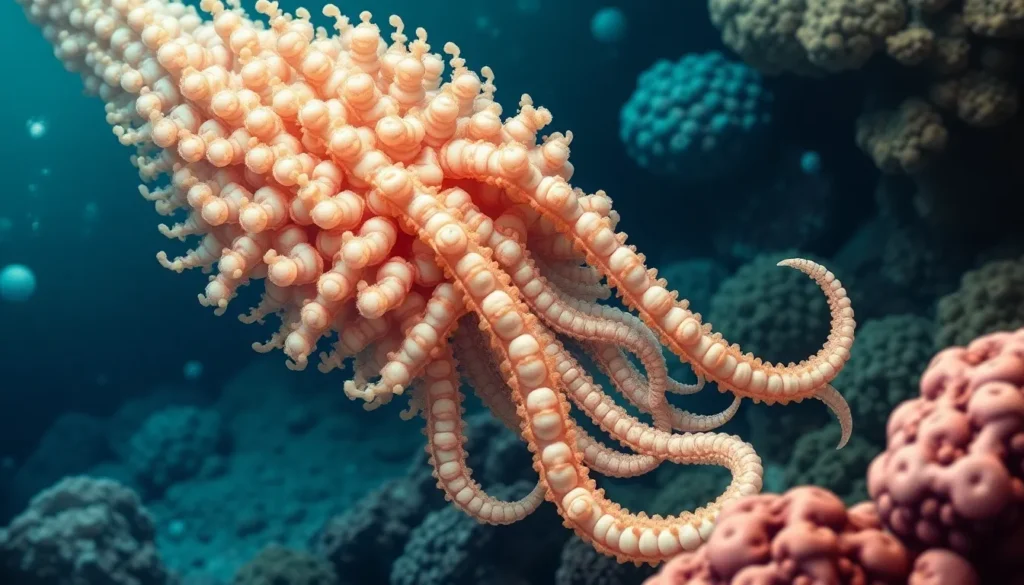
- Unique Morphology: Entoprocts possess a distinctive body structure characterized by a crown of tentacles that surround their mouth, which is located within the ring of tentacles.
- Feeding Mechanism: The tentacles of entoprocts are covered in cilia, which beat in a coordinated manner to create water currents, facilitating the capture of plankton and detritus.
- Size Variation: Entoprocts can vary significantly in size, with some species measuring only a few millimeters, while others can grow up to several centimeters in length.
- Habitat Range: These organisms are primarily found in marine environments, often attached to substrates such as rocks, seaweeds, and other organisms.
- Reproduction: Entoprocts can reproduce both sexually and asexually, with many species displaying a life cycle that includes a larval stage.
- Symbiotic Relationships: Some entoprocts engage in symbiotic relationships with other marine organisms, providing a habitat for small creatures while benefiting from the nutrients they bring.
- Regeneration: Entoprocts have remarkable regenerative abilities, allowing them to regrow damaged tentacles and other body parts.
- Taxonomy: Entoprocts belong to the phylum Entoprocta, which is distinct from other similar organisms, emphasizing their unique evolutionary path.
- Locomotion: Although primarily sessile, some entoprocts can exhibit limited movement by contracting their basal structures.
- Ecological Role: Entoprocts play a vital role in aquatic ecosystems by contributing to nutrient cycling and providing food for various marine species.
- Coloration: The coloration of entoprocts can vary widely, often reflecting their environment and helping them blend into their surroundings.
- Longevity: Some species of entoprocts can live for several years, although their lifespan can vary greatly depending on environmental factors.
- Environmental Indicators: Because they are sensitive to changes in water quality, entoprocts can serve as indicators of environmental health.
- Distribution: Entoprocts are globally distributed, with species found in various marine environments across all major oceans.
- Research Significance: Entoprocts are of interest to scientists studying evolutionary biology and marine ecology, as they represent a unique branch of the tree of life.
- Predation: While entoprocts have few natural predators, they can fall prey to small fish and other marine animals that feed on benthic organisms.
- Bioluminescence: Some species of entoprocts exhibit bioluminescence, which may play a role in communication or attracting prey.
- Community Structure: Entoprocts often contribute to the structural complexity of benthic communities, influencing the diversity and abundance of associated species.
- Fossil Record: Fossil evidence of entoprocts dates back to the Cambrian period, providing insights into the early evolution of multicellular life.
- Conservation Status: While many entoproct species are not currently threatened, habitat destruction and pollution pose potential risks to their populations.
- Research Challenges: Studying entoprocts can be challenging due to their small size and often cryptic nature, which may hinder population assessments.
This morphology is crucial for their feeding strategy, as the tentacles are equipped with cilia that help in capturing food particles from the water.
This feeding mechanism allows them to efficiently filter feed in their aquatic environments, ensuring they receive necessary nutrients.
Their size can affect their ecological interactions and the types of environments they inhabit.
They thrive in a variety of conditions, from shallow coastal waters to deeper oceanic regions.
This flexibility in reproduction allows them to adapt to changing environmental conditions and population dynamics.
This interaction highlights the complex interdependencies present in marine ecosystems.
This trait may enhance their survival in environments where predation or injury is common.
Understanding their taxonomy helps clarify their biological classification and evolutionary relationships.
This ability allows them to reposition themselves in response to environmental changes.
Their presence can indicate the health of marine environments.
This adaptation offers some camouflage from predators.
Longer lifespans may influence their reproductive strategies and population dynamics.
Monitoring their populations can provide insights into the impacts of pollution and climate change.
This broad distribution showcases their adaptability to different ecological niches.
Understanding their biology can provide insights into early animal evolution.
This predation helps maintain ecological balance within their habitats.
This fascinating trait adds to the diversity of adaptations found in marine organisms.
Their presence can enhance habitat availability for other marine organisms.
This long fossil history emphasizes their significance in understanding evolutionary processes.
Conservation efforts aimed at protecting marine ecosystems can help ensure their survival.
Advancements in technology and methodologies may improve research outcomes in the future.
Habitat and Behavior
Entoprocts typically inhabit marine environments, often found attached to various substrates such as rocks, shells, and seaweeds. They prefer locations with moderate water flow, which aids in their feeding by ensuring a constant supply of plankton and organic particles. Their behavior is largely sessile, although some species can exhibit limited movement by retracting their bodies into their bases.
Why This Animal Matters
Entoprocts play a crucial role in marine ecosystems by participating in nutrient cycling and serving as a food source for various marine organisms. Their sensitivity to environmental changes makes them important indicators of ecosystem health. Understanding their biology and ecology can also contribute to broader conservation efforts aimed at preserving marine biodiversity.
Common Misconceptions
Misconception: Entoprocts are closely related to corals and anemones. Correction: Although they share a similar habitat and some morphological features, entoprocts belong to a different phylum and have distinct biological characteristics.
Misconception: All entoprocts are small and insignificant. Correction: While many entoprocts are small, they contribute significantly to their ecosystems and have unique adaptations that make them important organisms in marine environments.
FAQ
What do entoprocts eat?
Entoprocts primarily feed on plankton and organic particles filtered from the water.
Are entoprocts harmful to humans?
No, entoprocts are generally harmless and do not pose any threat to humans.
How do entoprocts reproduce?
They can reproduce both sexually and asexually, with some species having a larval stage.

Leave a Reply