
Short Answer
21 Facts About Nudibranch Stolen Nematocysts
- Nudibranchs exhibit kleptocnidae behavior. Some nudibranchs can steal nematocysts from cnidarians, such as jellyfish, allowing them to use these stinging cells for defense.
- They can retain stolen nematocysts for long periods. Nudibranchs have been observed to keep nematocysts functional for several weeks after extraction.
- Not all nudibranchs exhibit kleptocnidae. Only specific species, such as those in the Elysia and Dendronotus genera, display this behavior.
- Stolen nematocysts are incorporated into their body. Nudibranchs embed these cells in their own tissues, particularly in specialized structures known as cerata.
- Kleptocnidae serves as a defense mechanism. By utilizing stolen nematocysts, nudibranchs can deter predators, effectively enhancing their survival.
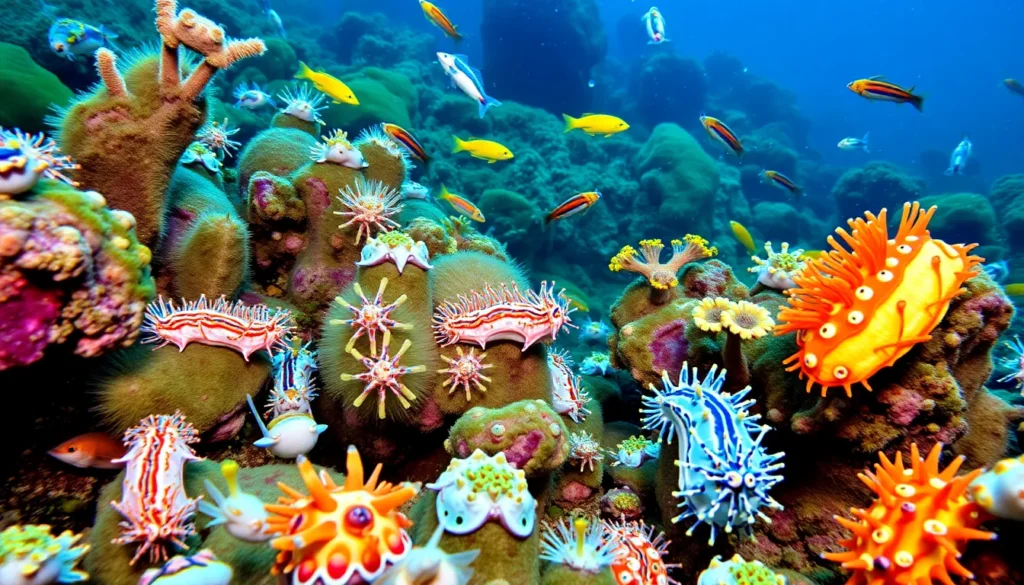
- Many nudibranchs are brightly colored. Their vivid colors serve as a warning to potential predators about their toxicity.
- They are primarily found in marine environments. Nudibranchs inhabit oceans worldwide, often in shallow waters near coral reefs.
- Nudibranchs are hermaphroditic. They possess both male and female reproductive organs, allowing for flexible mating strategies.
- Some nudibranchs are capable of photosynthesis. Certain species can incorporate chloroplasts from algae they consume, enabling them to produce energy from sunlight.
- Nudibranchs have a unique feeding strategy. They primarily feed on sponges, hydroids, and other soft-bodied invertebrates.
- They exhibit a variety of forms and sizes. Nudibranchs can range from just a few millimeters to over a foot long, showcasing diverse morphologies.
- Nudibranchs are known for their slow movement. Their locomotion is primarily through the use of a muscular foot, which allows for gentle gliding over surfaces.
- They have limited sensory organs. Nudibranchs possess simple eyes and chemoreceptors to detect food and potential threats.
- Some species are capable of regeneration. Nudibranchs can regenerate lost body parts, a trait that aids in their survival.
- Environmental factors impact their distribution. Temperature, salinity, and the availability of food sources greatly influence nudibranch populations.
- Nudibranchs play a role in marine ecosystems. They help control sponge populations and serve as prey for various marine animals.
- They have a complex life cycle. Nudibranchs undergo a larval stage called a veliger before maturing into adult forms.
- Some nudibranchs are toxic to consume. The toxins they acquire from their prey can make them harmful or unpalatable to predators.
- Nudibranchs exhibit a variety of reproductive strategies. Some species engage in elaborate courtship behaviors to attract mates.
- They are often studied for their unique adaptations. Researchers examine nudibranchs to understand evolutionary adaptations related to kleptocnidae.
Habitat and Behavior
Nudibranchs predominantly inhabit marine environments, particularly in shallow waters near coral reefs, rocky shores, and seagrass beds. They are primarily benthic organisms, often found on the ocean floor or attached to various substrates. Nudibranchs exhibit different behaviors, including slow movement facilitated by their muscular foot, and are often seen feeding on sponges and other soft-bodied invertebrates. Their ability to steal nematocysts from cnidarians serves as a unique survival strategy, allowing them to deter predators through their acquired defenses.
Why This Animal Matters
Nudibranchs play a critical ecological role in marine ecosystems by regulating populations of sponges and other invertebrates. Their unique feeding habits contribute to the biodiversity of coral reefs and help maintain the balance within marine environments. Additionally, their interesting adaptations, such as kleptocnidae, provide valuable insights into evolutionary biology and ecological interactions, making them a subject of research in marine science. Furthermore, the vibrant colors of nudibranchs contribute to the aesthetic appeal of underwater ecosystems, attracting divers and marine enthusiasts alike.
Common Misconceptions
Misconception: All nudibranchs are toxic.
Correction: While many nudibranchs are toxic due to the nematocysts they acquire or the chemicals they produce, not all species share this characteristic.
Misconception: Nudibranchs only steal nematocysts from jellyfish.
Correction: Nudibranchs can steal nematocysts from a variety of cnidarians, including anemones and hydroids, not just jellyfish.
Misconception: Nudibranchs are fast swimmers.
Correction: Nudibranchs are primarily benthic and move slowly, using their muscular foot to glide over surfaces rather than swimming rapidly.
FAQ
What are nudibranchs?
Nudibranchs are soft-bodied, marine gastropod mollusks known for their colorful appearances and unique behaviors.
How do nudibranchs use stolen nematocysts?
They incorporate stolen nematocysts into their bodies for defense against predators.
Are all nudibranchs capable of kleptocnidae?
No, only specific species exhibit this behavior, primarily within certain genera.





Leave a Reply