
Short Answer
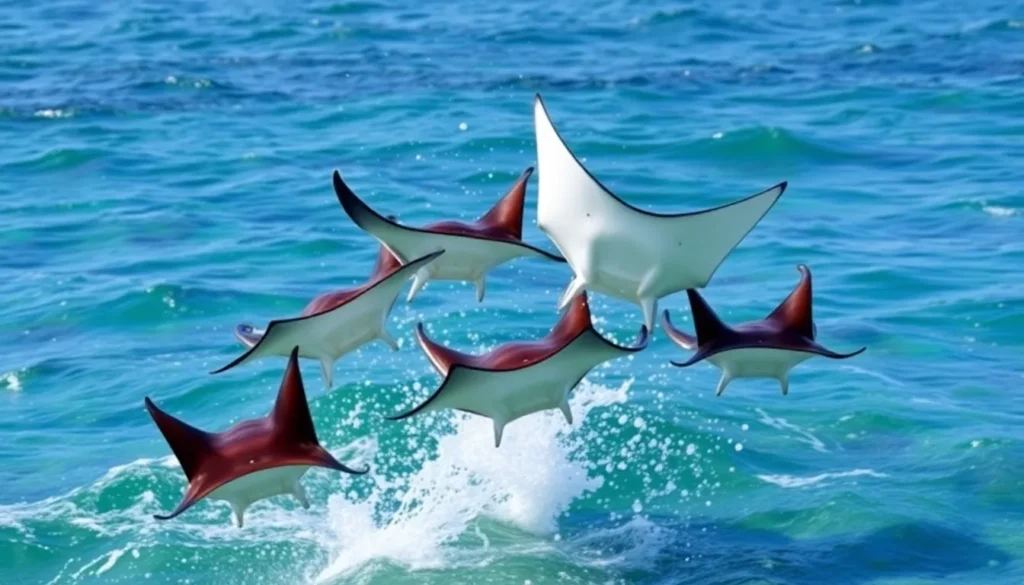
21 Facts About Devil Ray Acrobatics
- Highly Acrobatic: Devil rays are known for their impressive leaps and flips out of the water, showcasing their agility.
- Species Diversity: There are several species of devil rays, including the Mobula mobular, which are known for their unique acrobatic displays.
- Social Creatures: Devil rays often perform acrobatic displays in groups, suggesting a social component to their behavior.
- Feeding Behavior: Their acrobatics may also aid in feeding, as they can stun prey with their jumps.
- Migration Patterns: Devil rays exhibit migratory behavior that can involve extensive travel, often coinciding with seasonal changes.
- Breaching: Breaching is a common behavior among devil rays, where they leap into the air and splash back down.
- Identification by Acrobatics: Individual devil rays can sometimes be identified by their unique acrobatic patterns and behaviors.
- Environmental Indicators: The presence and behavior of devil rays can indicate the health of marine ecosystems.
- Reproductive Display: Males often show off their acrobatics during mating season to attract females.
- Vulnerability to Humans: Despite their size and agility, devil rays face threats from fishing and habitat destruction.
- Unique Swimming Techniques: Devil rays utilize their large pectoral fins to glide gracefully through the water.
- Group Hunting: Some devil rays engage in cooperative hunting, demonstrating complex social interactions.
- Predator Evasion: Acrobatics can also serve as an effective defense mechanism against predators.
- Educational Displays: Aquariums and marine parks often showcase devil ray acrobatics to educate the public about marine life.
- Temperature Sensitivity: Devil rays are sensitive to changes in water temperature, which can affect their behavior and distribution.
- Use of Sound: They may use sound in conjunction with their acrobatics to communicate with one another.
- Ecological Role: As filter feeders, devil rays help maintain the health of marine ecosystems by controlling plankton populations.
- Threatened Species: Several species of devil rays are listed as vulnerable or endangered due to overfishing and habitat loss.
- Interaction with Other Species: Devil rays sometimes interact with other marine animals, including sharks and sea turtles.
- Behavioral Research: Ongoing research aims to understand the full extent of their acrobatic behaviors and their implications for social structure.
- Conservation Efforts: Organizations are working to establish marine protected areas to safeguard devil ray habitats.
This acrobatic behavior is not just for show; it can help them shake off parasites or communicate with other rays.
Each species exhibits slightly different acrobatic behaviors depending on their habitat and social structure.
These group displays may serve to strengthen social bonds or attract mates.
By leaping out of the water, they can disorient small fish, making them easier to catch.
This migration is believed to be linked to food availability and breeding cycles.
This behavior is thought to be a form of communication, possibly signaling distress or excitement.
Researchers have noted that specific individuals may have preferred styles of jumping.
As filter feeders, they play a significant role in maintaining the balance of marine life.
This display may involve synchronized jumping, which enhances the chances of reproductive success.
Conservation efforts are crucial to protect their populations and the habitats they rely on.
This unique swimming style allows them to cover long distances with minimal energy expenditure.
This behavior involves coordinated movements to herd schools of fish into tighter groups for easier feeding.
By jumping, they can confuse or evade larger predators such as sharks.
These displays help raise awareness about the importance of ocean conservation.
Warming ocean temperatures may impact their migratory patterns and feeding habits.
This auditory communication is still being studied for its complexity and function.
Their feeding habits contribute to nutrient cycling in marine environments.
Efforts to enforce sustainable fishing practices are essential for their conservation.
These interactions can provide insights into the dynamics of marine ecosystems.
Such studies help scientists better understand the complexities of marine life.
These efforts are crucial in ensuring the survival of these fascinating creatures.
Habitat and Behavior
Devil rays primarily inhabit warm, coastal waters around the world, often found in tropical and subtropical regions. They prefer areas where they can exploit abundant plankton, which serves as their primary food source. Devil rays are known to congregate in nutrient-rich waters and are often observed near the surface, where they can be seen performing their acrobatics.
Their social behavior is noteworthy, as they often gather in groups, especially during feeding or mating seasons. These social structures can vary in size and composition, ranging from small pods to larger aggregations, depending on environmental conditions and food availability.
Why This Animal Matters
Devil rays play an essential role in marine ecosystems as filter feeders, contributing to the regulation of plankton populations. They help maintain a balance within the marine food web, which supports various marine life forms. Additionally, their acrobatic displays attract ecotourism, raising awareness about the need for marine conservation. The decline in devil ray populations due to human activities underscores the importance of conservation efforts aimed at protecting these remarkable animals and their habitats.
Common Misconceptions
Misconception: Devil rays are dangerous to humans.
Correction: Devil rays are generally harmless and pose no threat to humans. They are known for their gentle nature and primarily feed on plankton.
Misconception: All rays are the same.
Correction: Devil rays are a distinct group with unique behaviors and characteristics that differentiate them from other types of rays, such as stingrays or skates.
FAQ
What do devil rays eat?
Devil rays primarily feed on plankton, which they filter from the water using their gill rakers.
Why do devil rays jump out of the water?
They jump for various reasons, including communication, parasite removal, and feeding.
Are devil rays endangered?
Yes, many species of devil rays are considered vulnerable or endangered due to overfishing and habitat loss.


Leave a Reply