
Short Answer
21 Facts About Salmon
- Salmon Navigate Using Earth’s Magnetic Field
Salmon have the ability to detect the Earth’s magnetic field, which aids them in orienting themselves during their long migrations. This geomagnetic navigation is believed to help them find their way back to their natal rivers.
- Imprinting on Birthplace
Young salmon imprint on the unique chemical composition of their home stream. During their early life stages, they absorb these chemical cues, which they later use to find their way back as adults.
- Use of Smell
Salmon possess a highly developed sense of smell that allows them to recognize the specific odors of their birthplace. This olfactory memory is crucial for navigation during spawning.
- Migration Distances
Some species of salmon, such as the Chinook, can migrate over 3,000 miles from the ocean back to their freshwater spawning grounds, demonstrating remarkable endurance and determination.
- Homing Instinct Variability
The homing instinct varies among salmon species. For instance, sockeye salmon show a strong fidelity to their hatching streams, while others may have a broader range.
- Influence of Water Temperature
Changes in water temperature can affect the timing and success of salmon migrations. Warmer temperatures can lead to earlier spawning, impacting their homing behavior.
- Environmental Changes
Human activities, such as dam construction and pollution, can disrupt salmon’s homing instincts by altering the chemical and physical characteristics of their natal streams.
- Role of Lunar Phases
Some studies suggest that lunar phases may influence salmon migrations, with certain phases associated with increased homing success.
- Genetic Factors
Genetic predispositions may play a role in the strength of a salmon’s homing instinct, with some individuals demonstrating stronger navigational abilities than others.
- Homing in the Ocean
Salmon are capable of homing not only in freshwater but also in the ocean, navigating vast distances before returning to their spawning grounds.
- Social Learning
Young salmon may learn migratory routes and homing behaviors from older, experienced fish, showcasing the importance of social structures in their navigation.
- Impact of Climate Change
Climate change poses a significant threat to salmon populations, potentially altering their migratory patterns and disrupting their homing instincts.
- Salmon Lifespan
Most salmon species have a relatively short lifespan, living between two to seven years, which influences their migratory behavior and homing instincts.
- Return to Spawning Grounds
Upon returning to spawn, salmon undergo physical changes, including changes in coloration and body shape, which prepare them for the rigors of reproduction.
- Predation Risks
During their migration, salmon face numerous threats from predators, including bears, birds, and larger fish, highlighting the dangers of their journey back home.
- Salmon in Native Cultures
Salmon hold significant cultural importance for many Indigenous peoples of the Pacific Northwest, symbolizing resilience and sustenance.
- Research and Conservation
Ongoing research into salmon homing instincts is crucial for conservation efforts, as understanding these behaviors can help in habitat restoration and management strategies.
- Unique Adaptations
Salmon exhibit unique physiological adaptations that allow them to transition from saltwater to freshwater, further facilitating their homing instincts.
- Spawning Behavior
Upon reaching their spawning grounds, salmon engage in complex behaviors, including nest building and courtship displays, which are essential for successful reproduction.
- Fisheries Management
Knowledge of salmon homing instincts is vital for sustainable fisheries management, helping to ensure that populations remain healthy and viable.
- Declining Populations
Many salmon populations are in decline due to overfishing, habitat loss, and climate change, prompting conservation efforts aimed at habitat protection and restoration.
Habitat and Behavior
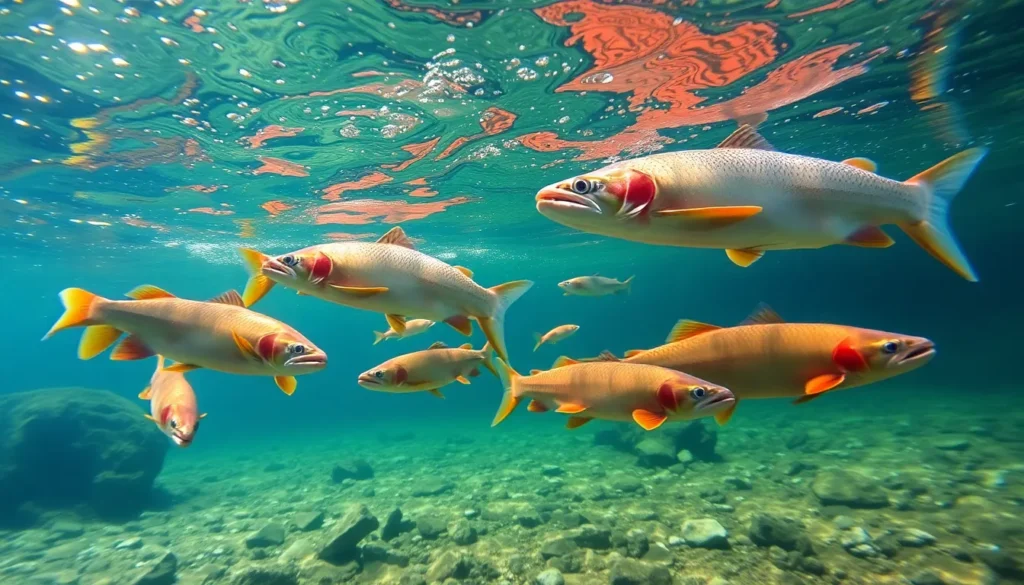
Salmon are predominantly found in the North Pacific Ocean and its tributaries. They are anadromous fish, meaning they are born in freshwater, migrate to the ocean, and return to freshwater to spawn. Their lifecycle includes distinct stages, from egg to alevin, fry, smolt, and adult. Salmon typically inhabit rivers, streams, and lakes during their freshwater stage and are found in coastal marine environments during the ocean phase. They exhibit a variety of behaviors, including foraging for food, establishing territories, and engaging in complex migration routes to reach their spawning grounds.
Why This Animal Matters
Salmon play a crucial ecological role as both predators and prey within their ecosystems. They contribute to nutrient cycling by transporting nutrients from the ocean to freshwater systems during their spawning runs. Salmon are also culturally significant, particularly for Indigenous communities, where they are integral to traditional diets, cultural practices, and economic activities. Furthermore, their populations are indicators of environmental health, making them essential for conservation efforts. Protecting salmon habitats is vital for maintaining biodiversity in aquatic ecosystems.
Common Misconceptions
Misconception: Salmon only return to their exact birthplace to spawn.
Correction: While salmon have a strong homing instinct, some species may spawn in nearby streams if their original habitat is unsuitable.
Misconception: All salmon species have the same migratory behavior.
Correction: Different salmon species exhibit varying migratory patterns, distances, and homing instincts, influenced by genetic and environmental factors.
FAQ
How do salmon find their way back home?
Salmon use a combination of magnetic cues, olfactory memory, and environmental signals to navigate back to their birthplace.
Why are salmon populations declining?
Factors contributing to the decline of salmon populations include overfishing, habitat destruction, and climate change.
What role do salmon play in the ecosystem?
Salmon are integral to nutrient cycling and serve as a food source for various predators, thus maintaining ecological balance.

Leave a Reply