
Short Answer
21 Facts About Sugar Glider Gliding
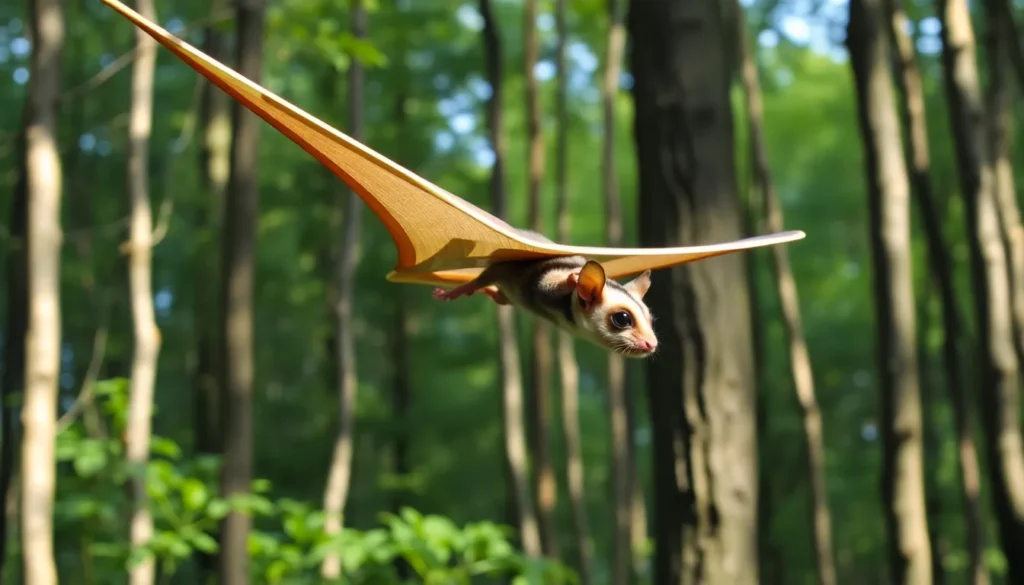
- 1. Unique Gliding Mechanism: Sugar gliders possess a patagium, a membrane stretching from their wrists to their ankles, allowing them to glide up to 150 feet.
- 2. Nocturnal Activity: These marsupials are primarily nocturnal, gliding in the dark to hunt insects and nectar.
- 3. Social Creatures: Sugar gliders are highly social animals, often gliding in pairs or small groups to strengthen bonds.
- 4. Parental Care: Female sugar gliders carry their young in a pouch for about 70 days, ensuring they develop in a safe environment.
- 5. Communication: They use a range of vocalizations, including barks and whistles, to communicate with each other while gliding.
- 6. Habitat Preference: Sugar gliders inhabit forests, particularly eucalyptus and acacia woodlands, which provide ample gliding space.
- 7. Diet: Their diet consists mainly of fruits, nectar, and insects, which they locate while gliding from tree to tree.
- 8. Glide Control: They can control their direction and speed by adjusting their limbs and tail while gliding.
- 9. Lifespan: In the wild, sugar gliders can live up to 9 years, while in captivity, they may live over 15 years.
- 10. Conservation Status: Sugar gliders are not currently endangered, but habitat loss poses a potential threat.
- 11. Instinctive Gliding: Young sugar gliders instinctively learn to glide by watching their parents and practicing.
- 12. Territorial Behavior: Males often mark their territory with scent glands, which can influence their gliding routes.
- 13. Adaptations to Environment: Their gliding ability helps them escape predators, such as birds of prey, by allowing them to navigate forest canopies.
- 14. Climate Sensitivity: Sugar gliders are sensitive to extreme temperatures, which can affect their gliding and activity levels.
- 15. Breeding Season: Breeding often coincides with the flowering of eucalyptus trees, providing ample food for nursing mothers.
- 16. Social Grooming: Grooming not only strengthens social bonds but also helps maintain their fur, essential for gliding efficiency.
- 17. Gliding Initiation: A sugar glider typically requires a launch from a height to initiate gliding, often from tree branches.
- 18. Flight vs. Glide: Unlike flying, gliding relies on a downward slope and is less energy-intensive for the sugar glider.
- 19. Sensory Adaptations: Their large eyes and acute hearing enhance their ability to navigate and hunt at night during gliding.
- 20. Ecological Role: As pollinators and seed dispersers, sugar gliders play a crucial role in maintaining their forest ecosystems.
- 21. Human Interaction: While popular as pets, their needs for social interaction and space must be carefully managed to ensure their well-being.
Habitat and Behavior
Sugar gliders are native to Australia, New Guinea, and surrounding islands, preferring wooded habitats such as eucalyptus forests. They are adept climbers and spend much of their time in trees, where they glide to navigate their environment efficiently. Their behavior is characterized by strong social bonds, with groups often consisting of family units. They communicate through vocalizations and scent marking, and their nocturnal nature allows them to forage for food during the night.
Why This Animal Matters
Sugar gliders play a significant ecological role as pollinators and seed dispersers, contributing to the health of their forest habitats. Their gliding ability not only helps them escape predators but also assists in maintaining the genetic diversity of plant species by facilitating cross-pollination. Culturally, they hold importance for Indigenous Australian communities, who recognize their role in the ecosystem.
Common Misconceptions
Misconception: Sugar gliders can be kept alone without any issues.
Correction: Sugar gliders are social animals and thrive in pairs or groups, requiring companionship for their mental well-being.
Misconception: Sugar gliders can fly like birds.
Correction: Sugar gliders glide rather than fly, utilizing a membrane to glide from heights rather than flapping wings.
FAQ
What do sugar gliders eat?
Sugar gliders primarily consume fruits, nectar, and insects, which they locate while gliding.
How do sugar gliders glide?
They glide using a membrane called patagium, which allows them to travel from tree to tree.
Are sugar gliders good pets?
While they can be kept as pets, sugar gliders require social interaction and a spacious environment to thrive.


Leave a Reply