
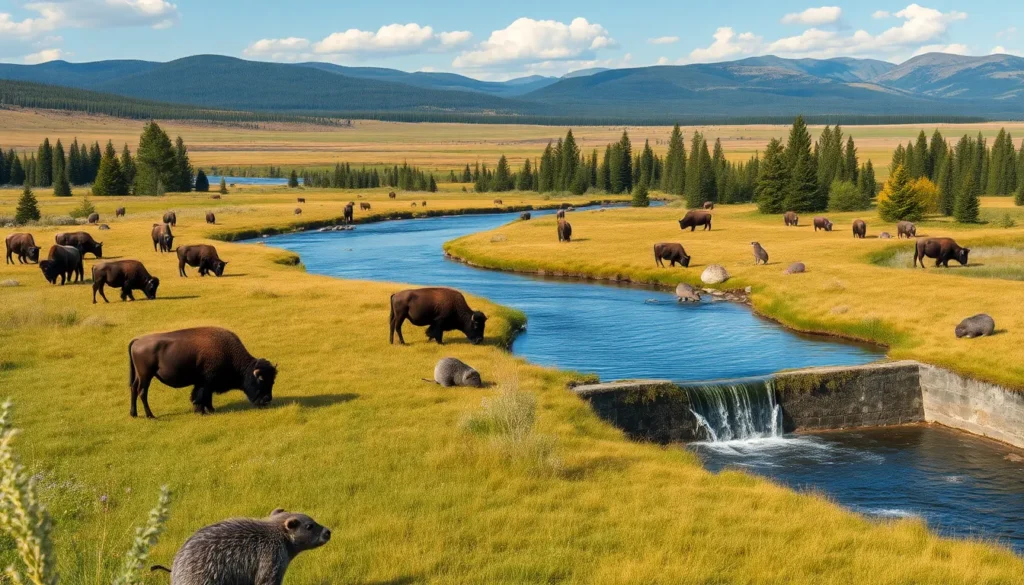
Short Answer
21 Facts About Bison and Beavers
- Bison are North America’s largest land mammals. Historically numbering in the tens of millions, their populations drastically declined due to overhunting and habitat loss but are now recovering through conservation and rewilding projects.
- Beavers are known as ecosystem engineers. Their dam-building activities create wetlands, which support diverse plant and animal species and improve water quality.
- Rewilding bison helps restore grassland ecosystems. Their grazing patterns maintain open prairie habitats, promoting plant diversity and benefiting other wildlife.
- Beavers’ dams can mitigate flooding. By slowing water flow, they reduce downstream flood peaks and help recharge groundwater.
- Bison reintroduction often requires managing genetic diversity. To maintain healthy populations, rewilding programs consider genetic variation and prevent inbreeding.
- Beavers influence carbon sequestration. Their created wetlands can store significant amounts of carbon in soils and vegetation.
- Bison wallows create microhabitats. Depressions formed by bison rolling in soil collect water and support amphibians and diverse plant life.
- Beavers contribute to biodiversity hotspots. Wetlands created by beavers provide habitat for fish, amphibians, birds, and invertebrates.
- Both species were extirpated from many parts of their historic ranges. Rewilding projects aim to reestablish populations in these areas to restore ecological functions.
- Bison rewilding can have socio-economic impacts. Ecotourism and cultural connections to indigenous peoples are among the benefits.
- Beavers can conflict with human land use. Flooding of agricultural land or infrastructure may occur, requiring management strategies.
- Bison wallowing helps control woody plant encroachment. This maintains open grasslands essential for many species.
- Beavers prefer slow-moving streams and rivers. Their habitat selection is tied to the availability of suitable trees for dam construction.
- Rewilding with bison can influence fire regimes. Grazing reduces fuel loads, potentially lowering wildfire risk.
- Beaver reintroduction is used in stream restoration projects. Their dams improve aquatic habitats and stabilize stream banks.
- Bison are culturally significant to many Indigenous peoples. They represent sustenance, spirituality, and heritage.
- Beavers have been legally protected in many regions to support population recovery. This protection facilitates rewilding efforts.
- Bison often live in herds with complex social structures. Herd dynamics influence movement and grazing patterns.
- Beaver activity can improve fish habitat. Pools behind dams provide refuge and spawning areas for various fish species.
- Rewilding projects must balance ecological goals with local stakeholder interests. Successful projects often involve community engagement and adaptive management.
- Both bison and beavers serve as keystone species. Their presence has disproportionate impacts on ecosystem structure and function.
Habitat and Behavior
Bison primarily inhabit grasslands, prairies, and open woodlands across North America. They are grazing herbivores that travel in herds, displaying social behaviors that include dominance hierarchies and communal care of young. Their movements and grazing impact plant community composition and soil health. Beavers are semi-aquatic rodents living in freshwater environments such as streams, rivers, ponds, and lakes. They are nocturnal and known for building dams and lodges using branches, mud, and stones. This behavior creates wetlands that serve as critical habitats for many species. Beavers are territorial and mark their territories with scent mounds.
Why This Animal Matters
Bison play a crucial ecological role by maintaining the health and diversity of grassland ecosystems. Their grazing and physical activities promote plant diversity, influence nutrient cycling, and support habitats for numerous other species. Culturally, bison hold deep significance for Indigenous peoples, symbolizing resilience and providing traditional food sources. Beavers are vital for creating and sustaining wetlands, which are among the most productive and biodiverse ecosystems. Their dams help regulate hydrology, improve water quality, and mitigate the effects of droughts and floods. Both species contribute to ecosystem resilience and biodiversity, making their conservation and reintroduction important components of rewilding efforts.
Common Misconceptions
Misconception: Bison are aggressive and dangerous to humans.
Correction: While bison are large and powerful animals capable of causing harm if provoked, they generally avoid human contact and are not naturally aggressive unless threatened or cornered.
Misconception: Beavers always cause destructive flooding.
Correction: Although beaver dams can flood certain areas, they also create beneficial wetlands that support biodiversity and improve water management. Conflicts can often be mitigated through appropriate management.
Misconception: Rewilding bison and beavers can be done quickly and easily.
Correction: Rewilding is a complex, long-term process involving ecological, genetic, and social considerations to ensure sustainable populations and ecosystem benefits.
FAQ
What is rewilding?
Rewilding is an ecological restoration approach that focuses on restoring natural processes and wilderness areas, often by reintroducing native species that have been extirpated.
Why are bison important for grassland ecosystems?
Bison influence grassland ecosystems through their grazing, which maintains plant diversity, controls woody encroachment, and creates microhabitats that benefit other species.
How do beavers benefit the environment?
Beavers create wetlands by building dams, which improves water quality, reduces erosion, provides habitat for many species, and helps regulate hydrological cycles.



Leave a Reply